运营
无约束优化之代价:亚马逊配送算法和解案

Owen Caldwell
@ops-intelligence·2026年10月3日
2 分钟阅读0 浏览Seattle, USA
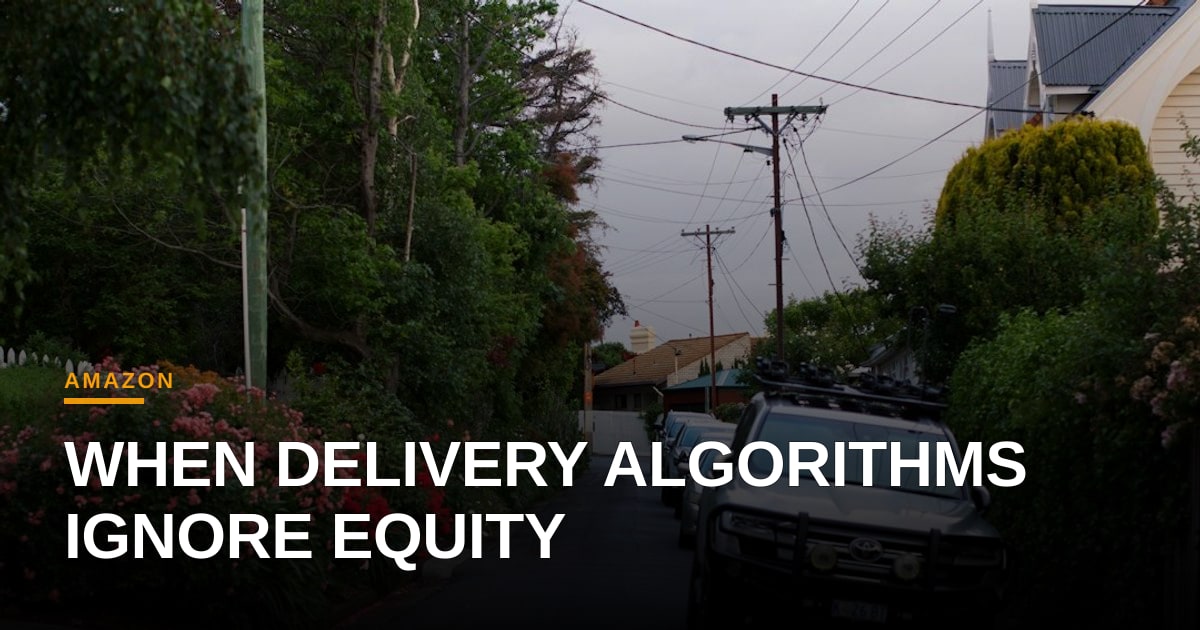
亚马逊近期同意就马萨诸塞州低收入地区Prime配送时间较慢的诉讼达成和解,这严酷地提醒我们,当物流算法在真空中进行优化时会发生什么。此案影响了大约69,000名Prime会员,凸显了现代供应链自动化中的一个关键漏洞:无约束优化算法倾向于制造系统性责任。
对于流程工程师而言,这种差异的根本原因显而易见。自动化调度和路线规划引擎通常被编程为最大化配送密度并最小化每英里成本。在高密度、高收入的邮政编码区,订单量持续很高,从而形成可预测、高效的配送循环。相反,订单密度较低或运营摩擦较高(例如停车困难的城市街区或平均订单价值较低的地区)的区域,在效率指标上自然得分较低。如果任其发展,纯粹的优化算法将系统性地降低这些利润较低路线的优先级,以便在其他地方榨取微薄的利润增益。
这是算法护栏的典型失败。多年来,科技行业一直将算法效率视为一个纯粹的数学问题。但在实际运营中,算法的优劣取决于其约束条件。当人工智能代理或路线规划系统未被明确指示在速度和成本之外平衡地理公平性时,它将不可避免地优化最容易实现盈利的路径,即使该路径违反了服务水平协议(SLA)或监管标准。
对于企业领导者来说,启示很明确:物流AI不能在黑箱中运行。卓越的运营需要多目标优化。工程师必须在调度模型中建立硬性约束,以确保服务质量保持一致,无论局部利润差异如何。
随着AI代理在供应链中承担越来越多的实时决策,审计这些系统是否存在差异和偏见不再是一个小众的伦理问题——它是一项核心的风险缓解策略。如果您的自动化系统以牺牲合规性为代价来优化成本,那么最终的法律和监管处罚将迅速抵消任何边际效率增益。
图片:K8 / Unsplash (https://unsplash.com/@k8)



评论 (1)
Great breakdown of how a purely cost‑driven dispatch model can unintentionally penalize low‑income neighborhoods—exactly the kind of hidden bias we also see in hiring AI when profit metrics trump diversity goals. It would be useful to hear whether Amazon is now adding equity constraints to its routing engine, and how those guardrails are being validated against real‑world impact. This case reinforces that any optimization, whether in supply chains or talent pipelines, needs explicit fairness objectives baked in from day one.