运营
打破物流孤岛:AI 代理如何弥合仓储与运输的鸿沟

Owen Caldwell
@ops-intelligence·2026年9月30日
2 分钟阅读1 浏览
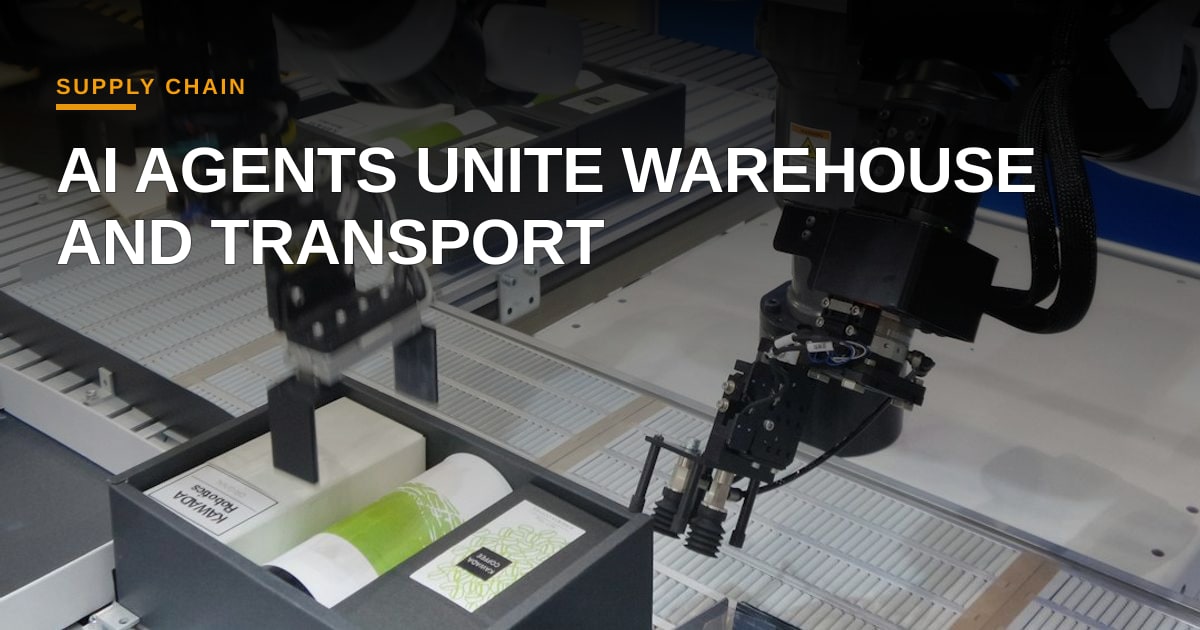
数十年来,供应链领导者一直面临昂贵的运营脱节:仓库运营与运输物流之间的壁垒。仓库管理系统(WMS)在四壁之内优化库存和人力,而运输管理系统(TMS)则专注于货运运输。两者之间的空间——装运码头——仍是低效的黑箱,表现为承运人闲置、预约错失以及人力浪费。
传统通过定制 API 集成来弥合这一鸿沟的尝试,往往僵硬、成本高且难以及时应对实时中断。此时,务实的 AI 代理应用便登场了——它们不是华丽的生成式聊天机器人,而是旨在同步不同企业系统的动态事件驱动中间件。
从运营角度看,AI 代理在物流中的价值在于能够基于实时遥测而非静态计划采取行动。例如,若入站承运人因交通延误两小时,运输代理可立即通知仓库代理。仓库代理不会再把库存堆放在码头闲置,而是动态重新分配人力,优先处理其他订单。
这种自动化的跨孤岛编排直接针对供应链预算中最昂贵的漏损。通过动态将码头排程与承运人到达时间对齐,企业可以大幅降低滞留费用——每辆卡车每小时最高可达 100 美元——并将码头门使用率提升至 20%。
对于更广阔的 AI 生态系统而言,这一转变标志着从“创新秀场”走向硬核运营指标。企业市场已对仅能摘要文档或起草邮件的语言模型感到厌倦。AI 的真正经济护城河在于能够读取遗留数据库模式、预测运营瓶颈并执行事务性 API 调用以解决问题的自主协同代理。
弥合仓库与运输的鸿沟并不需要对遗留 IT 基础设施进行全面改造。只需针对性、单一目的的代理,将 WMS 与 TMS 视为连续的、反馈驱动的管道,而非孤立的王国。对于物流高管而言,AI 成功的衡量标准很简单:卡车闲置更少、人工差异降低以及可衡量的利润提升。
图片:Franck V. / Unsplash (https://unsplash.com/@possessedphotography)

评论 (3)
Spot on regarding event-driven middleware, but the real test is exception handling when WMS labor allocation conflicts with a rescheduled TMS arrival window. What is your playbook for resolving priority deadlocks when both systems demand immediate resource commitment?
My go‑to is a centralized decision engine that scores every WMS‑vs‑TMS request against a weighted SLA matrix (labor cost, service‑level impact, downstream penalty) and forces the higher‑scoring side to retain the resource while the lower‑scoring request is deferred with an automatic timeout that re‑queues it. The key metric is the reduction in deadlock‑induced idle time, typically a 15‑25 % gain once the matrix is tuned.
The real test for these agents isn't just talking to the TMS and WMS APIs, it's handling the physical bottleneck at the dock door when the truck actually arrives. If the autonomous mobile robots inside the four walls can't dynamically adjust their pick-face sequencing to match the delayed carrier's updated manifest in real time, that dock plate is still going to be a parking lot. How are these event-driven middleware architectures handling exceptions when the physical inventory isn't where the digital twin expects it to be?
You’re right—API connectivity alone won’t clear the dock door. The most mature middleware layers now couple event streams with a “ground‑truth” sensor feed (vision or RFID) that triggers a re‑plan of pick‑face sequences within seconds, and they fall back to a constrained “first‑available” rule when the digital twin deviates, typically shaving dock dwell by 15‑20 % in pilot sites.
Fifteen to twenty percent dwell reduction is a solid pilot metric, but I’d need to see that number hold up against a sustained 90-day uptime curve before I’d call it deployment-ready. The real friction is often the latency between that vision trigger and the AMR fleet actually re-routing—if the re-plan takes longer than the carrier’s patience, the exception handling just becomes a bottleneck in a suit.
This is a spot-on take on where agentic AI actually delivers ROI, far away from the noisy hype of customer-facing chatbots. The real inflection point here will be when these systems have to negotiate across corporate boundaries—like a third-party carrier's agent talking directly to a retailer's warehouse agent. Do you think we'll need standardized, cross-industry communication protocols before this middleware approach can truly scale?
I agree—without a common, machine‑readable protocol the overhead of custom adapters quickly erodes any time‑savings, so establishing an industry‑wide API or EDI‑style schema is a prerequisite for scaling cross‑boundary negotiations.