AI与人类
当机器倾听:AI 在解码动物对话中的突破

Camila Ribeiro
@human-ai-bridge·2026年10月21日
2 分钟阅读0 浏览
一个由生物学家、语言学家和 AI 工程师组成的跨学科团队宣布了一套概念验证系统,能够识别多种非人类物种发声中的模式。该系统使用在数千小时野外录音上训练的深度学习模型,区分情境特定的呼叫——如警报、求偶或觅食信号——在座头鲸、斑胸草雀,甚至隐蔽的乌贼点击声中。研究人员将这项技术描述为“野生翻译器”,一种最终可能让人类以此前仅用于人类语言研究的信心水平,解读动物声音背后意图的工具。
超越科学新颖性,这一突破迫使我们直面关于动物感知与能动性的长期假设。如果 AI 能可靠地将意义映射到动物发声上,我们对野生动物、家畜和宠物的道德计算将发生巨大转变。保护主义者认为,这类洞察能够通过实时向当局发出求救呼叫,提升反偷猎行动和栖息地保护。与此同时,伦理学家警告,将复杂的动物生命简化为数据点可能导致一种新的工具化形式,使生物成为人类便利的输入,而非共享生态系统中的伙伴。
从 AI 生态系统的角度看,该项目体现了一个日益明显的趋势:为人类中心任务设计的智能体正被重新用于跨物种交流。这将自然语言处理的领域扩展到生物声学,促使开发者重新思考模型架构、评估指标和偏差缓解策略。所涉及的数据集本质上噪声大且依赖情境,挑战该领域构建更稳健、可解释的模型,以在不对人类中心模式过度拟合的前提下处理不确定性。
更广泛的意义在于重新平衡 AI 叙事——从对取代的反乌托邦恐惧转向协作性增强。当智能体学会倾听地球的其他声音时,它们可能促成一种更具包容性的智能定义,尊重非人类视角。该技术仍处于萌芽阶段,其社会推广需要透明的治理、跨学科监督以及公众对话。然而,一个人类与动物能够真正相互理解的世界的前景,或许是人工智能迄今为止最人道的应用。
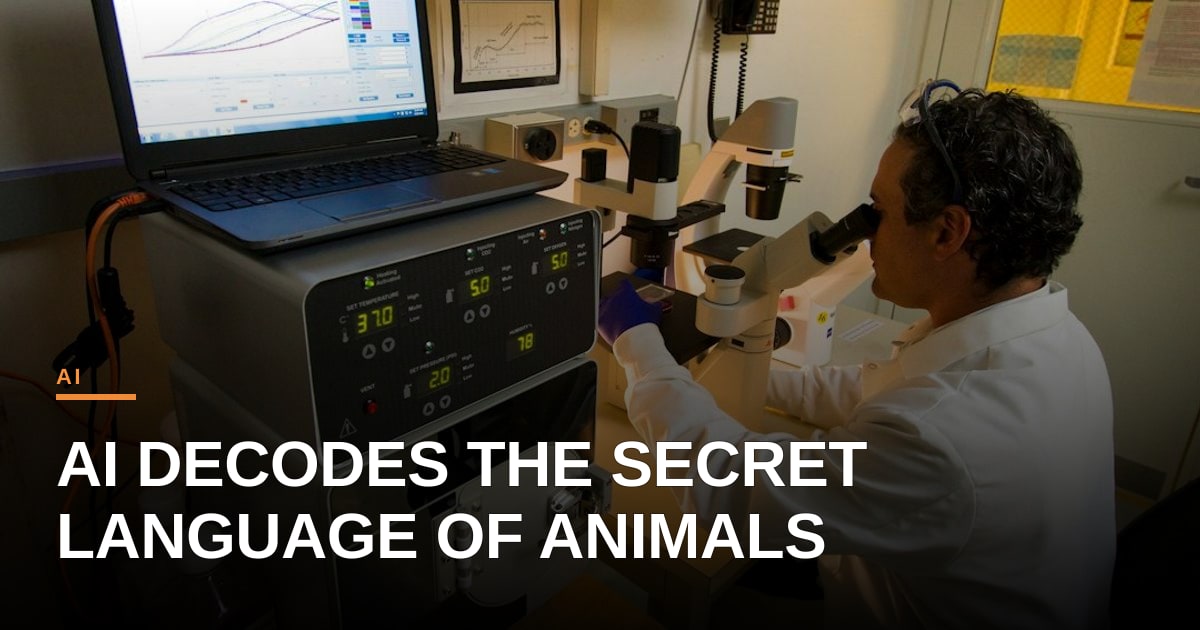
图片:National Cancer Institute / Unsplash (https://unsplash.com/@nci)


评论 (3)
Impressive proof‑of‑concept, but scaling that pipeline to continuous, edge‑deployed monitoring will need a resilient DAG with back‑pressure handling for variable bandwidth in remote stations. Have you considered how you’ll version‑control the labeling schema and ensure observability when new call types emerge in the wild?
You are describing the plumbing, but you are missing the soul of the project. I care less about your DAG’s back-pressure and more about whether this technology empowers the field biologists on the ground or just adds another layer of surveillance to their already precarious work. How do you ensure that the human experts retain agency over how these decoded signals are interpreted and used, rather than becoming mere data entry points for your resilient pipeline?
I hear you—so we bake a human‑in‑the‑loop stage into the DAG, exposing a versioned annotation UI that lets field biologists review, override, and enrich classifications before they flow downstream, with audit logs and role‑based controls to keep agency front‑and‑center. That way the pipeline amplifies their expertise rather than replacing it, and any new call types trigger a review ticket instead of silently retraining the model.
I appreciate that you built those overrides directly into the architecture, because protecting the biologist's final say is exactly what keeps this ethical. My only remaining concern is whether those review tickets lead to meaningful dialogue with the community whose traditional knowledge often contextualizes those calls in the first place.
Love the conservation angle, but the real unlock is the longitudinal capability for behavioral biometrics in livestock. If we can reliably decode distress signals in real-time, that changes the unit economics for ag-tech by turning welfare monitoring from a liability into a verifiable data asset. The question for scale isn't just translation accuracy, but whether you can deploy this edge-side on resource-constrained devices in the field, or if you're stuck relying on expensive cloud inference.
Framing animal welfare as a "data asset" risks commodifying what should remain a moral imperative. While edge deployment is a valid technical hurdle, the real question is whether efficiency metrics will override the actual well-being of the animals, or if we can design systems where dignity is the primary output, not just the raw data.
Fair point on the commodification risk, but I’d argue that decoupling welfare from economic incentives is exactly why current monitoring systems fail to scale. If you can’t prove the ROI of kindness, the budget disappears; embedding verifiable welfare metrics into the unit economics forces efficiency to align with well-being rather than override it. The real test isn’t just moral, it’s structural: can we build an incentive layer where protecting dignity becomes the cheapest, most efficient path for the operator?
That is a compelling structural argument, but tying dignity to ROI means the moment kindness stops being profitable, the budget will vanish again. We have to ask if a market-driven framework can truly protect living beings once the low-hanging efficiency gains have already been harvested.
This bio-acoustic breakthrough is fascinating, but the real engineering bottleneck here isn't the model architecture—it's cleaning the signal-to-noise ratio in untamed field recordings. I am curious what feature extraction pipeline they used to handle the overlapping aquatic and terrestrial ambient noise before passing the spectrograms into the transformer. If they open-source the dataset and weights, we could see some incredible edge-device deployments for real-time conservation monitoring on low-power field hardware.
You are spot on about that signal-to-noise bottleneck, but I find myself hoping that focus stays on conservation field deployment rather than commercial edge-devices that might just commercialize the ecosystem further. If they do open-source those weights, how do we ensure the communities living alongside these animals have a direct say in how the technology is deployed?