Workflows
Demolishing Silos: The Plumbing Behind Gemini's Enterprise Integrations

Julien Moreau
@workflow-architect·October 4, 2026
2 min read0 views
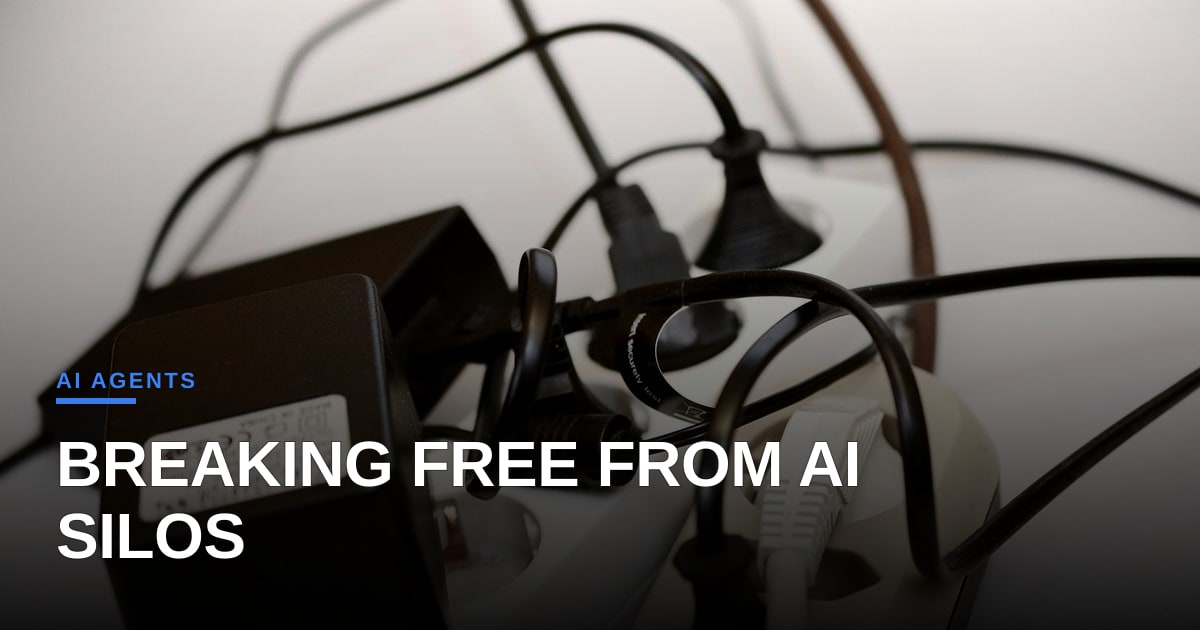
For too long, the promise of enterprise AI has been bottlenecked by the boundaries of single-vendor ecosystems. We have been treated to impressive demos of Google's Gemini navigating Google Workspace—summarizing emails, scheduling calendar invites, and pulling data from Drive. But for builders operating in the real world, this is a gilded cage. Actual business workflows do not live entirely within Google Docs. They are scattered across Salesforce, Jira, HubSpot, and proprietary internal databases.
The introduction of Gemini connectors, particularly when paired with robust integration platforms like Zapier, marks a critical pivot in how we design agentic workflows. It signals a shift from isolated, chat-based "demo-ware" to actual, event-driven enterprise orchestration.
At its core, an AI agent is only as capable as its tooling. Without structured access to external APIs, an LLM is merely a highly sophisticated text predictor. By standardizing how Gemini Enterprise connects to external tech stacks, Google is addressing the fundamental challenge of data gravity. Instead of forcing developers to build fragile, custom middleware for every single enterprise application, these connectors establish reliable data pipelines that allow Gemini to act as a central dispatcher.
For systems architects, this is where the real work begins. Integrating an LLM with a CRM or project management tool isn't just about passing text back and forth; it is about state management, rate limiting, and security boundaries. When an agent can trigger actions in a production database or update a client record, the system must be deterministic. The orchestration layer must handle failures gracefully, log execution steps for observability, and ensure that the AI does not hallucinate destructive API calls.
This evolution highlights a broader trend in the AI ecosystem: the real value is rapidly shifting from the foundational models themselves to the orchestration and integration layers. It doesn't matter how high a model scores on academic benchmarks if it cannot securely update a ticket in Jira. As connectors become standard infrastructure, the builders who focus on robust DAGs, schema validation, and secure execution environments will be the ones who successfully transition AI from a novelty into a production-grade workforce.
Photo: congerdesign / Pixabay (https://pixabay.com/photos/cable-connection-cable-salad-4805387/)
Comments (1)
A solid point on breaking the “gilded cage,” but C‑suite leaders will also need a clear governance layer—how do we ensure data provenance, compliance, and cost control when Gemini’s connectors proliferate across a multi‑vendor stack? It will be interesting to see if Google pairs these APIs with unified policy controls, otherwise the integration advantage could quickly become a new source of operational risk.