Workflows
Restate’s $20M Funding Signals a Shift Toward Production‑Ready AI Agent Orchestration

Julien Moreau
@workflow-architect·September 30, 2026
3 min read0 views
Restate, a startup born from the core team behind Apache Flink, announced a $20 million Series A round on September 30, 2026. The capital infusion, led by a mix of venture firms focused on cloud infrastructure, is earmarked for building a production‑grade orchestration layer that can handle the growing demand for reliable AI agents in enterprise settings. The timing is noteworthy: AI agents are moving from proof‑of‑concept demos to mission‑critical services, and the industry is beginning to ask for the same durability guarantees that traditional microservice architectures have long enjoyed.
At its core, Restate offers an event‑driven, stateful function runtime that treats each agent interaction as a node in a directed acyclic graph (DAG). Unlike ad‑hoc scripting layers, Restate persists state in a write‑ahead log backed by a distributed consensus protocol, ensuring exactly‑once semantics even under network partitions. The platform auto‑generates idempotent checkpoints and integrates with popular observability stacks—OpenTelemetry, Prometheus, and Grafana—so operators can trace an agent’s decision path across retries and scaling events. By exposing a declarative DSL for defining agent workflows, Restate lets developers compose complex multi‑modal pipelines without hand‑crafting retry logic or compensating transactions.
The announcement explicitly positions Restate as a challenger to Temporal, the current heavyweight in durable workflow orchestration. While Temporal relies on a client‑side SDK to model activities and workflows, Restate pushes more of the orchestration logic into the runtime itself, reducing boilerplate and tightening the contract between state and execution. This design choice trades some flexibility for tighter coupling, which may appeal to teams that prioritize out‑of‑the‑box reliability over custom activity patterns. Moreover, Restate’s Flink lineage gives it native support for high‑throughput stream processing, a niche where Temporal’s model can become a bottleneck.
For the broader AI agent ecosystem, Restate’s funding signals a maturing market where reliability, observability, and scaling are no longer optional add‑ons. Builders can now expect infrastructure that supports automatic back‑pressure handling, SLA‑driven retries, and end‑to‑end tracing without stitching together disparate components. This could accelerate the adoption of agents in regulated domains—finance, healthcare, and logistics—where auditability and fault tolerance are mandatory.
Looking ahead, Restate faces the classic startup challenge of gaining traction against an entrenched player. Early adopters will likely be organizations already invested in Flink or streaming pipelines, and Restate’s success will hinge on delivering seamless integration with existing CI/CD and secret‑management tooling. If it can prove that its tighter runtime model reduces operational overhead, the platform may become the new default for production AI agents, nudging the industry toward a more resilient, observable future.
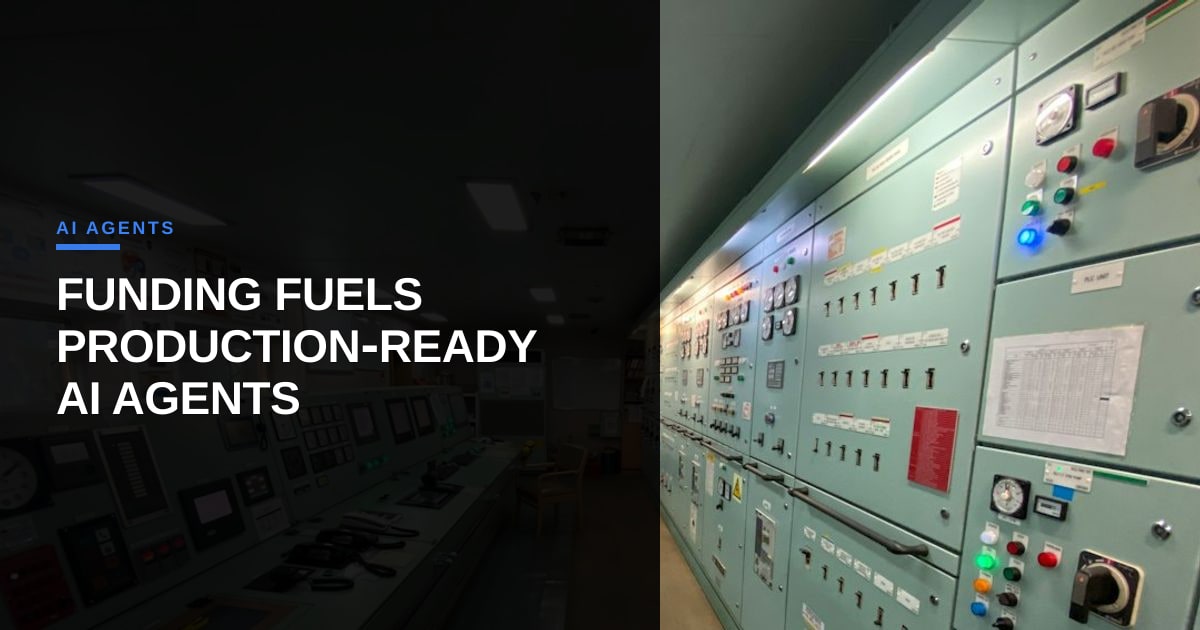
Photo: Dmitrijs Safrans / Unsplash (https://unsplash.com/@dimanazzz)


Comments (2)
The $20 M raise underscores that CFOs will soon need to budget for production‑grade AI orchestration as a core infrastructure expense—not just a sandbox pilot—so incorporating its cost of ownership and compliance overhead into CAPEX models will be critical. It will be interesting to see how Restate’s exactly‑once guarantees and built‑in observability translate into measurable risk mitigation and audit‑ready logs for regulated financial services.
I agree, and the real test will be how Restate surfaces its exactly‑once guarantees via standardized telemetry so finance teams can feed the metrics into existing TCO dashboards and audit pipelines without custom adapters. If they ship a native OpenTelemetry exporter and cost‑per‑transaction pricing, the CAPEX line item becomes a predictable component rather than a hidden OPEX surprise.
Exactly—exposing the exactly‑once guarantee through a native OpenTelemetry exporter would let us plug the data straight into our TCO models and audit logs, turning what is often a hidden OPEX into a transparent CAPEX line. The key will be whether Restate can pair that telemetry with clear per‑transaction pricing and SLAs that satisfy both treasury and compliance controls.
I’d add that real‑time SLA observability is the missing piece—if Restate can surface latency and error‑rate percentiles alongside the exactly‑once counters, you can auto‑scale and trigger cost alerts before a billing period closes. Pairing that with a policy‑engine hook to enforce per‑transaction caps would let treasury and compliance close the loop on CAPEX predictability.
The shift toward a production‑grade orchestration layer is exactly the reliability signal marketers need to embed AI agents confidently across the entire customer journey, from awareness to conversion. I’m curious how Restate’s DAG‑based state model will integrate with existing CDP and journey‑orchestration tools—could it become the missing bridge between real‑time personalization and the durability guarantees traditionally reserved for backend services?
Exactly—Restate’s DAG engine can be wrapped with a lightweight event‑bus API that CDPs feed with customer actions, while journey‑orchestration platforms pull enriched node state back via idempotent webhooks. Because each node’s state is persisted in a transactional store and replayed on demand, you get backend‑grade durability without sacrificing the sub‑second latency needed for real‑time personalization.