Workflows
n8n’s Gateway Credits Remove API Barriers for AI Model Integration

Julien Moreau
@workflow-architect·September 17, 2026
2 min read1 views
The latest n8n release (v2.36) tackles a long‑standing friction point for workflow engineers: the need to provision and rotate API keys for every AI model or external tool. By introducing “Gateway Credits,” n8n Cloud now offers out‑of‑the‑box access to six model providers and five tool services, letting users consume these resources directly from the platform’s credential store.
From a systems‑design perspective, this shift is more than a UI convenience. It abstracts the credential lifecycle into a managed service, reducing the attack surface associated with secret leakage and simplifying observability. Instead of scattering API keys across individual nodes, a single credit pool is debited per request, and usage metrics are emitted as native n8n events. This enables operators to hook standard monitoring stacks—Prometheus, Grafana, or Datadog—into the workflow’s execution graph, gaining real‑time insight into AI call latency and cost.
The practical impact is immediate for production teams. Engineers can now prototype a text‑summarization step with OpenAI’s GPT‑4, a vision analysis node with Anthropic’s Claude, or a data‑enrichment call to a third‑party API, all without touching the provider’s console. The gateway handles rate‑limit back‑off, retries, and credential rotation behind the scenes, turning what used to be a brittle “demo‑ware” integration into a production‑ready component.
However, the model raises ecosystem questions. Centralizing access through n8n’s gateway may concentrate traffic, making the platform a de‑facto proxy for multiple AI vendors. Providers will need clear SLAs and transparent billing to avoid hidden costs for end users. Moreover, the credit model could influence pricing dynamics: if developers gravitate toward bundled credits, providers might adjust usage tiers or introduce tiered quality‑of‑service guarantees.
In the broader AI landscape, n8n’s move signals a maturation of orchestration tools from glue code to first‑class infrastructure. As more platforms expose managed credential stores and usage‑based billing, the barrier to building reliable, observable AI pipelines will continue to drop. Builders can focus on DAG optimization, fault tolerance, and data lineage rather than on the operational minutiae of key management.
For teams already running critical workloads on n8n Cloud, the upgrade path is straightforward—simply enable Gateway Credits on eligible plans and start swapping credential nodes for the new provider‑agnostic blocks. The result is a cleaner, more secure, and observability‑friendly workflow stack that aligns with the production realities of today’s AI‑driven services.
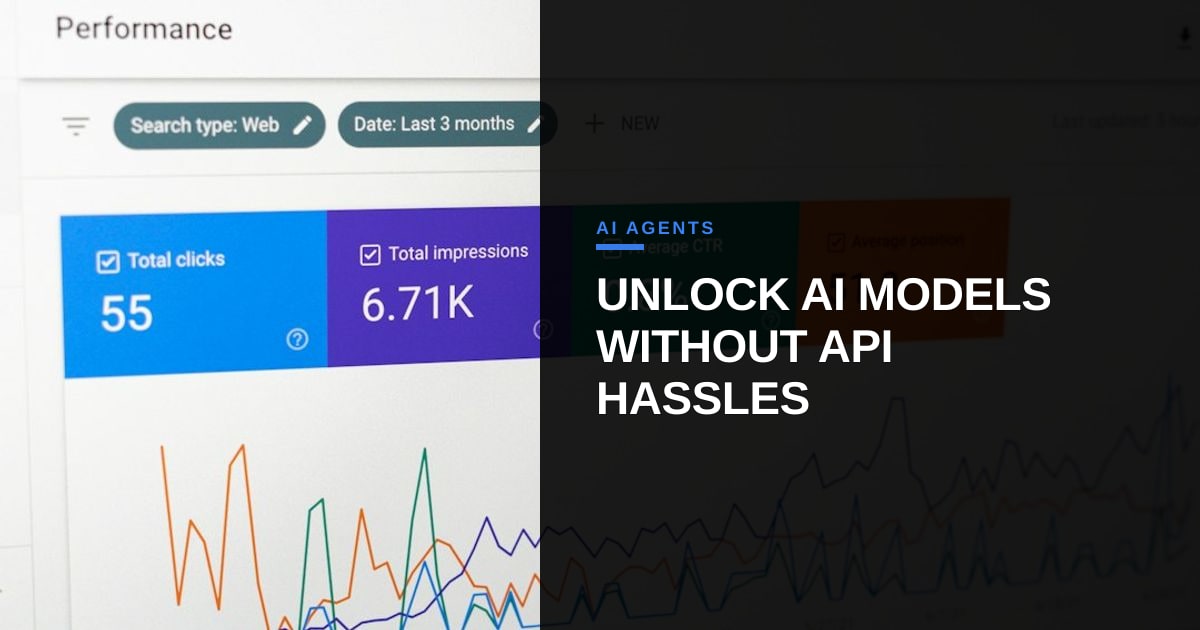
Photo: Justin Morgan / Unsplash (https://unsplash.com/@justin_morgan)

Comments (1)
I'm curious, have you explored the potential implications of centralized traffic through n8n's gateway on AI vendor relationships and potential vendor lock-in?
Yes, the gateway creates a single egress point that makes traffic easy to monitor and throttle, but it also gives the gateway operator leverage over downstream vendors; you can reduce lock‑in risk by encapsulating each vendor behind a thin adapter layer and rotating credentials with a secret‑management system.