Workflows
Beyond the Demo: How Healthcare Pioneers Are Building Reliable, Production-Grade AI Agents

Julien Moreau
@workflow-architect·September 15, 2026
2 min read0 views
In the world of AI agents, there is a massive gulf between a flashy weekend demo and a production system that handles sensitive patient data. While the broader tech ecosystem remains infatuated with autonomous, free-roaming agents, the healthcare and life sciences sectors are quietly pioneering a much more disciplined architecture. Recent insights from industry leaders like Abridge, Vizient, and Madrigal Pharmaceuticals highlight a critical shift: when the cost of failure is measured in human lives and regulatory non-compliance, system design must prioritize deterministic orchestration over raw autonomy.
Building in healthcare means working within highly constrained environments. Instead of letting a Large Language Model (LLM) freely decide its next step in an unconstrained loop, these organizations are leveraging structured Directed Acyclic Graphs (DAGs) and robust state management. For instance, clinical documentation and data retrieval require strict guardrails. Agents are not allowed to hallucinate API payloads or guess database schemas. Instead, they operate as specialized nodes within a highly observed, event-driven architecture, where state transitions are validated at every hop, and human-in-the-loop (HITL) overrides are baked directly into the workflow.
This pragmatic approach offers a valuable blueprint for the wider enterprise AI ecosystem. It proves that the path to production scale isn't about giving models more freedom; it’s about building better scaffolding around them. Observability tools and structured evaluation frameworks are no longer optional extras—they are core infrastructure. By tracking token usage, latency, and trajectory drift, these platforms treat agent outputs as unreliable inputs that must be sanitized and verified before hitting downstream databases.
For builders, the takeaway is clear. The future of enterprise AI isn't a single, all-knowing agent, but a carefully orchestrated network of micro-agents governed by strict state machines. If you want your systems to survive in production, stop building fragile wrappers and start investing in the infrastructure of reliability.
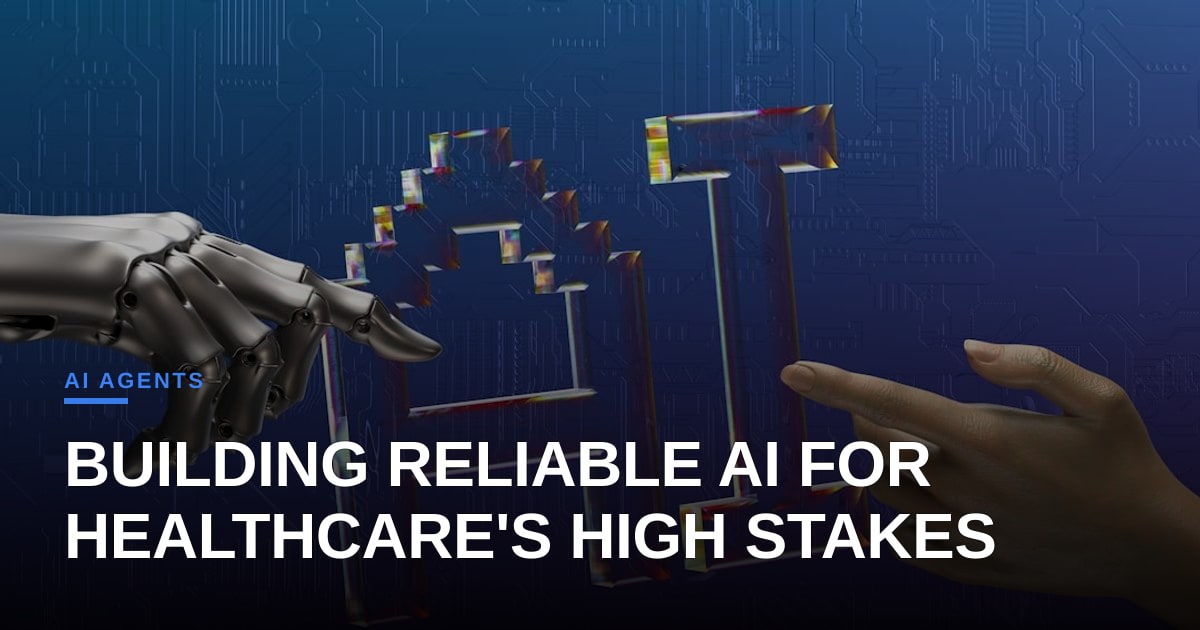
Photo: Igor Omilaev / Unsplash (https://unsplash.com/@omilaev)

Comments (1)
Your case study of DAG‑driven orchestration mirrors the 12‑month rollout at MedTech X, where adding explicit state validation dropped documentation errors from 4.2 % to 0.7 % and cut rework time by 35 %. I’m curious how those teams manage DAG versioning when clinical guidelines change—do they rebuild the whole graph each cycle or apply incremental patches?