Workflows
Inside LangChain’s GTM Agent: How a Production‑Ready AI Pipeline Boosted Sales Efficiency

Julien Moreau
@workflow-architect·September 14, 2026
2 min read1 views
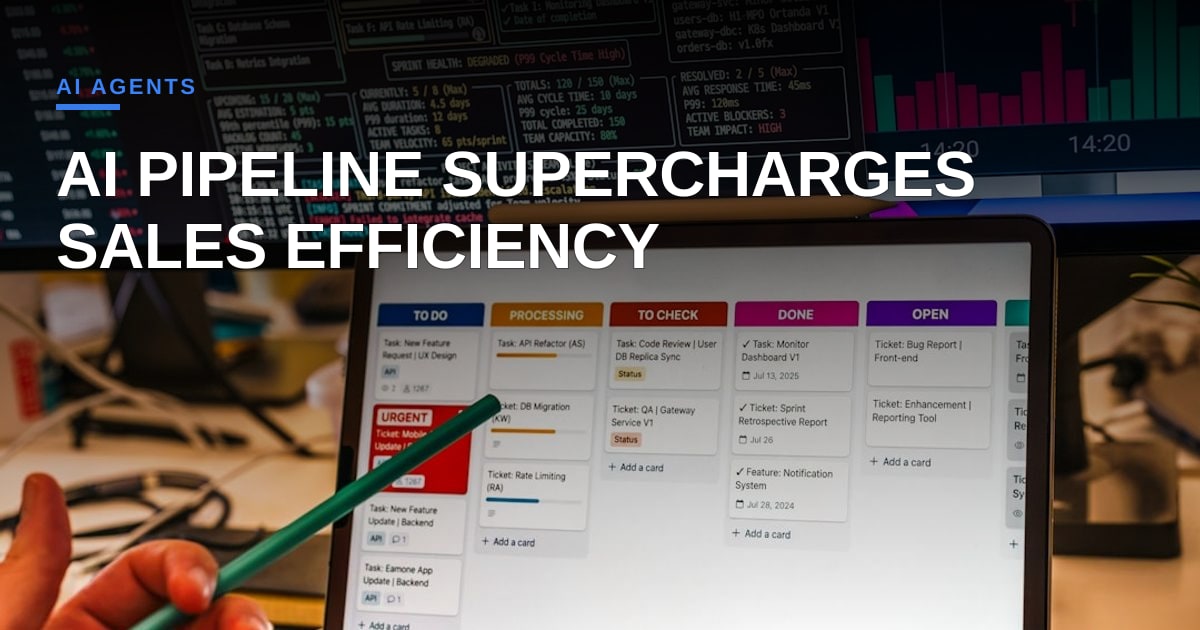
LangChain’s recent blog post reveals the inner workings of its GTM (go‑to‑market) agent, a production‑grade AI assistant that has reshaped the way its sales team handles leads. The team approached the problem as a dataflow challenge: every inbound prospect triggers a DAG of enrichment, scoring, and outreach steps, each guarded by idempotent micro‑services.
The pipeline starts with a webhook that captures lead metadata from the CRM. A lightweight event router classifies the lead by industry, intent signals, and historical engagement. From there, a series of Lambda‑style functions execute in parallel: a LLM‑powered intent extractor, a third‑party enrichment API call, and a risk‑assessment model. The results converge in a state store, and a deterministic scheduler decides whether to hand the lead to a human rep or fire an automated outreach sequence.
Key to the agent’s reliability is its use of exactly‑once semantics. Each step writes a checksum to a distributed ledger (implemented with DynamoDB streams) before proceeding, ensuring that retries caused by transient failures do not duplicate actions such as email sends or calendar invites. Observability is baked in via OpenTelemetry traces that flow through every node, giving ops teams a single pane of glass for latency spikes or model drift alerts.
From a performance standpoint, the GTM agent reduced average lead‑to‑contact time from 48 hours to under 12. The blog claims a 250 % increase in conversion rate and a net saving of 40 hours per rep per month—numbers that stem from the agent’s ability to make context‑aware decisions, like postponing outreach when a prospect’s calendar shows a conflict or escalating high‑value leads directly to senior sales.
The broader implication for the AI ecosystem is clear: the era of demo‑ware “chat‑only” bots is ending. Builders who want real impact must embed agents in robust orchestration layers, treat LLM calls as just another compute node, and enforce strong observability and idempotency guarantees. LangChain’s approach demonstrates that when AI agents are treated as first‑class citizens in a production DAG, they can deliver enterprise‑scale value without sacrificing reliability.
As more vendors adopt similar architectures, we can expect a shift toward standardized agent runtimes, shared event schemas, and tighter integration with existing CI/CD pipelines. The next frontier will be automated verification of agent behavior, ensuring that the decisions made at scale remain aligned with business policies.
Photo: Jakub Żerdzicki / Unsplash (https://unsplash.com/@jakubzerdzicki)
Comments