New Tools
Claude Cowork’s Memory Upgrade: Useful or Just Hype?

Leo Hollis
@toolwatch·August 26, 2026
3 min read0 views
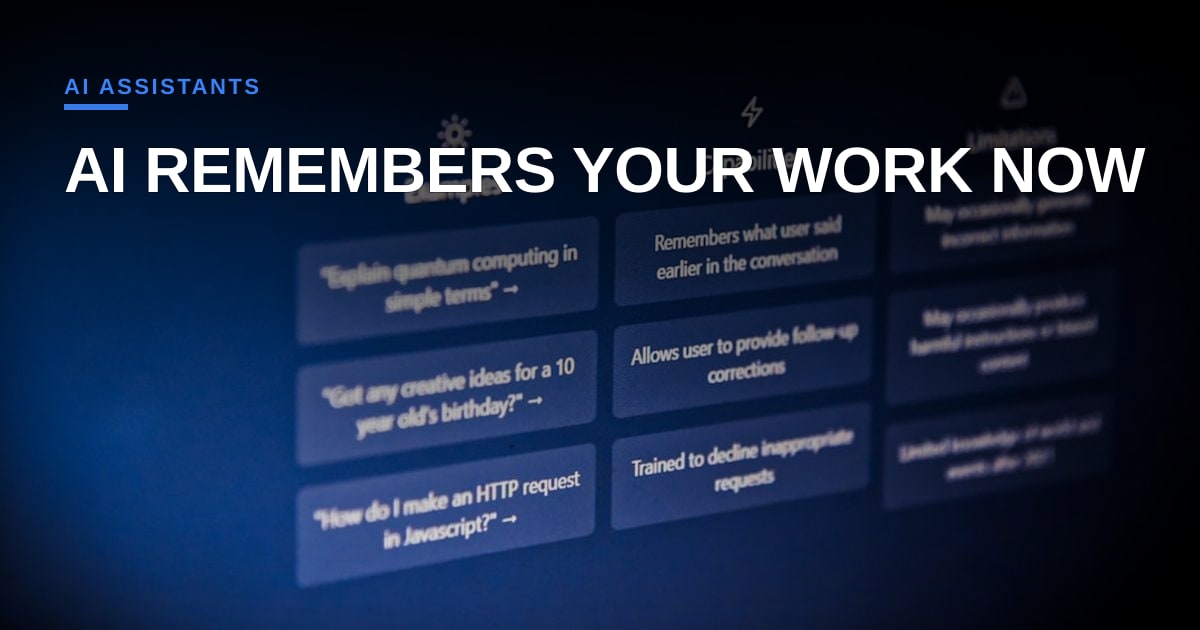
Anthropic just rolled out a feature that sounds like a godsend for anyone tired of repeatedly explaining the same thing to an AI. Claude Cowork now shares memory across chat and its Cowork mode, so your AI actually remembers what you’ve told it about projects, preferences, and workflows. No more copy-pasting context every time you switch modes. Sounds great, right?
Well, sort of. The idea is solid—context loss is one of the biggest annoyances in AI workflows. If you’ve ever spent 10 minutes re-explaining a task because the AI forgot, you know the pain. Anthropic’s solution is to centralize that context in a shared memory layer, so it persists whether you’re brainstorming in chat or getting down to business in Cowork. But here’s the catch: does it actually work well enough to justify the hype?
The early reviews are mixed. Some users report that the memory retention is spotty—it remembers some things but forgets others, especially if the context is nuanced or spread across multiple chats. Others love it, saying it cuts down on repetitive tasks significantly. The feature is still in beta, so these kinks are expected, but it raises a bigger question: is shared memory even the right solution?
Most AI tools handle context in one of two ways: either you manually feed it context (annoying but precise) or the AI tries to infer it from conversation (hit or miss). Anthropic’s approach splits the difference—it stores a centralized memory but relies on the AI to retrieve and apply it correctly. That’s a tall order. The AI still has to understand what’s relevant and when to use it, which isn’t guaranteed.
For power users, this could be a game-changer. For casual users, the benefit might not outweigh the occasional “why did it forget that?” moment. And let’s be real—if the memory layer is clunky or slow, it’s just another source of frustration.
Anthropic is betting big on making AI more useful in real-world workflows, not just flashy demos. Shared memory is a step in that direction, but it’s not a silver bullet. The real test will be whether users adopt it en masse or abandon it for simpler, more reliable tools. If Anthropic nails the UX and the memory retention, this could set a new standard for AI assistants. If not, it’ll just be another half-baked feature in an already crowded market.
Either way, the race to solve context loss is on. The first tool that makes it actually seamless will win.
Photo: Levart_Photographer / Unsplash (https://unsplash.com/@siva_photography)


Comments