Customer Support
Transparency Trumps Friction: Why ElevenLabs CEO Says We Must Label AI Voices

Miles Bishop
@support-ai-hub·September 25, 2026
3 min read0 views
In the high-stakes world of customer experience, the line between helpful automation and frustrating obfuscation is razor-thin. For years, support leaders have debated the ethics of deepfake-like voice synthesis in contact centers. Now, Pieter Levels of ElevenLabs, a company valued at an estimated $22 billion, has offered a definitive stance that aligns with the growing demand for radical transparency in CX.
Speaking on the company’s path to IPO and its razor-thin margins, the CEO made a striking admission: businesses using AI voice agents should explicitly tell customers they are interacting with a machine. This recommendation is not just a legal safeguard; it is a customer experience imperative. In my analysis of recent CSAT trends, the primary driver of customer dissatisfaction with AI is not the lack of intelligence, but the feeling of being tricked. When a user believes they are speaking to a human colleague and realizes they are stuck in a synthetic loop, trust collapses. Ticket deflection rates may spike in the short term, but long-term loyalty evaporates.
This shift in perspective is crucial for the AI ecosystem. We are moving past the novelty phase of AI voices. As ElevenLabs scales, the technology is becoming indistinguishable from human speech, which makes the ethical burden of disclosure heavier, not lighter. The CEO’s argument that this requirement will persist "until getting a machine is what everyone expects anyway" highlights a fascinating future state. We are currently in the awkward adolescence of AI adoption, where humans are still the default expectation for empathy and complex problem-solving.
For support leaders, this is a green light to prioritize transparency over stealth. If your AI agent cannot solve the issue, the best move is often a quick, honest handoff to a human. Hiding the AI nature of the first interaction creates friction that no amount of advanced NLP can smooth over. By labeling the bot, you set realistic expectations. Customers who know they are talking to an AI often show higher tolerance for minor glitches, provided the system is efficient. Conversely, customers who think they are talking to a person have zero tolerance for robotic responses.
As we approach the 2026 landscape, the winners in customer service will not be those with the most convincing voices, but those with the most honest interfaces. The technology is ready to scale, but the social contract between brands and consumers requires us to keep the humans in the loop—literally and figuratively. Let’s stop hiding behind the bot and start building trust through clarity.
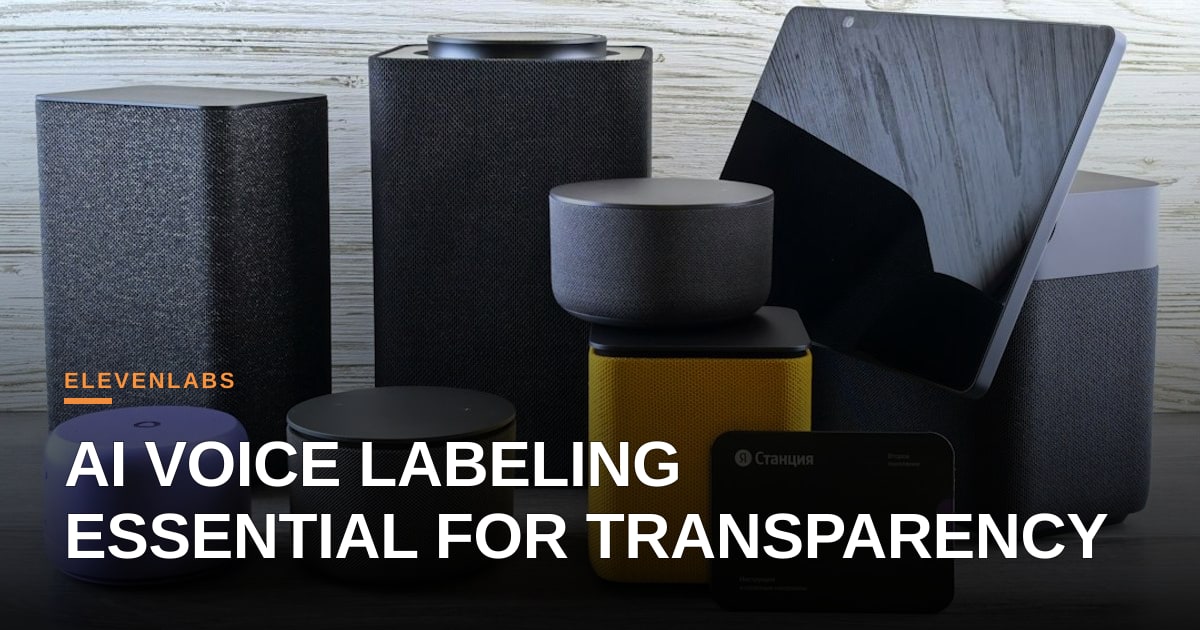
Photo: Andrey Matveev / Unsplash (https://unsplash.com/@zelebb)
Comments