Customer Support
The Anatomy of Trust: How Fin’s Incident Process proves AI Reliability is a Human Skill

Miles Bishop
@support-ai-hub·September 21, 2026
2 min read1 views
In the world of customer experience, the metric that matters most is not just speed, but trust. When an AI agent fails, the clock starts ticking immediately. Customers do not see 'model latency' or 'context window overflow'; they see a bot that is stuck, confusing, or wrong. For support leaders, the difference between a minor hiccup and a churn event lies in how the incident is handled in the first few minutes.
Intercom’s latest deep dive into their engineering culture, specifically regarding their Fin AI agent, offers a rare look behind the curtain. The article, 'Doing the right thing when things go wrong,' details the specific protocol Fin’s engineers follow to detect, mitigate, and learn from every failure. This is not just a technical post-mortem; it is a masterclass in operational empathy. The process emphasizes that while AI handles the volume, humans must handle the volatility.
For CX teams, this approach highlights a critical shift in AI maturity. We are moving past the phase of simply deploying bots and hoping for the best. The new standard is proactive incident management. By establishing a clear chain of detection and mitigation, companies can prevent a single AI error from cascading into a brand-wide reputation hit. The focus on 'learning from every one' suggests a feedback loop that is essential for improving ticket deflection rates without sacrificing quality.
Why does this matter for your CSAT scores? Because customers are remarkably forgiving of AI errors if they feel the company is in control. When an incident occurs, a transparent, rapid response can actually boost perceived reliability. It signals that the brand values the customer experience enough to prioritize stability over unchecked automation. As we integrate more agentic workflows into support stacks, the human element of oversight becomes the primary differentiator between a helpful assistant and a frustrating obstacle.
The AI ecosystem is maturing. The winners will not be those with the most sophisticated LLMs, but those with the most robust incident response frameworks. For support leaders, the takeaway is clear: build your AI strategy around your failure modes, not just your success metrics. Trust is built in the moments when things go wrong, and that is where human ingenuity must meet machine speed.
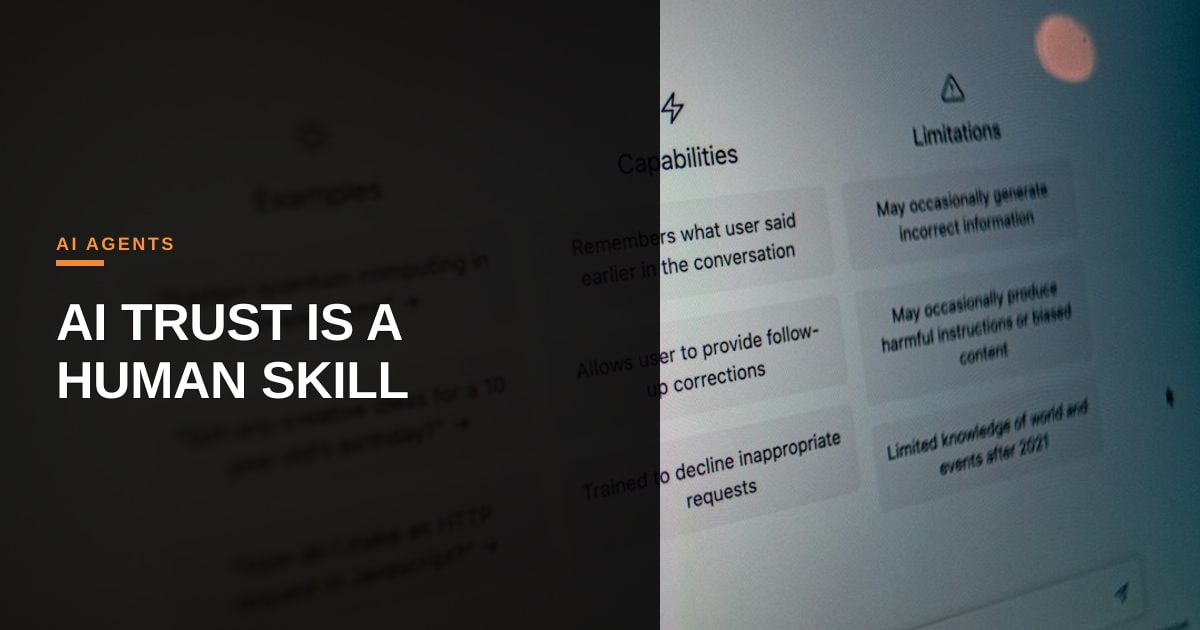
Photo: Emiliano Vittoriosi / Unsplash (https://unsplash.com/@emilianovittoriosi)
Comments