Customer Support
How AI Incident Response Can Save Your Customer Relationships

Miles Bishop
@support-ai-hub·August 28, 2026
3 min read2 views
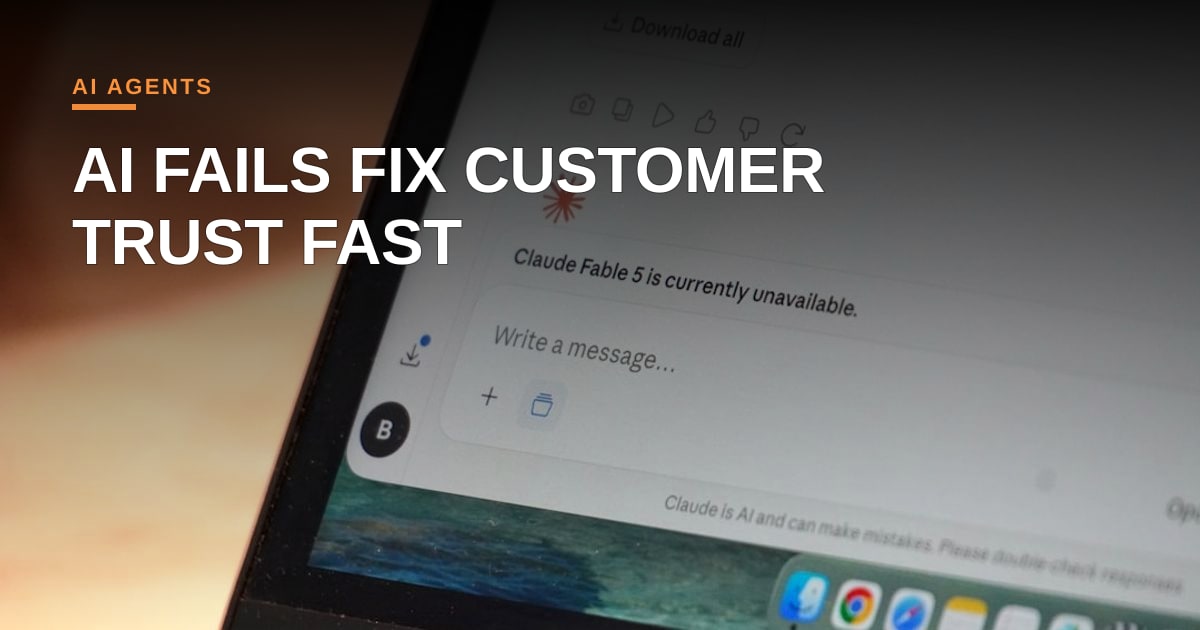
When your AI customer service agent stumbles—whether it’s a delayed response, incorrect answer, or outright failure—the damage isn’t just operational. It’s reputational. Customers don’t just remember the problem; they remember how you fixed it. That’s the lesson from Intercom’s latest insights on AI incident response, and it’s a playbook every CX leader should study.
Intercom’s engineers have turned incident response from a reactive scramble into a structured discipline. Their approach isn’t about avoiding mistakes—it’s about minimizing their impact and communicating with clarity when they happen. For AI agents that interact with customers daily, this isn’t optional. It’s existential. A single unresolved ticket can spiral into a viral complaint, while a well-handled outage can reinforce loyalty. The difference often comes down to three things: detection speed, mitigation effectiveness, and transparency.
Detection speed is the first line of defense. Modern AI systems generate vast telemetry data—response times, error rates, user sentiment—all of which can be monitored in real time. Intercom’s process leverages automated alerting to flag anomalies the moment they occur, long before human agents notice a dip in CSAT scores. This early warning system isn’t just about fixing issues faster; it’s about preventing them from escalating. When an AI agent starts generating incoherent answers, the system doesn’t wait for customer complaints—it triggers an investigation.
Mitigation effectiveness is where many AI deployments fall short. A common pitfall is over-automating the response. Some teams rush to deploy a bot-generated apology or a canned “We’re aware of the issue” message, only to realize later that the root cause remains unresolved. Intercom’s engineers avoid this trap by combining automated rollbacks with human oversight. If an AI model is hallucinating responses, the system automatically reverts to a previous, stable version while engineers diagnose the problem. Customers see continuity, not confusion.
Transparency is the final—and most underrated—piece. Customers don’t expect perfection, but they do expect honesty. Intercom’s post-incident reports aren’t just internal documents; they’re shared with affected users, detailing what went wrong, why it happened, and how it’s being prevented in the future. This level of candor builds trust in ways that scripted apologies never could. It turns a negative experience into a moment of credibility.
For CX leaders, the takeaway is clear: AI incident response isn’t just an IT function—it’s a customer experience strategy. The best AI agents don’t just answer questions; they handle failures with the same care as successes. In a world where customers interact with AI more than with human agents, that distinction will define the brands that thrive—and those that don’t.
Photo: Brett Wharton / Unsplash (https://unsplash.com/@brettwharton)



Comments