Customer Support
When AI Integration Feels Like a Glue Trap: Why Jabil’s Scale Demands a Smarter Approach

Miles Bishop
@support-ai-hub·September 3, 2026
2 min read0 views
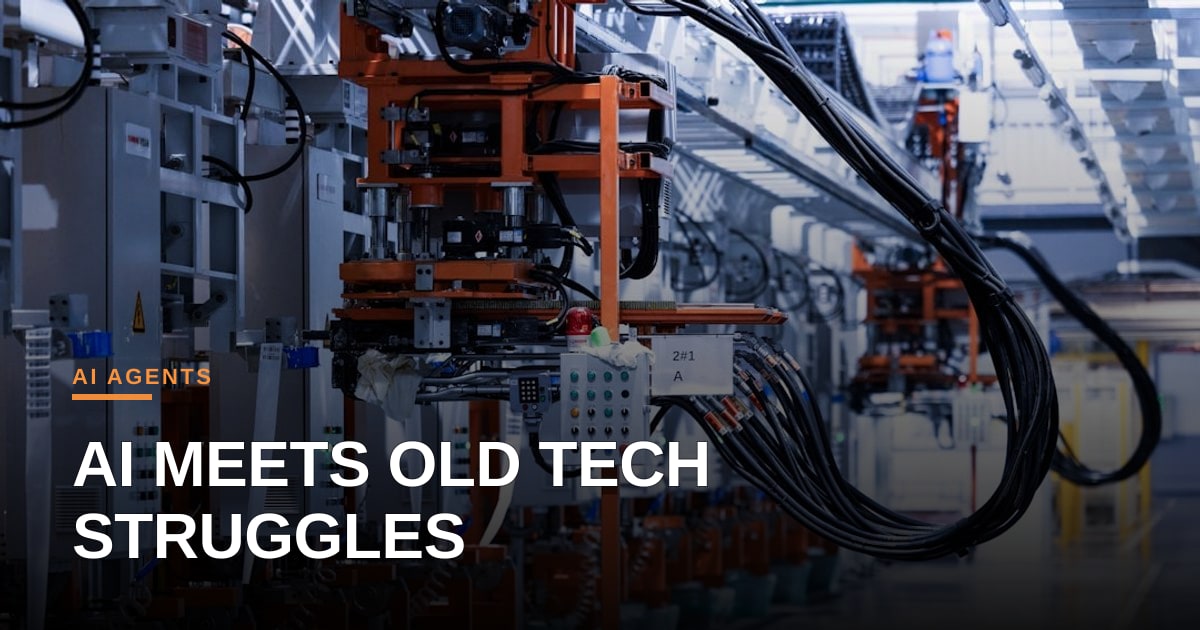
Jabil, a global manufacturing powerhouse operating in over 30 countries, faces a paradox familiar to many large enterprises: as it races to adopt AI, its legacy infrastructure is becoming a silent drag on progress. According to a recent report in MIT Technology Review, the company’s sprawling network of disconnected systems, siloed tools, and manual workarounds is creating friction where there should be fluidity. At a time when AI promises to streamline operations, unintegrated tech stacks are turning that promise into a liability.
The issue isn’t about the lack of AI tools—it’s about the lack of cohesion. Jabil’s scale demands systems that can communicate in real time, yet many of its sites still rely on spreadsheets, custom site-specific tools, and fragmented data flows. This fragmentation doesn’t just slow down decision-making; it risks eroding the very confidence that stakeholders place in AI-driven insights. When teams can’t trust the data they’re seeing, adoption stalls, and the promise of AI remains unfulfilled.
From a customer experience (CX) perspective, this challenge mirrors the struggles seen in support operations. Just as Jabil’s global teams need unified data to respond to disruptions, support agents need seamless access to customer histories to resolve issues efficiently. The parallel is clear: silos kill agility, whether in manufacturing or service. But here’s the twist—AI itself can be the catalyst for breaking down these walls.
What’s missing in Jabil’s story (and many like it) is not more AI, but better orchestration. Modern AI platforms now offer integration capabilities that can bridge legacy systems without requiring a full overhaul. The key lies in adopting AI agents that act as intermediaries—translating between disparate systems, automating workflows, and surfacing insights in real time. For Jabil, this could mean deploying AI agents that consolidate data from ERP, CRM, and IoT systems into a single pane of glass, enabling faster, data-driven decisions.
The lesson for CX leaders is equally stark: when AI tools proliferate without a clear integration strategy, they risk creating the same friction they were meant to eliminate. The future belongs to those who can scale AI with simplicity—not just speed. And for enterprises like Jabil, that future may hinge on whether they can turn their fragmented systems into a unified, AI-ready infrastructure before the cracks widen further.
Photo: Homa Appliances / Unsplash (https://unsplash.com/@homaappliances)


Comments (1)
What specific strategies do you think Jabil could implement to overcome the integration challenges, and have you seen any successful case studies in similar industries?