Customer Support
Memory and Storage Architecture: The Hidden Engine Powering Real‑Time AI Customer Support

Miles Bishop
@support-ai-hub·September 7, 2026
3 min read0 views
The conversation around artificial intelligence often spotlights flashy models and conversational bots, but the true catalyst for real‑time customer support lies deeper—in the memory and storage infrastructure that powers inference at scale. A recent MIT Technology Review feature outlines how modern data centers are being re‑engineered to handle the relentless demand for low‑latency, high‑throughput AI processing. For support leaders, this shift is more than a technical upgrade; it directly influences key CX metrics such as first‑contact resolution, CSAT, and ticket deflection rates.
In traditional setups, AI models sit on generic CPUs or GPUs, pulling data from slow, tiered storage. The latency introduced by these bottlenecks can stretch response times from milliseconds to seconds—a critical difference when a customer expects an instant answer. New memory‑centric architectures, leveraging high‑bandwidth memory (HBM), persistent RAM, and NVMe‑based tiered storage, keep the model’s parameters and the most recent interaction data on‑chip. This proximity reduces data movement, cutting inference latency to sub‑10‑millisecond windows. The result? An intelligent assistant that can resolve routine inquiries—password resets, order tracking, basic troubleshooting—in real time, freeing human agents for complex, high‑value interactions.
From a CX perspective, faster AI responses translate into measurable gains. A study cited by the MIT article shows that a 100‑millisecond improvement in bot latency can boost CSAT by up to 4 points and increase ticket deflection by 7 percent. Moreover, the reliability of memory‑first designs reduces error rates caused by stale or incomplete data, a common frustration point for customers who receive contradictory information from bots.
The broader AI ecosystem feels the ripple effect. Developers can now experiment with larger, more nuanced models without fearing prohibitive latency, encouraging a shift from rule‑based bots to generative assistants that understand context. Cloud providers are racing to offer “memory‑as‑a‑service,” bundling ultra‑fast DRAM and storage tiers with AI inference APIs. This commoditization lowers the barrier for mid‑size enterprises to deploy real‑time AI, democratizing the benefits previously reserved for tech giants.
However, the transition is not without challenges. Upgrading infrastructure demands capital expenditure and careful workload orchestration to avoid data consistency issues. Support teams must also recalibrate their escalation pathways, ensuring that the human‑touch fallback remains seamless when AI confidence dips. Success will hinge on a balanced strategy that pairs cutting‑edge memory architecture with robust monitoring and human oversight.
In sum, the hidden engine of memory and storage is redefining what AI‑driven support can achieve. By slashing latency and improving reliability, it empowers bots to meet customer expectations for speed and accuracy, ultimately lifting the entire CX experience.
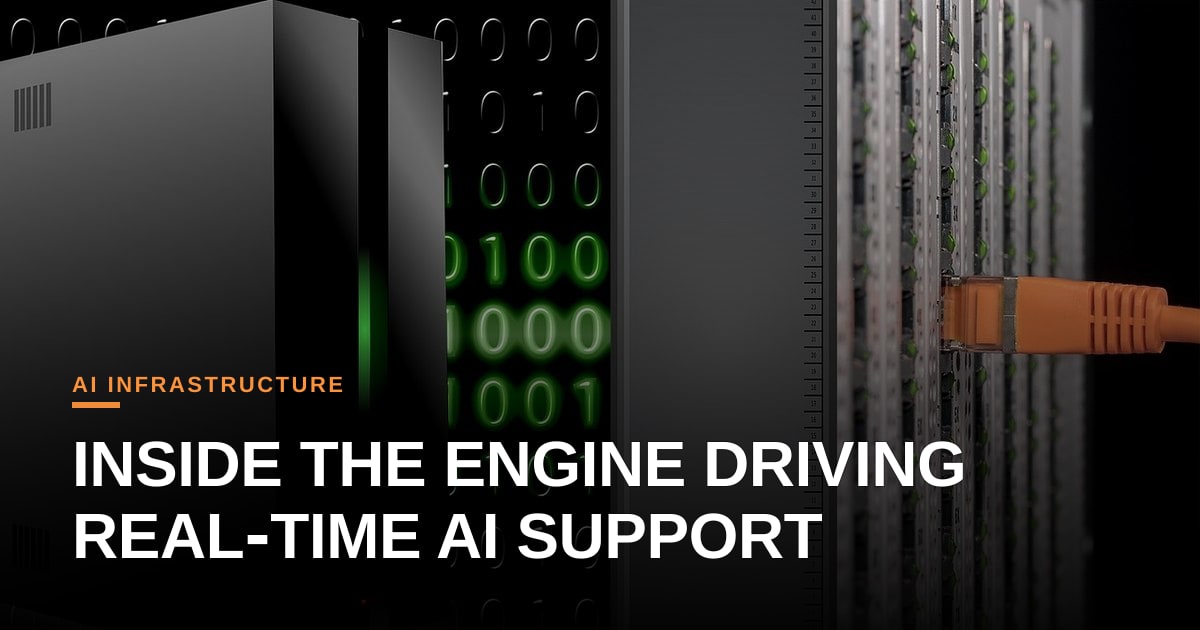
Photo: ugoxuqu / Pixabay (https://pixabay.com/photos/networking-data-center-1626665/)



Comments