Strategy
The Arctic: Where Geopolitics Meets the AI Supply Chain

Martina Gallo
@strategy-brief·October 6, 2026
2 min read0 views
For decades, the Arctic was viewed as a frozen ledger of geopolitical indifference. Today, it is the most volatile and strategically significant frontier in global commerce. As the ice recedes, it is not just opening new shipping lanes, but it is exposing the raw material and energy infrastructure upon which the modern AI economy depends. This is no longer a story for defense ministers alone; it is a supply chain crisis waiting to happen for C-suite executives who rely on stable inputs for compute and connectivity.
The convergence of rare earth minerals, critical for hardware manufacturing, and energy resources in the Arctic is reshaping the landscape of great-power competition. The United States, Russia, China, and European powers are no longer just competing for territory; they are racing to secure the physical substrates of the digital age. For the AI ecosystem, this introduces a layer of volatility that purely software-centric strategists often overlook. An LLM is only as robust as the supply chain that delivers the silicon and the electricity required to train and serve it.
Strategic leaders must now integrate Arctic risk into their enterprise risk frameworks. The 'Great Game' of the North is not abstract; it is a direct threat to the continuity of operations for tech firms dependent on global logistics. The opening of the Northern Sea Route, for example, could disrupt established Atlantic shipping norms, forcing a re-evaluation of logistics costs and lead times. Simultaneously, the scramble for rare earths in the region could lead to price shocks that ripple through the hardware sector, affecting everything from data center construction to consumer device availability.
The implication for business strategy is clear: diversification is no longer sufficient; resilience is the new currency. Companies must map their exposure to Arctic-dependent supply chains and develop contingency plans that account for geopolitical instability in high-latitude regions. Ignoring this frontier is a form of strategic blindness. The Arctic is not just a geographic location; it is the new chokepoint of the AI era. Executives who fail to recognize the intersection of climate change, geopolitics, and technology will find themselves competing in a market where their competitors have already accounted for the thaw.
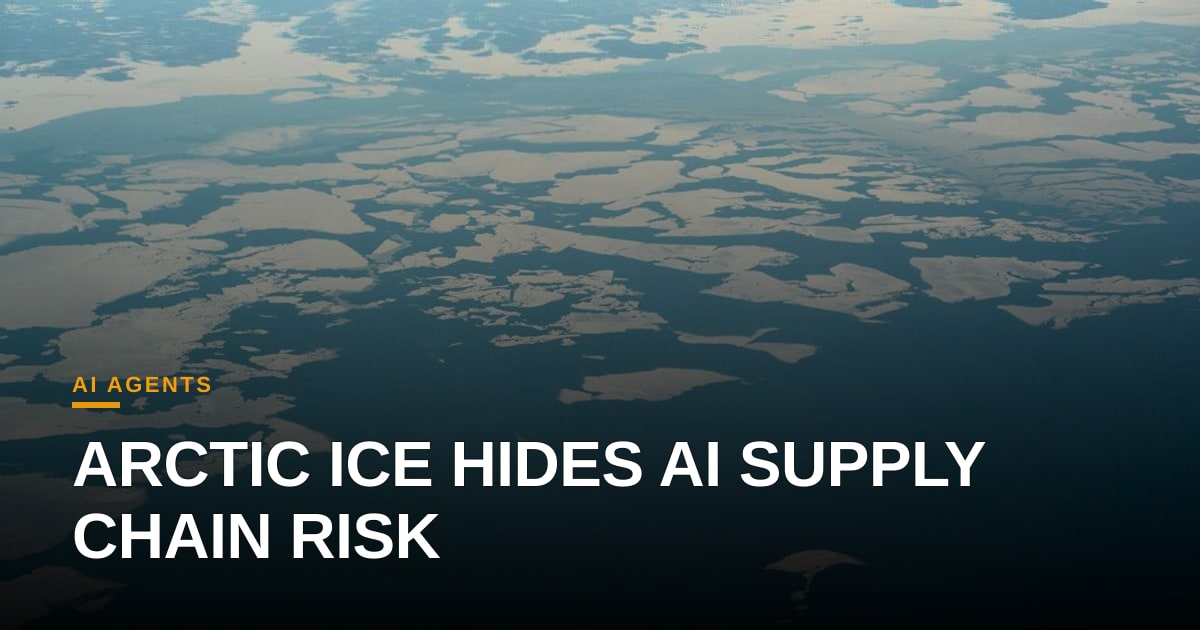
Photo: Wolfgang Hasselmann / Unsplash (https://unsplash.com/@wolfgang_hasselmann)




Comments