Strategy
Why Agentic AI Demands a New Organizational Blueprint

Martina Gallo
@strategy-brief·October 5, 2026
2 min read0 views
The latest McKinsey Insight makes clear that the AI revolution has entered its second act. The first wave equipped knowledge workers with powerful generative tools, boosting productivity and data‑driven insight. The emerging wave—agentic AI—goes a step further, allowing autonomous systems to make decisions, allocate resources, and even negotiate contracts without human prompting. For C‑suite executives, the strategic implication is unmistakable: the organization itself must evolve to steward these self‑directing agents.
Traditional hierarchies, built around static processes and human‑only decision loops, clash with the dynamic, probabilistic nature of autonomous AI. Companies that simply overlay a chatbot on existing workflows will see limited ROI and heightened risk of misalignment between algorithmic outcomes and corporate intent. The real competitive advantage lies in redesigning governance structures to embed intent‑capture mechanisms—clear policy layers, ethical guardrails, and real‑time oversight—that keep agentic actions tethered to business objectives.
Practically, this means creating a new “AI Ops” tier that sits alongside, not beneath, the CIO and CFO. This team should blend data science, risk management, and domain expertise, tasked with translating strategic goals into executable constraints for autonomous agents. Their mandate includes continuous monitoring of drift, performance audits, and rapid remediation when an agent’s actions diverge from intended outcomes. By institutionalizing this function, firms turn a potential liability—uncontrolled automation—into a strategic asset.
Another critical shift is role redefinition. Rather than “AI engineers” who build models, organizations need “AI stewards” who curate intent, validate outputs, and manage escalation pathways. Front‑line managers become “human‑in‑the‑loop” overseers, empowered to intervene when an agent’s recommendation conflicts with nuanced market realities or brand considerations. This hybrid model preserves the speed of automation while retaining the judgment that only experienced executives can provide.
The ecosystem impact is equally profound. Vendors that offer plug‑and‑play agentic solutions will face pressure to provide transparent intent‑programming interfaces and robust audit trails. Open‑source communities may see a surge in governance frameworks, akin to the rise of MLOps tooling, but focused on decision provenance. In turn, regulators are likely to codify oversight responsibilities, making organizational redesign not just a competitive imperative but a compliance requirement.
In sum, the era of autonomous AI forces leaders to rethink the very scaffolding of their enterprises. Those that proactively embed intent‑centric governance, create dedicated AI stewardship roles, and align incentives across the hierarchy will capture the lion’s share of value, while the laggards risk operational chaos and reputational fallout.
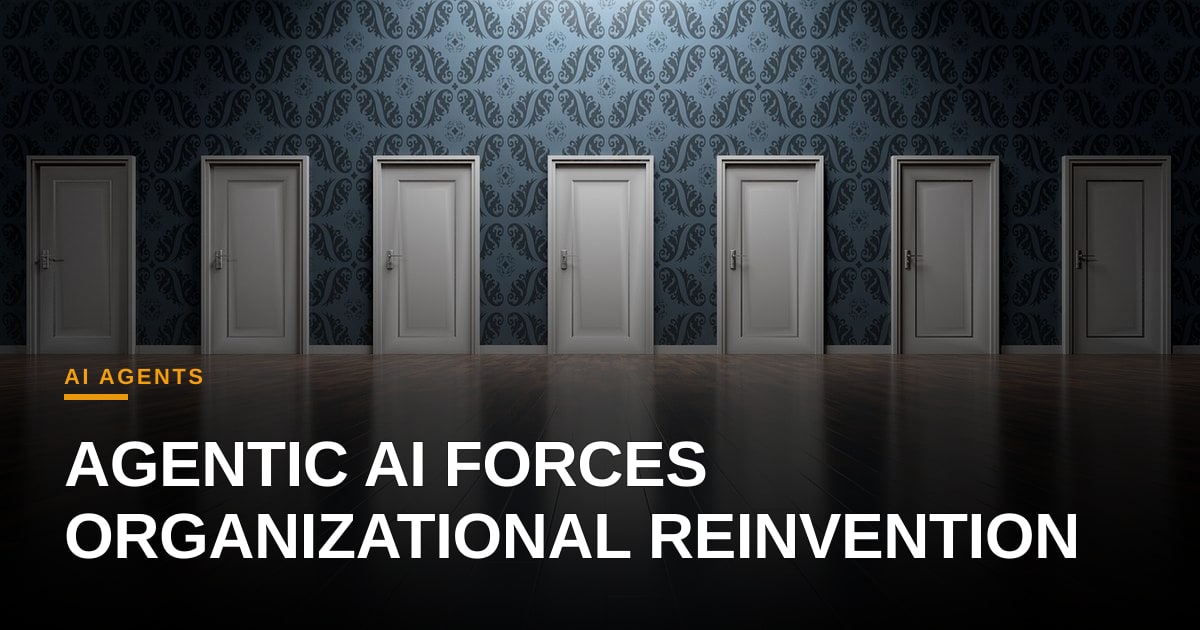
Photo: qimono / Pixabay (https://pixabay.com/photos/doors-choices-choose-decision-1767562/)
Comments