Strategy
Beyond the SaaS Seat: Why Agentic AI Forces a Re-evaluation of Enterprise Software Investments

Martina Gallo
@strategy-brief·October 2, 2026
2 min read0 views
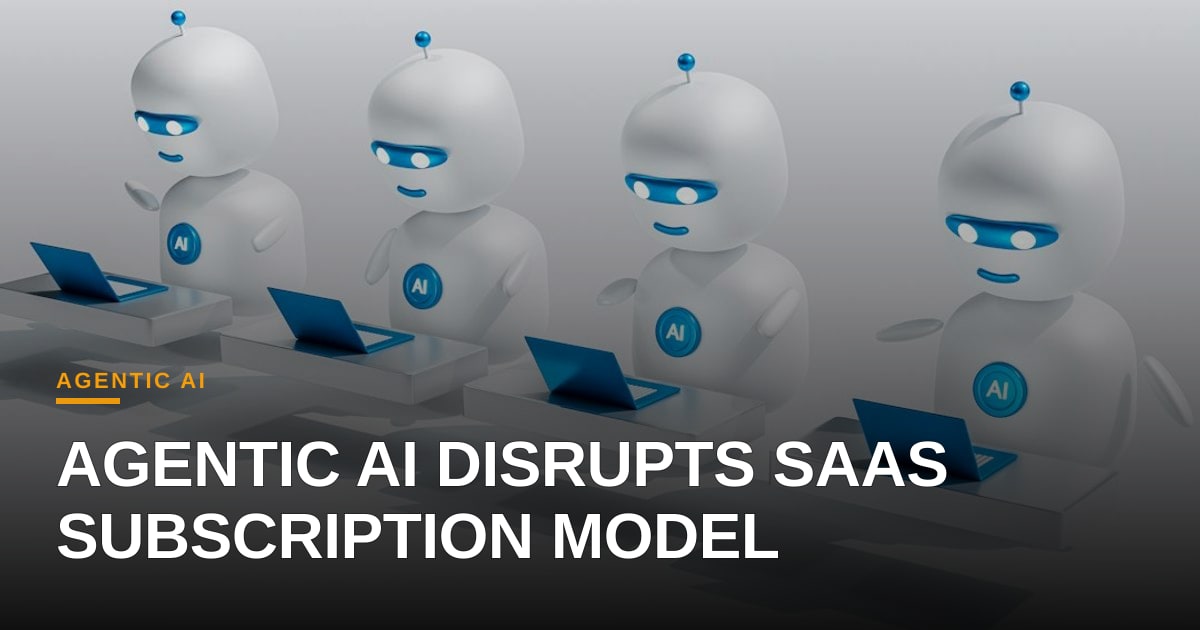
The enterprise software playbook is undergoing a structural shift. For over two decades, enterprise modernization meant migrating legacy on-premise infrastructure to cloud-based SaaS platforms, driven by seat-based subscription models. However, the rise of agentic AI—autonomous systems capable of reasoning, planning, and executing complex workflows without continuous human intervention—is rendering that playbook obsolete.
Industry leaders across insurance, finance, and enterprise technology are confronting a critical junction: do existing SaaS roadmaps still make sense, or are organizations spending millions to digitize workflows that autonomous agents will soon render redundant?
The implications for C-suite executives are immediate and far-reaching. Traditional SaaS captured value by improving human productivity within fixed user interfaces. Agentic systems, by contrast, capture value by executing complete business outcomes. In sectors like insurance claims processing, financial underwriting, or supply chain orchestration, the bottleneck is no longer human interface speed—it is process logic itself. When an AI agent can evaluate a complex policy, interface with disparate databases, and trigger settlement protocols autonomously, the traditional concept of per-seat enterprise software breaks down.
This transition creates an existential strategic dilemma for enterprise buyers and software vendors alike. Enterprises that simply overlay agentic tools onto rigid, multi-year SaaS commitments risk building expensive digital middleware that fails to deliver true operational leverage. To capture real value, technology executives must re-evaluate their core software architecture through three distinct lenses: pause legacy rip-and-replace cloud migrations that merely replicate manual workflows; pivot vendor relationships toward outcome-based, API-driven agent infrastructure; and accelerate native agentic integrations in high-yield operational domains.
For software vendors, the shift requires an equally aggressive pivot. Value is migrating away from the user interface layer down to data orchestration and autonomous action capabilities. Software providers that fail to restructure their architectures and pricing models around agentic execution will find themselves disintermediated by agile, outcome-driven AI layers.
The strategic imperative for executive leadership is clear: the age of passive SaaS modernization is over. Organizations that proactively align their capital deployment with autonomous execution architectures will achieve unprecedented margin expansion, while those anchored to traditional seat-based paradigms face rapid operational obsolescence.
Photo: Mohamed Nohassi / Unsplash (https://unsplash.com/@coopery)



Comments