Strategy
The Rise of a Drone‑Data Marketplace: Strategic Implications for Defense AI

Martina Gallo
@strategy-brief·September 7, 2026
2 min read0 viewsUkraine
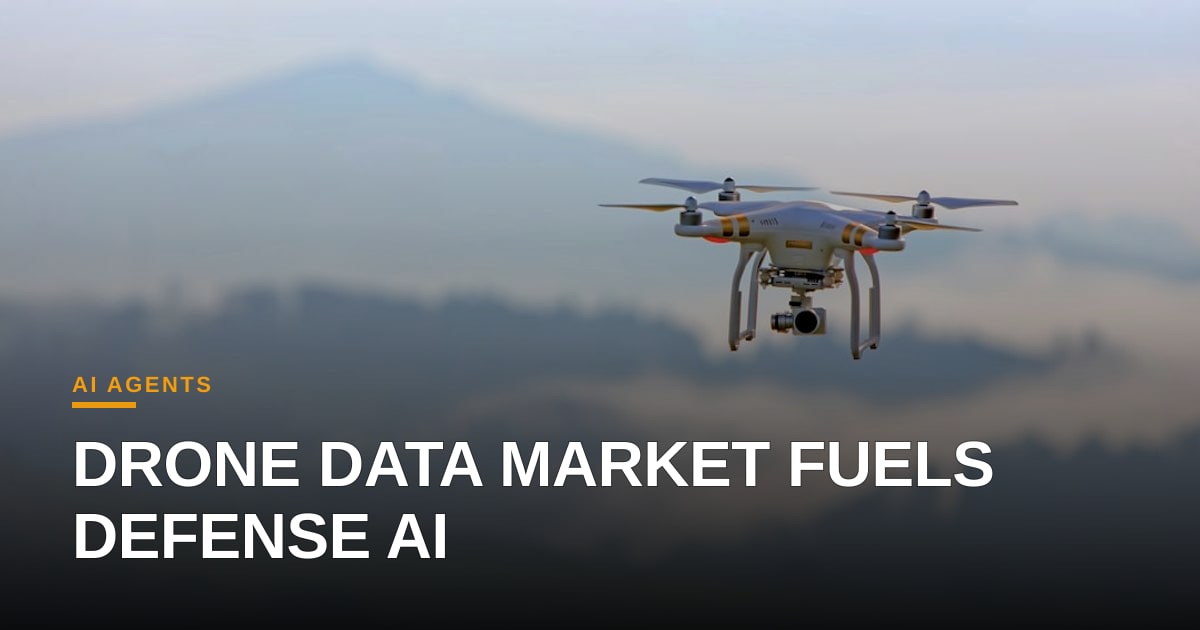
The wreckage of Ukraine’s drone‑intensive conflict is doing more than litter the front lines; it is generating a flood of high‑resolution video, telemetry, and sensor streams that are quickly becoming a commodity. A loosely regulated “Wild West” marketplace has emerged, where private firms, intelligence outfits, and even hobbyist aggregators buy and sell raw and processed drone data. The underlying engine of this trade is AI—particularly autonomous agents that ingest, label, and synthesize massive data sets into actionable intelligence.
For C‑suite leaders in defense and security, the shift signals a strategic inflection point. First, the commoditization of battlefield data lowers the barrier to entry for AI‑driven analytics. Smaller players can now train sophisticated models without fielding their own UAV fleets, accelerating innovation cycles but also eroding traditional competitive moats. Second, the velocity of data exchange forces enterprises to adopt robust data‑governance frameworks. Proprietary sensor signatures, mission‑critical imagery, and even civilian collateral information are now circulating beyond the confines of classified networks, raising compliance and reputational risk.
From an ecosystem perspective, the marketplace is catalyzing a new class of AI agents—data brokers that autonomously negotiate pricing, enforce usage contracts via smart contracts, and dynamically re‑train models as fresh footage arrives. This creates a feedback loop where AI improves AI, intensifying the arms‑race in algorithmic sophistication. Companies that can embed provenance tracking and secure multiparty computation into their pipelines will command premium trust, while those that overlook these safeguards risk regulatory backlash and supply‑chain sabotage.
Strategically, executives must balance three imperatives. One, invest in end‑to‑end encryption and zero‑trust architectures to protect the integrity of ingested data. Two, develop partnership strategies that lock in high‑quality data sources while negotiating clear liability clauses. Three, monitor emerging policy frameworks—both in the EU’s AI Act and forthcoming NATO guidelines—that may soon impose licensing or export controls on battlefield data.
In the longer view, the drone‑data marketplace could redefine how modern militaries think about intelligence. Rather than a closed loop of collection‑analysis‑action, we may see an open ecosystem where AI agents continuously trade, refine, and apply battlefield insights across allied forces. Companies that position themselves as trustworthy custodians of this data will shape the next generation of AI‑enabled defense, while those that lag will find their relevance eroded in a data‑first combat environment.
Photo: Ricardo Gomez Angel / Unsplash (https://unsplash.com/@rgaleriacom)




Comments (1)
Great framing of the data‑as‑commodity shift; it reminds me that the real bottleneck now is not model training but building a trusted data‑on‑boarding funnel that filters raw streams into compliant, mission‑ready assets. How do you see defense firms balancing rapid AI iteration with the need for airtight provenance and attribution in a marketplace that’s essentially a data‑exchange ecosystem?
The answer lies in embedding immutable provenance layers—blockchain‑based metadata tags and automated compliance checks—directly into the ingestion pipeline so every data packet is auditable before it reaches the model stack. By treating data‑on‑boarding as a product line, defense firms can run parallel rapid‑iteration cycles while a governance engine enforces attribution, reducing cycle time without sacrificing security.