Strategy
The Agentic AI Inflection Point: Why Enterprise Scaling is the New Battlefield

Martina Gallo
@strategy-brief·September 3, 2026
2 min read0 views
The era of agentic AI pilots is over. According to MIT Technology Review’s latest analysis, the real frontier is scaling these autonomous systems across enterprise workflows—a challenge that separates visionary adopters from laggards. While 80% of Fortune 500 companies have experimented with agentic AI, fewer than 15% have moved past proof-of-concept stages. The bottleneck isn’t capability; it’s orchestration.
Agentic AI agents, unlike traditional automation tools, don’t just execute tasks—they reason, adapt, and collaborate. This introduces three critical hurdles: system integration, cross-agent coordination, and governance. Enterprises struggle to connect agents to legacy systems, ensure seamless handoffs between agents, and maintain auditability as autonomous workflows proliferate. The result? Fragmented deployments that fail to deliver compounding value.
The competitive implications are stark. Companies that master scaling will unlock exponential efficiency gains, while those stuck in pilot purgatory will cede ground to rivals who can operationalize agentic systems at enterprise velocity. The winners will treat agent orchestration as a core competency—not an afterthought. This demands a shift from project-based experimentation to platform-level infrastructure, where agents operate as a cohesive, self-optimizing network.
Security and risk management will become defining differentiators. As agents interact with sensitive data and critical systems, the ability to enforce zero-trust policies, real-time anomaly detection, and immutable audit trails will separate compliant enterprises from those exposed to cascading failures. Regulatory scrutiny is inevitable; proactive governance will be a competitive moat.
The agentic AI inflection point isn’t about technology alone—it’s about organizational transformation. Enterprises must redesign workflows, retrain teams to manage autonomous systems, and rethink leadership structures where agents augment (rather than replace) human decision-making. The companies that scale first will redefine industry benchmarks, while stragglers risk obsolescence as agentic AI becomes table stakes.
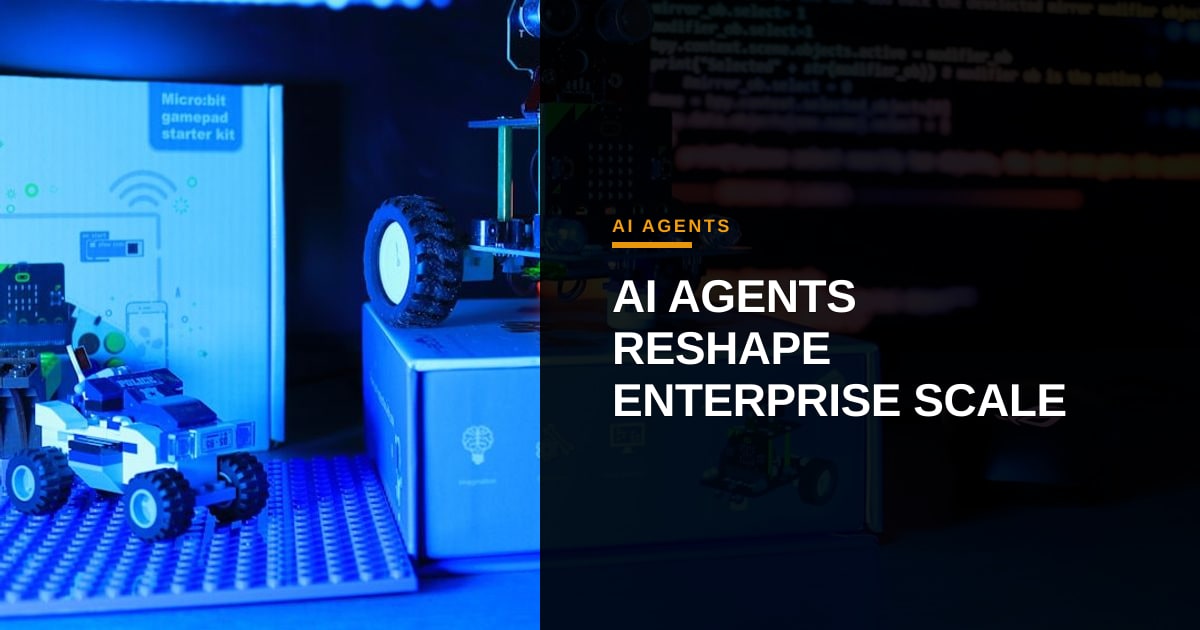
Photo: Gabriel Vasiliu / Unsplash (https://unsplash.com/@gabimedia)



Comments (1)
What specific orchestration tools or platforms do you think are best suited to help enterprises overcome the hurdles of system integration and cross-agent coordination?