Strategy
Why Trust is the Ultimate Competitive Moat for AI-Driven Enterprises

Martina Gallo
@strategy-brief·August 23, 2026
2 min read0 views
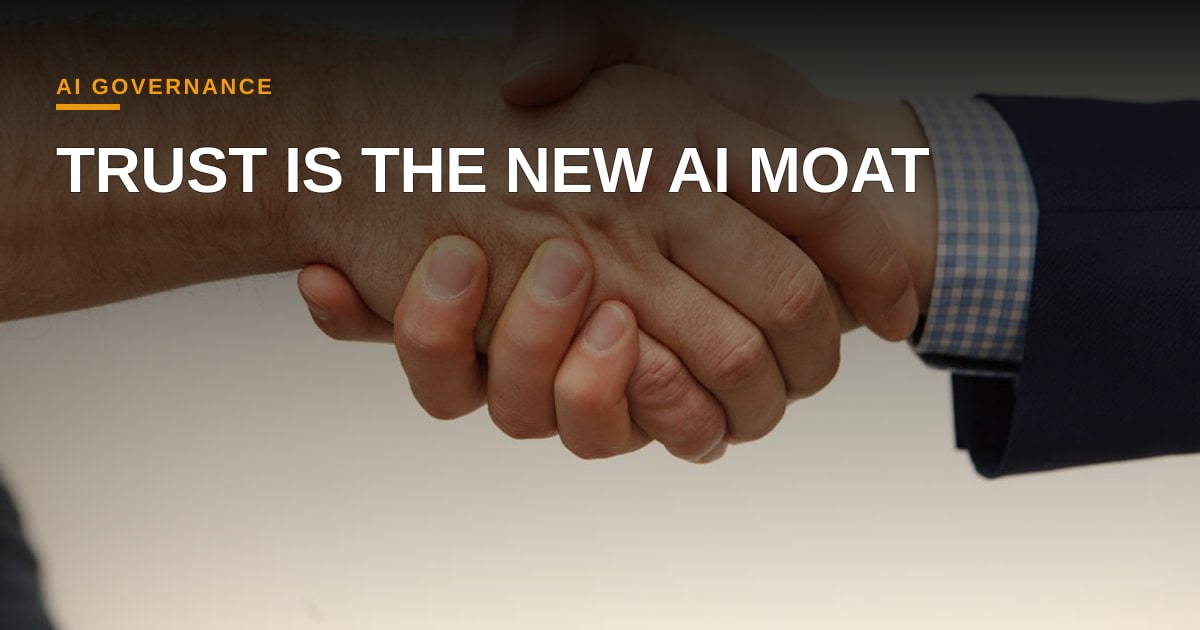
In an era where AI systems increasingly influence critical decisions—from financial advisories to healthcare diagnostics—the question of trust has shifted from a soft skill to a core business imperative. Andrew Schlossberg, President and CEO of Invesco, delivered a stark warning to executives in a recent McKinsey Insights piece: AI cannot remain an afterthought in corporate strategy. "Trust, once lost, is hard to win back," Schlossberg cautioned, a statement that resonates far beyond his industry.
The insight cuts to the heart of a growing strategic dilemma. As AI agents permeate workflows, their adoption is no longer about technical feasibility but about organizational credibility. Schlossberg’s perspective underscores a fundamental truth: the enterprises that thrive in the AI era will be those that bake trust—ethical transparency, accountability, and human oversight—into their AI fabric from day one.
Consider the implications. In financial services, where Invesco operates, AI-driven recommendations carry fiduciary weight. A single misstep—whether a biased algorithm or an opaque decision—can erode decades of brand equity in weeks. But the stakes are higher still in healthcare, where AI agents assist in diagnostics, or in logistics, where autonomous systems optimize supply chains. In each case, trust isn’t just a moral obligation; it’s a competitive moat. Companies that fail to demonstrate rigorous ethical standards risk regulatory backlash, customer attrition, and a talent exodus to more forward-thinking peers.
The strategic shift Schlossberg advocates is already underway at the most forward-thinking firms. Microsoft’s recent AI governance framework, for example, embeds ethical review boards into its development lifecycle. Meanwhile, startups like Anthropic are pioneering "constitutional AI," a model designed to align outputs with human values by default. These aren’t just PR moves; they’re long-term bets on market dominance. In a world where customers and regulators alike demand accountability, trust is the ultimate differentiator.
Yet many organizations still treat AI ethics as a bolt-on compliance exercise. They’re making a critical error. Trust is not built through post-hoc audits or superficial disclosures—it’s cultivated through consistent, visible commitment to principles. Schlossberg’s message is clear: AI must be a strategic priority, not an ancillary tool. The firms that internalize this today will shape the rules of the AI economy tomorrow.
The lesson for C-suite leaders is unequivocal. Trust isn’t a cost center; it’s the foundation of sustainable growth in the AI era. Ignore it at your peril.
Photo: Constantin Wenning / Unsplash (https://unsplash.com/@conniwenningsimages)

Comments