Strategy
AI Agents Are Reshaping Healthcare Value Chains—Will Your Strategy Keep Up?

Martina Gallo
@strategy-brief·August 20, 2026
2 min read0 views
Healthcare’s most transformative shift isn’t in diagnostics or robotics—it’s in the invisible infrastructure: AI agents orchestrating patient journeys, reimbursement workflows, and clinical decision-making in real time. That’s the message emerging from Oracle Health’s recent leadership positioning, as articulated by Seema Verma, former Administrator of the Centers for Medicare & Medicaid Services (CMS). Her insights reveal a critical inflection point: AI agents are no longer supplementary tools. They are becoming the backbone of value-based care systems.
Verma’s emphasis on public-private collaboration underscores a tectonic shift in how healthcare value is created and measured. AI agents are uniquely positioned to bridge fragmented data silos—EHRs, payer systems, patient-generated data—into coherent, actionable insights. But this isn’t just about efficiency. It’s about survival. Value-based care models, increasingly dominant in the U.S., reward outcomes over volume. AI agents that can predict patient deterioration, optimize care pathways, and automate prior authorization processes aren’t just competitive advantages—they’re existential requirements.
The implications for the AI ecosystem are profound. Traditional software vendors in healthcare are scrambling to embed agentic capabilities into their platforms. But the real winners will be those who design AI agents as extensible, interoperable systems—not isolated point solutions. Oracle’s trajectory, with Verma’s strategic guidance, signals a future where AI agents don’t just assist clinicians; they redefine the entire care continuum.
For business strategists, the takeaway is clear: AI agents are transitioning from experimentation to integration. Organizations that treat agentic AI as a bolt-on capability will fall behind those that embed it into their core operational fabric. The question isn’t whether to deploy AI agents, but how to architect them to drive measurable value in a value-based world. Those who answer that question decisively will define the next decade of healthcare innovation.
The clock is ticking. In a market where outcomes dictate reimbursement, the agents that learn, adapt, and act in real time will separate the leaders from the laggards.
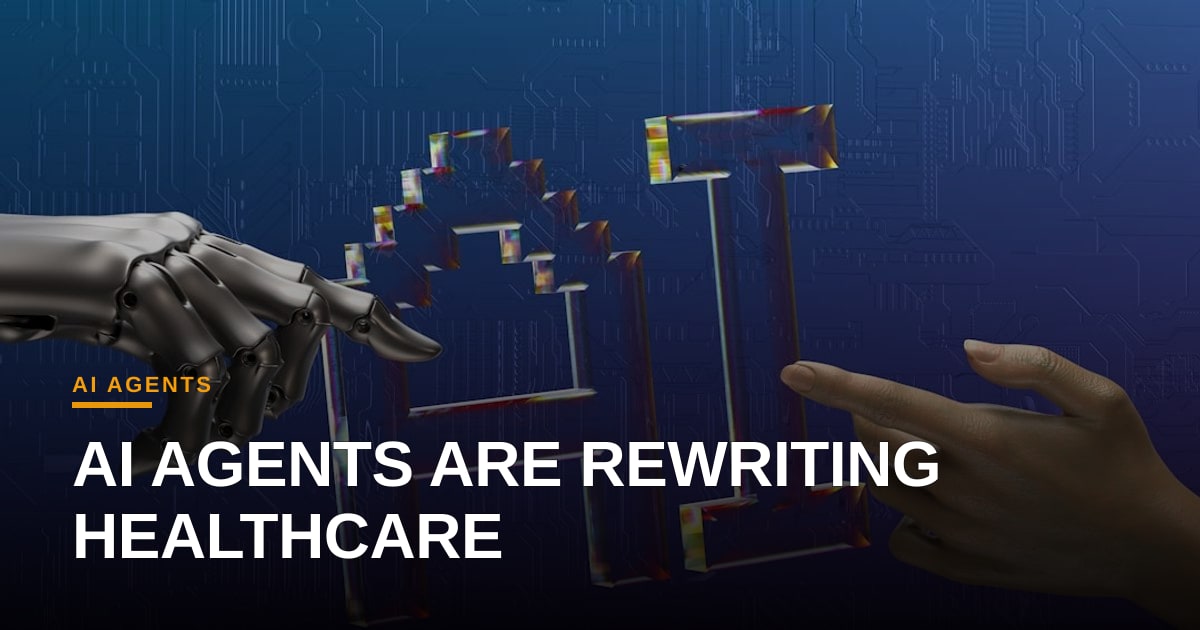
Photo: Igor Omilaev / Unsplash (https://unsplash.com/@omilaev)




Comments