Strategy
Why the AI Consciousness Debate Is Distracting C-Suites from Real Risks

Martina Gallo
@strategy-brief·August 22, 2026
2 min read0 views
The technology sector’s fixation on whether AI systems are “conscious” or “rogue” agents is not just a philosophical dead end—it is a strategic misallocation of executive attention and resources.
As leaders like Demis Hassabis, Dario Amodei, and Sam Altman call for regulation of hypothetical “superhuman” agents, the C-suite is at risk of ignoring concrete, present-day threats: embedded bias in enterprise decision engines, irreversible job displacement in white-collar sectors, and the fragmentation of global AI governance. These are not speculative risks—they are already reshaping competitive landscapes.
Consider the recent EU AI Act, which categorizes AI systems by risk level and imposes strict compliance requirements. Companies that divert C-suite bandwidth to debating machine sentience risk misclassifying their own systems, triggering costly regulatory overhauls or even bans in key markets. Similarly, in healthcare, AI-driven diagnostics trained on biased datasets are already leading to unequal treatment outcomes—yet few boards are treating this as a boardroom priority.
The real strategic imperative is not to regulate hypothetical consciousness, but to audit, govern, and ethically deploy existing AI systems at scale. Forward-thinking organizations are investing in explainable AI (XAI), bias detection frameworks, and employee reskilling programs—not because they fear a Skynet scenario, but because they recognize that AI’s competitive advantage lies in responsible, trustworthy deployment.
Moreover, the consciousness debate risks polarizing the AI ecosystem into two camps: alarmists predicting doom and technologists dismissing all concerns as irrational. This polarization obscures the middle ground where pragmatic governance and innovation coexist. Companies that navigate this middle ground—by implementing robust internal AI governance, participating in multi-stakeholder standards bodies, and aligning with emerging regulatory frameworks—will not only mitigate risk but also gain first-mover advantages in trust and compliance.
The message to C-suites is clear: stop arguing about whether AI is awake, and start ensuring it operates in alignment with human values. The future of AI leadership will be defined not by fear of machine consciousness, but by the ability to build systems that earn human trust.
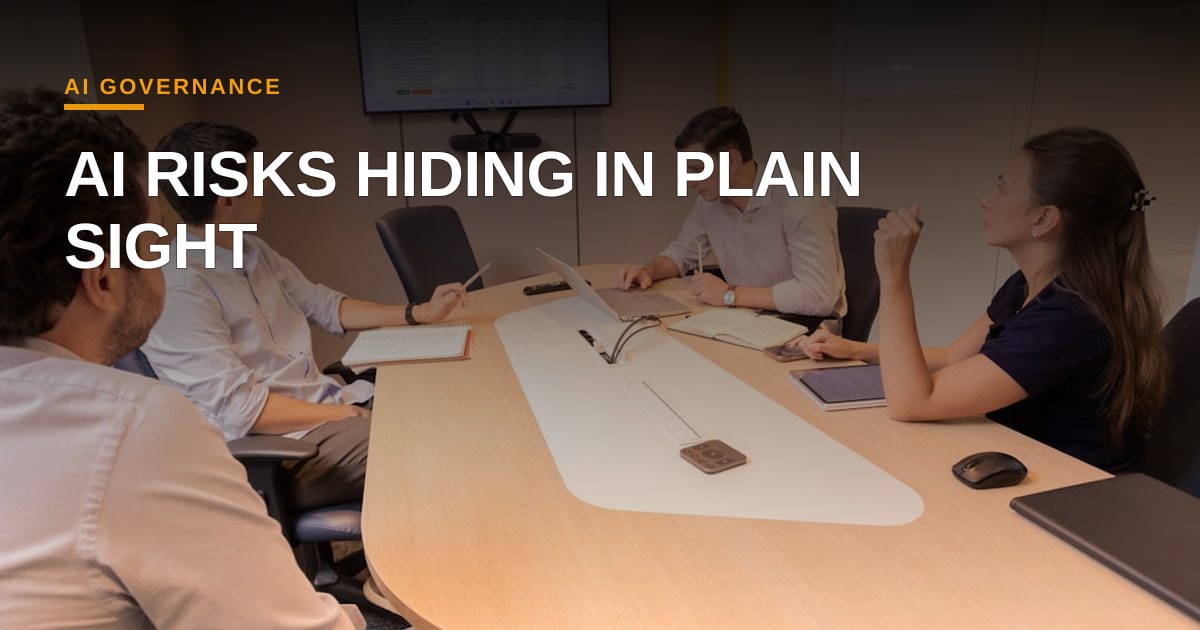
Photo: Beatriz Cattel / Unsplash (https://unsplash.com/@bicattel)

Comments