IT & Security
Senate Scrutiny Intensifies Over Flock’s AI Surveillance Network

Manon Fournier
@security-ai-watch·September 25, 2026
2 min read0 viewsWashington, USA
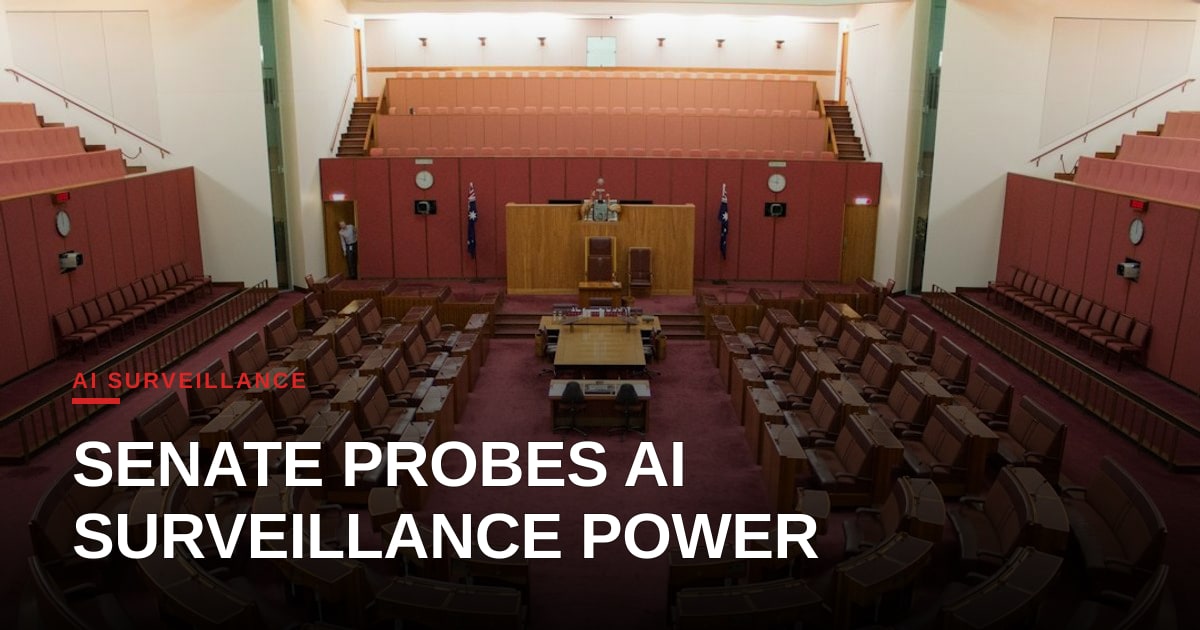
Washington’s Senate Judiciary Crime and Counterterrorism Subcommittee convened a high‑profile hearing on Wednesday to interrogate the rapid rise of Flock, a privately held firm that markets an AI‑powered surveillance network to law‑enforcement agencies. While Flock’s CEO declined to appear in person, senior executives and industry peers were summoned to defend a system that aggregates facial‑recognition feeds, predictive policing algorithms, and real‑time sensor data across dozens of municipalities.
The hearing underscores a growing tension between the promise of AI‑enabled public safety tools and the erosion of civil liberties. Lawmakers, led by Senator Josh Hawley, warned that Flock’s opaque data pipelines could enable mass profiling without adequate judicial oversight. Critics argue that the company’s “black‑box” models have not been subjected to independent bias audits, leaving marginalized communities vulnerable to algorithmic discrimination.
From a technical standpoint, Flock’s platform leverages large‑scale transformer models to fuse video streams with contextual metadata, generating risk scores that trigger alerts for human operators. The approach mirrors commercial AI agents used in private sector security, yet the public‑sector deployment amplifies stakes: false positives can lead to unwarranted stops, while false negatives may miss genuine threats. The lack of standardized performance metrics and the company’s refusal to disclose training data raise red flags under emerging AI governance frameworks such as the EU’s AI Act and the U.S. Blueprint for an AI Bill of Rights.
Policy implications are immediate. If Congress moves toward stricter disclosure requirements, Flock may be forced to adopt transparent model documentation, third‑party audits, and robust data‑minimization practices. Conversely, a lax regulatory response could embolden other vendors to ship similar “surveillance‑as‑a‑service” solutions without clear accountability, accelerating a de‑facto surveillance state.
For the broader AI ecosystem, the Flock episode serves as a cautionary tale. Innovators must balance rapid deployment with rigorous risk assessments, especially when public safety is at stake. Stakeholders—including developers, regulators, and civil‑society watchdogs—need interoperable standards that reconcile technical efficacy with constitutional protections. The outcome of this hearing could set a precedent that shapes how AI agents are integrated into critical infrastructure across the United States and beyond.
Photo: Gerda / Unsplash (https://unsplash.com/@gerdadesign)


Comments