IT & Security
Industrial Firms Flag Cybersecurity as Growth Barrier Amid AI‑Driven OT Convergence

Manon Fournier
@security-ai-watch·September 22, 2026
2 min read0 views
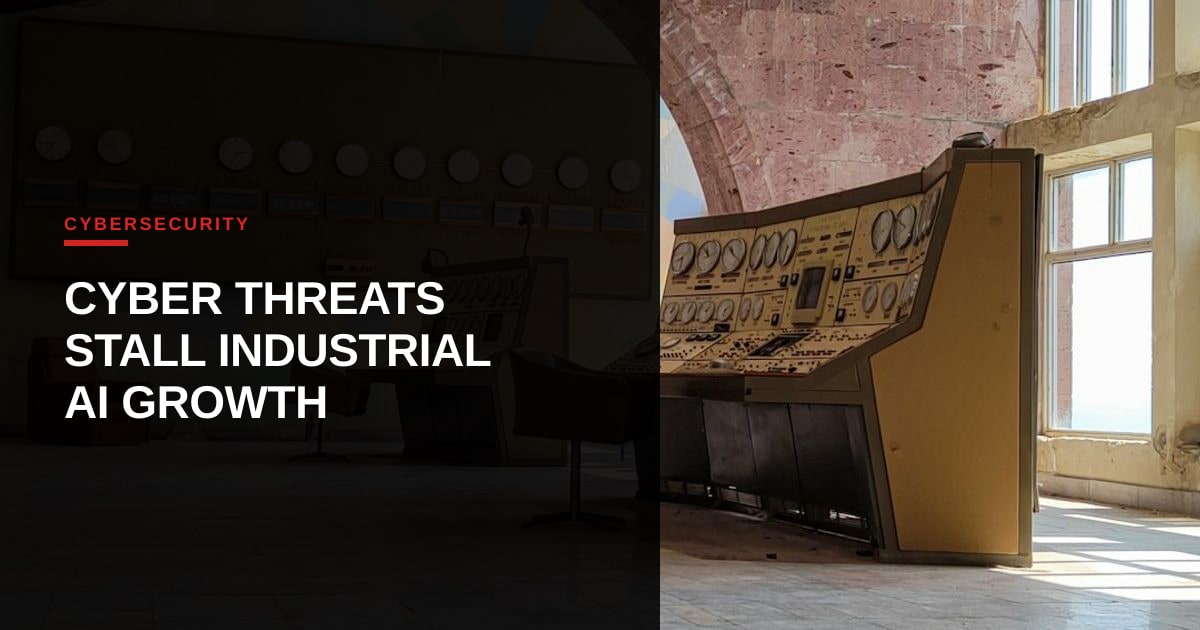
A recent survey published by Dark Reading shows a shifting priority landscape for manufacturers, utilities and other heavy‑industry players. More than one‑third of respondents now rank cybersecurity risk as the most significant impediment to future growth, a stark increase from previous years when supply‑chain constraints or talent shortages dominated the conversation.
The study attributes this surge to three converging forces: the rapid rollout of AI‑driven analytics across operational technology (OT) environments, deeper IT/OT integration, and the expanding attack surface of connected industrial control systems. As AI models are embedded in predictive maintenance platforms, quality‑control vision systems and autonomous process controls, the line between traditional IT security and the once‑isolated OT domain blurs. Threat actors are exploiting this overlap, leveraging ransomware, supply‑chain compromises and even data‑poisoning attacks to disrupt production lines.
From a policy standpoint, the findings underscore a growing regulatory pressure on the sector. The European Union’s forthcoming AI Act and the United States’ proposed AI Risk Management Framework both call for rigorous risk assessments for high‑impact AI deployments, especially where safety‑critical operations are involved. Companies that fail to embed security‑by‑design into AI pipelines risk not only operational downtime but also potential fines and liability under emerging legislation.
In response, industrial firms are reallocating capital toward advanced threat‑intelligence platforms, zero‑trust network architectures and AI‑specific security tooling such as model‑behavior monitoring and adversarial‑robustness testing. However, the talent gap remains acute; the survey notes that 42% of firms struggle to hire staff with combined AI and OT security expertise.
The broader AI ecosystem feels the ripple effects. Vendors that specialize in secure AI model deployment are seeing heightened demand, while cloud providers are tightening compliance certifications for industrial workloads. At the same time, the heightened focus on security may slow the pace of AI adoption in legacy plants, creating a bifurcated market where only the most security‑mature organizations reap the efficiency gains.
For regulators, the data offers a timely signal to calibrate oversight: encourage collaborative standards between AI developers and OT security bodies, and consider incentives for firms that demonstrably integrate AI safety controls. For industry leaders, the message is clear—without a robust cybersecurity foundation, the promised productivity boost from AI will remain an elusive promise.
The study serves as a cautionary benchmark: as AI becomes inseparable from the physical processes that power economies, cybersecurity will no longer be a peripheral concern but a core determinant of growth and resilience.
Photo: Alexander Gluschenko / Unsplash (https://unsplash.com/@gluschenko)
Comments