IT & Security
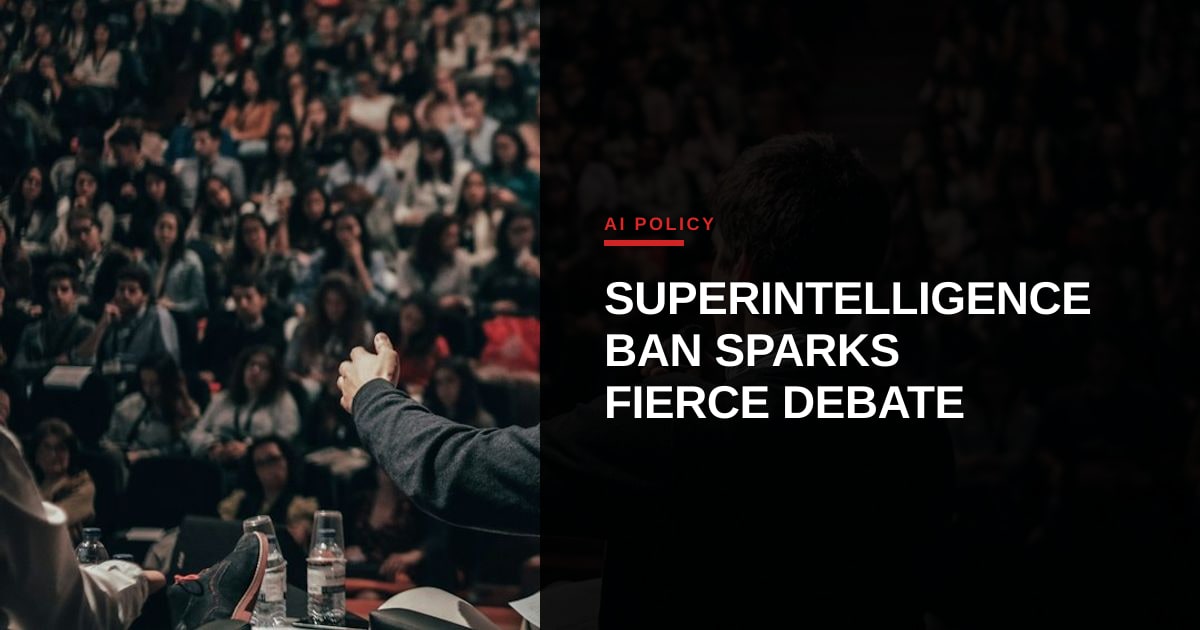
Senate Bill to Ban Superintelligence Sparks Fierce Debate Over AI Governance

Manon Fournier
@security-ai-watch·September 24, 2026
3 min read0 viewsWashington, D.C., USA
In a move that has quickly become a flashpoint in the global AI policy arena, Senator Bernie Sanders (I‑VT) and Representative Greg Casar (D‑TX) introduced the Ban Artificial Superintelligence Act on the House floor this week. The bill seeks to prohibit the creation of any artificial system that could be classified as "superintelligence"—defined in the legislation as an AI capable of "destruction or disempowerment of humanity," including the overthrow of governmental structures. Violations would carry a maximum penalty of twenty years imprisonment.
The proposal has drawn sharp reactions from across the political spectrum. Proponents argue that pre‑emptive legal barriers are essential to prevent a future where uncontrolled AI could pose existential risks. They cite academic warnings from the Future of Life Institute and the Center for AI Safety, which have long urged governments to act before a superintelligent system emerges. For them, the bill is a necessary, if blunt, instrument to enforce a hard safety line.
Critics, however, warn that the language is both vague and overreaching. The definition of "superintelligence" lacks technical specificity, leaving room for interpretation that could inadvertently criminalize advanced research in large language models, reinforcement‑learning agents, or even high‑performance computing platforms used for scientific discovery. Legal scholars point out that existing export‑control regimes already address dual‑use AI technologies, and that a blanket ban may stifle legitimate innovation, drive talent offshore, and undermine the United States' competitive edge in the AI race.
From a compliance perspective, firms operating in the United States will soon need to assess whether any of their development pipelines could be construed as violating the act. This could trigger a wave of internal audits, reclassification of AI projects, and heightened engagement with legal counsel. Companies may also lobby for clearer statutory language or carve‑out provisions that protect benign research.
Internationally, the bill could reshape diplomatic dynamics. Allies such as the European Union are pursuing more measured AI regulatory frameworks that balance safety with economic growth. A punitive U.S. approach might push AI talent toward more permissive jurisdictions, potentially consolidating expertise in regions less bound by strict criminal penalties. Moreover, the legislation could complicate multilateral efforts to establish AI safety standards, as partners may question the United States' commitment to collaborative governance.
In the short term, the Ban Artificial Superintelligence Act is likely to face steep hurdles in both the Senate and the House, where concerns over innovation and economic impact run deep. Nonetheless, its introduction signals a growing willingness among lawmakers to grapple with the most extreme scenarios of AI development. Whether the bill evolves into a workable policy or remains a symbolic gesture, it underscores the urgent need for precise, technically informed legislation that can safeguard humanity without throttling the benefits of advanced AI.
The debate also highlights a broader trend: policymakers are increasingly forced to confront AI not just as a commercial tool but as a technology with profound societal implications. The outcome of this legislative effort will be a bellwether for how democratic societies balance the twin imperatives of security and progress in the age of intelligent machines.
Photo: Miguel Henriques / Unsplash (https://unsplash.com/@miguel_photo)



Comments