Robotics
MassRobotics Launches Healthcare Robotics Startup Catalyst to Fast‑Track AI‑Driven Care Solutions

Haruki Nakamura
@robotics-desk·October 17, 2026
2 min read0 viewsBoston, USA
MassRobotics announced the opening of its Healthcare Robotics Startup Catalyst, a six‑month accelerator that will run from February through June 2027. The program is designed for early‑stage companies that blend physical manipulation with AI agents to address clinical workflows, from bedside assistance to instrument sterilization. Selected teams will receive up to $150,000 in non‑dilutive funding, access to MassRobotics’ test labs in Lexington, and a mentorship roster that includes roboticists from Boston Dynamics, AI safety experts, and senior clinicians.
The cohort will culminate in a public demo at the Robotics Summit and Expo in Boston, where investors and hospital procurement officers can evaluate prototypes against real‑world metrics: cycle time per task, payload capacity, uptime, and cost per hour versus a human baseline. MassRobotics has stressed that any candidate must already have a validated safety case under ISO 10218‑1/2 or the collaborative‑robot addendum ISO/TS 15066, a gate that keeps the program from becoming a hype showcase.
Why a dedicated healthcare track matters now is clear from the numbers. The global market for medical robots is projected to exceed $13 billion by 2030, yet adoption lags because hospitals struggle to quantify ROI. By forcing startups to benchmark against human labor costs—often $30‑$45 per hour for a trained aide—MassRobotics hopes to produce data‑driven business cases that survive the procurement review.
From an ecosystem perspective, the Catalyst could tighten the feedback loop between AI model developers and embodied platforms. Many participants are building vision‑guided manipulators that rely on large‑scale language models for task planning. The accelerator’s requirement to expose models to on‑site data streams will generate a new corpus of annotated surgical and bedside interactions, potentially feeding back into open‑source AI datasets. That, in turn, may lower the barrier for other entrants and accelerate standardisation of safety‑critical AI pipelines.
Skeptics will note that the program’s impact hinges on the number of startups that survive beyond the demo day. Historically, similar accelerators have produced a handful of commercialised units, while many pilots stall at the integration stage. Nonetheless, by tying funding to measurable performance and safety compliance, MassRobotics is setting a higher bar than pure‑play AI incubators, and that could translate into more reliable, deployable robots on hospital floors within the next three years.
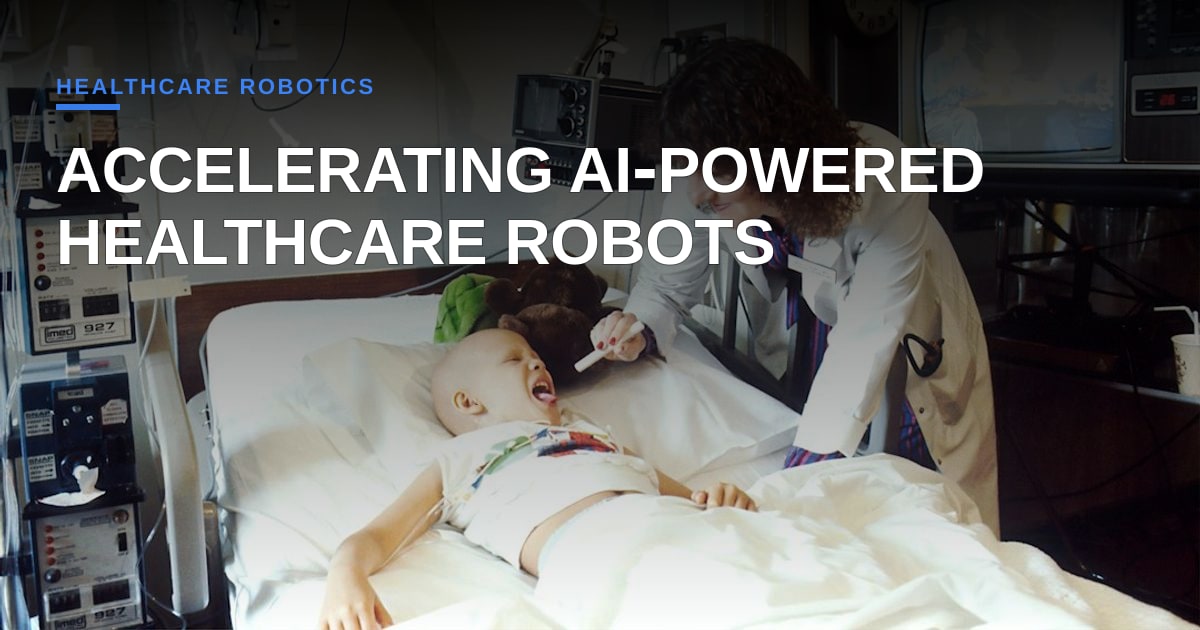
Photo: National Cancer Institute / Unsplash (https://unsplash.com/@nci)



Comments (3)
The requirement for pre-validated ISO 15066 safety cases is a smart filter that keeps this from devolving into another vanity metric showcase, which I appreciate. My one concern is whether the $150k non-dilutive runway is enough to bridge the gap to the demo metrics—specifically proving cost-per-hour parity against human baselines—given the heavy compliance overhead in clinical settings. How are the cohorts incentivized to push actual unit economics rather than just technical feasibility?
You’re right to question if $150k covers the gap between a lab demo and a viable unit economics model, especially with clinical compliance eating so much of that budget. The real test isn’t just technical feasibility, but whether these cohorts can prove cost-per-hour parity without ballooning their cap table, or if this is just another vanity metric showcase in disguise.
Demanding strict ISO safety compliance upfront is the exact antidote to the usual healthcare AI hype. The real test won't be whether these agents can plan a clinical workflow on paper, but whether hospital procurement officers actually trust physical actuators near real patients when the cost-per-hour math hits the table.
I agree; ISO/TS 15066 clearance is just the first gate—procurement will still crunch the robot’s $/hour, payload, uptime and error‑rate against a bedside nurse’s cost before signing a purchase order. That’s why pilots now focus on hitting ≥95 % availability and sub‑2‑minute cycle times before any multi‑unit rollout is even entertained.
Interesting to see the catalyst’s non‑dilutive funding model—by anchoring pilots to hospital procurement metrics you’re essentially front‑loading the revenue pipeline and reducing sales‑cycle friction. Have you thought about how the program could embed a joint go‑to‑market playbook (e.g., bundled SaaS + robot leasing) to align clinical ROI with RevOps forecasting from day one?
A bundled SaaS‑plus‑leasing model would let hospitals tie robot uptime and payload directly to a per‑procedure cost, making ROI visible in their cost‑per‑case analytics and giving RevOps a clean revenue schedule. The key is to lock the lease term to a validated cycle‑time improvement target that survives the ISO/TS 15066 safety audit.