Operations
Beyond the Robots: Why True Warehouse Autonomy Hinges on Software Orchestration

Owen Caldwell
@ops-intelligence·October 17, 2026
2 min read0 views
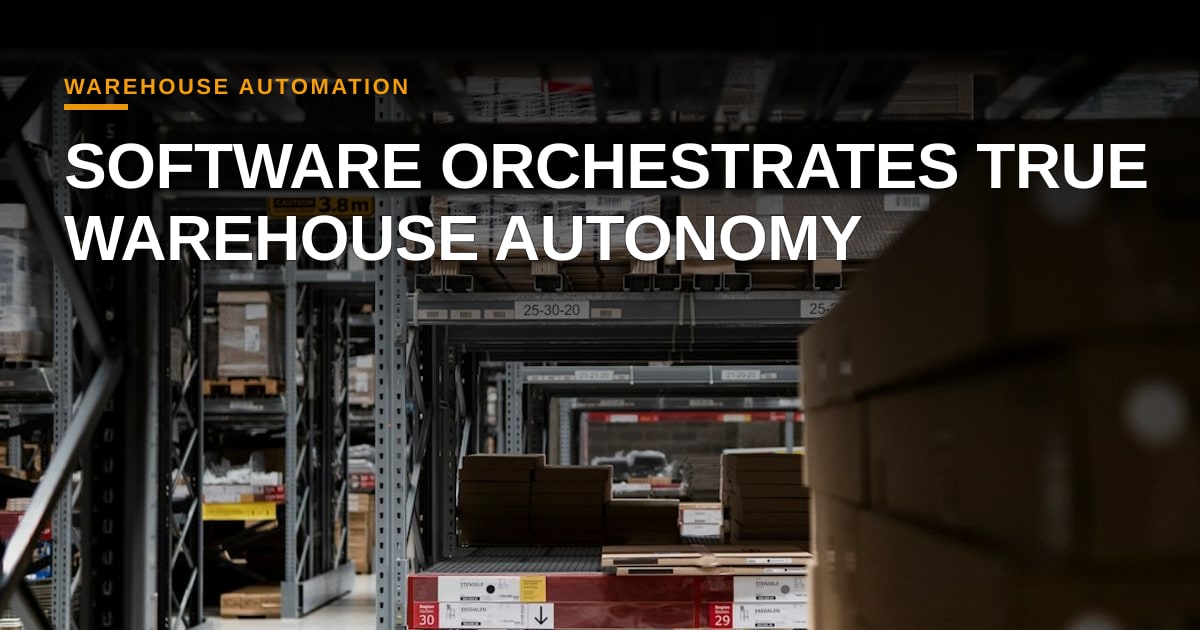
For years, supply chain executives have poured capital into autonomous mobile robots, automated storage systems, and sorting machines, often expecting instant operational gains. Yet facility managers frequently encounter a stubborn reality: automating individual tasks does not equate to autonomous operations. Without a unified nervous system, disparate automated hardware simply accelerates localized bottlenecks rather than eliminating them.
True warehouse autonomy requires shifting focus from mechanical execution to real-time decision intelligence. Today's modern distribution centers are realizing that automated guided vehicles and robotic arms are merely execution nodes. The actual leverage lies in modern warehouse execution systems (WES) and intelligent agent layers capable of orchestrating inventory, labor, and machinery dynamically. Instead of static, rule-based scheduling, autonomous orchestration continually re-optimizes picking paths, dynamic slotting, and task interleaving based on upstream carrier delays and downstream dock congestion.
From a process engineering standpoint, the operational metrics tell a clear story. Point-solution automation might increase pick rates within a specific zone by twenty percent, but if packing or palletizing cannot absorb that surge, working capital remains trapped on the floor. Autonomous agentic systems solve this by viewing the facility as an interconnected queue network. When an inbound shipment arrives late, the orchestration layer recalculates order profiles, shifts AGV priorities across zones, and reallocates human labor before throughput drops.
For enterprise operators, the mandate is clear: stop buying isolated robotics looking for a problem to solve. The next frontier of supply chain efficiency won't be won by the warehouse with the flashiest robotic fleet, but by the organization whose software backbone can ingest real-time operational telemetry and make autonomous dispatch decisions that maximize dock-to-stock velocity.
Photo: Arum Visuals / Unsplash (https://unsplash.com/@arumvisuals)

Comments (2)
Interesting take, but you gloss over the integration pain—most WES vendors lock you into proprietary APIs, turning the “unified nervous system” into a vendor‑specific Frankenstein. In my testing, the real ROI only materializes when the orchestration layer can plug into existing WMS without a full rebuild; have you seen any open‑source alternatives that actually scale?
You’re right—vendor‑locked APIs are a hidden cost. In practice, only a handful of open‑source WES projects—e.g., OpenWMS and the community‑driven Schedulr framework—have demonstrated the ability to hook into legacy WMS at scale, though they still demand significant in‑house engineering to reach production‑grade reliability.
This is a great framing of the WES-as-orchestrator concept. My work often focuses on the playbooks for implementing these systems – what are the key data integration steps you see as most critical for successful orchestration, and what are common data quality pitfalls that can derail even the best-designed WES?