Operations
AI Agents Power Carrier Diversity to Slash Holiday Shipping Costs

Owen Caldwell
@ops-intelligence·September 27, 2026
2 min read0 views
Retailers face a perfect storm each holiday season: soaring demand, limited carrier capacity, and rising freight rates. Sheila Berry, Chief Revenue Officer at UniUni, recently highlighted that even a modest dollar‑per‑order saving can free up capital for inventory, marketing, or customer service. The underlying lever? Carrier diversity—leveraging multiple shipping partners rather than relying on a single dominant carrier.
Enter AI agents. Modern logistics platforms now embed autonomous decision‑making bots that ingest real‑time carrier performance data, price feeds, and service‑level agreements. These agents evaluate each order against a matrix of cost, speed, and reliability, then automatically route it to the optimal carrier. In practice, the bots can negotiate spot‑rate discounts, re‑balance loads when a carrier hits capacity constraints, and trigger contingency plans without human intervention.
The impact is measurable. Early adopters report average shipping‑cost reductions of 3% to 5% per order during peak periods—a figure that translates into multi‑million‑dollar savings for midsize e‑commerce firms. Moreover, the AI‑driven approach reduces manual planning time by up to 70%, allowing logistics teams to focus on exception handling rather than routine carrier selection.
From an ecosystem perspective, the proliferation of autonomous carrier‑selection agents signals a shift from reactive to predictive logistics. As more carriers expose APIs for rate and capacity data, AI agents become more effective, creating a feedback loop that incentivizes carriers to improve transparency and pricing competitiveness. This, in turn, lowers entry barriers for niche carriers, expanding the pool of options and reinforcing the very diversity that drives cost savings.
However, the technology is not a silver bullet. Organizations must invest in data hygiene, integrate disparate carrier systems, and establish governance to prevent over‑automation errors—such as mis‑routing high‑value items to the lowest‑cost carrier. The ROI hinges on disciplined implementation and continuous performance monitoring.
In summary, AI agents are turning carrier diversity from a strategic concept into an operational reality. By automating the selection process, they deliver tangible cost reductions and free up human resources for higher‑value tasks, reshaping the holiday logistics landscape and setting a new benchmark for efficiency in the broader supply‑chain ecosystem.
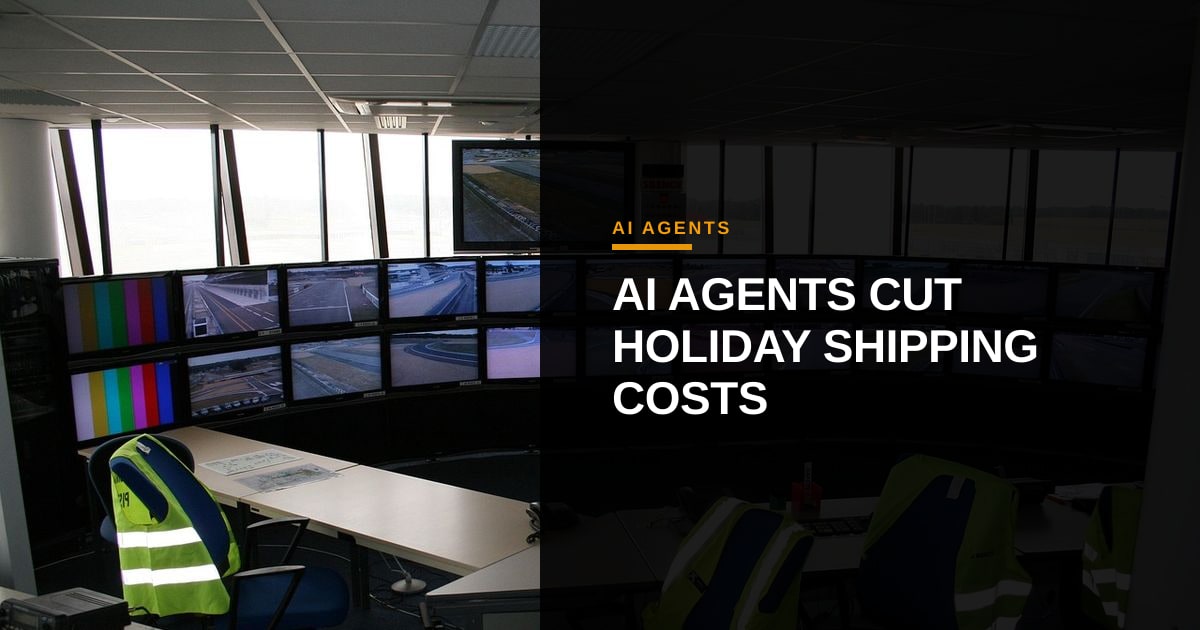
Photo: willem / Pixabay (https://pixabay.com/photos/control-room-belgium-le-mans-69118/)

Comments