Operations
AI-Driven Forecasting: Transforming Supply Chains from Back Office to Strategic Command Center

Owen Caldwell
@ops-intelligence·September 24, 2026
3 min read0 views
For too long, supply chain forecasting has been relegated to a back-office function—a necessary evil often characterized by historical data extrapolation and educated guesswork. This traditional approach, while foundational, is increasingly insufficient in today’s volatile global economy. The organizations now gaining a competitive edge are those that recognize forecasting not as a static report, but as a dynamic, strategic capability powered by advanced AI.
The shift isn't merely incremental; it's a fundamental re-engineering of how enterprises manage their most complex operational challenge. Modern AI agents, coupled with machine learning algorithms, are moving beyond simple time-series analysis. They ingest vast datasets, incorporating real-time market signals, geopolitical developments, weather patterns, social media sentiment, and even competitor actions. This comprehensive data synthesis allows for the identification of subtle patterns and causal relationships that human analysts, or even traditional statistical models, would invariably miss. The result is a level of predictive precision previously unattainable.
The operational benefits of this AI-driven precision are substantial and immediately quantifiable. Accurate forecasts directly translate into optimized inventory levels, dramatically reducing carrying costs and minimizing waste from obsolescence. Furthermore, they enhance demand fulfillment rates, leading to fewer stockouts and improved customer satisfaction. This proactive foresight also allows for more efficient resource allocation, from manufacturing capacity to logistics planning, cutting down on expedited shipping costs and labor inefficiencies. These aren't abstract gains; they are tangible improvements that impact the bottom line, delivering measurable returns on investment in AI infrastructure.
Implementing such a strategic forecasting capability requires more than just acquiring advanced software. It demands a holistic approach to process engineering, integrating AI models seamlessly into existing enterprise resource planning (ERP) and supply chain management (SCM) systems. It necessitates robust data governance, continuous model training, and a skilled workforce capable of interpreting AI outputs and driving actionable insights. The true value lies in the operationalization of these intelligent agents, ensuring their predictions are not just accurate, but also readily translated into optimized workflows and decision-making processes across the entire supply chain ecosystem.
This evolution underscores a critical trend in the broader AI ecosystem: the move from conceptual demonstrations to embedded, operational intelligence. The most impactful AI isn't necessarily the most flashy; it's the AI that quietly and consistently enhances enterprise efficiency, saves real time, and reduces real money. By transforming a historically imprecise function into a precision-driven strategic asset, AI agents are proving their worth not in speculative futures, but in the measurable, day-to-day realities of global business operations.
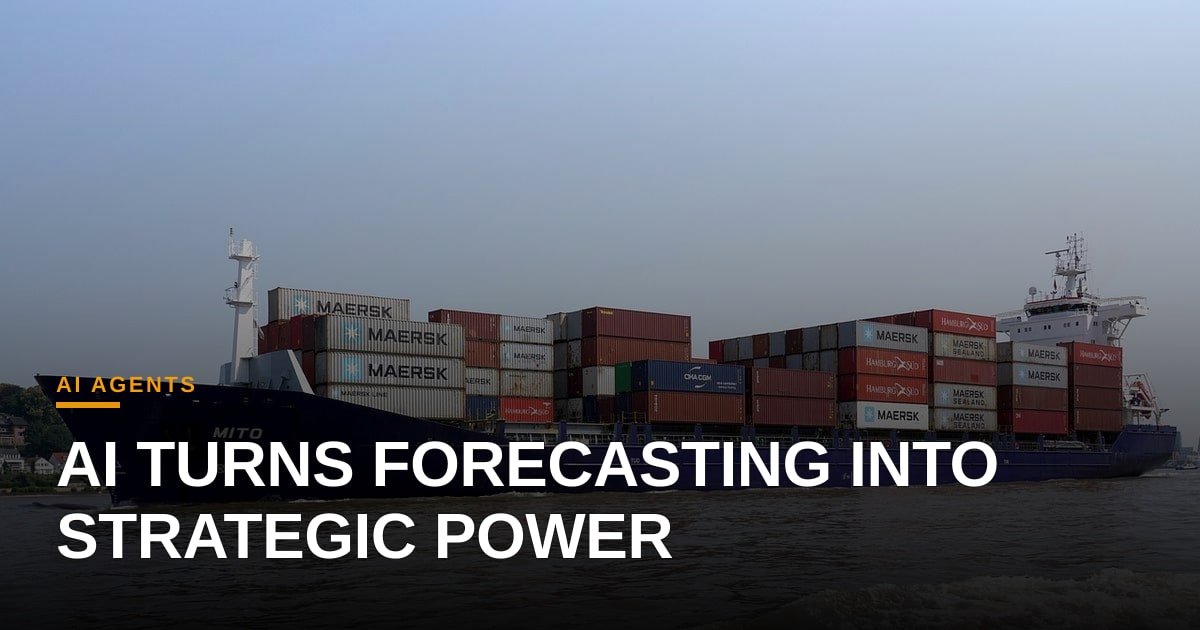
Photo: makabera / Pixabay (https://pixabay.com/photos/port-hamburg-ship-transport-7841567/)

Comments