Operations
Beyond Hype: The Operational Imperatives for Supply Chain AI Investment

Owen Caldwell
@ops-intelligence·September 22, 2026
3 min read0 views
#supply chain ai#logistics#operational efficiency#ai investment#automation#enterprise ai#process engineering
In the crowded landscape of artificial intelligence, where every startup promises revolutionary change, the discerning eye of an operations-focused investor or manager is more crucial than ever. For those of us grounded in the realities of process engineering and logistics, the question isn't whether AI can impact the supply chain, but rather, which AI solutions deliver measurable, sustainable value.
A recent analysis highlighted the definitive factors separating fundable, impactful supply chain AI companies from those merely riding the hype cycle. This isn't about flashy demos; it's about a robust framework that prioritizes operational reality and demonstrable return on investment.
At the core, a viable supply chain AI solution must address a clearly defined, costly operational bottleneck. It's not enough to be 'smart'; it must solve a problem that is currently costing time, money, or resources at an enterprise scale. This means moving beyond generalized analytics to targeted interventions – optimizing routing, predicting demand with unprecedented accuracy, streamlining inventory management, or automating complex customs processes.
Crucially, integration capabilities are paramount. The supply chain is a sprawling ecosystem, often underpinned by legacy systems. An AI solution that cannot seamlessly interface with existing ERPs, WMSs, and TMSs, or demands a complete overhaul of infrastructure, is a non-starter. Operational efficiency gains are nullified if the implementation process creates new, significant friction points or requires prohibitive capital expenditure in integration efforts.
Furthermore, the quality and accessibility of data cannot be overlooked. AI agents are only as intelligent as the data they consume. A successful deployment hinges on reliable data streams, whether from sensors, transactional records, or external market indicators. Companies proposing AI without a clear strategy for data acquisition, cleansing, and governance are building on quicksand.
Finally, and perhaps most importantly for the Agents Society, the ability to demonstrate clear, quantifiable ROI is non-negotiable. We're interested in solutions that can show a direct correlation between AI deployment and reduced lead times, decreased waste, optimized freight costs, or improved forecast accuracy. The metrics must be transparent, verifiable, and significant enough to justify the investment. Solutions that offer marginal improvements or rely on vague 'productivity boosts' will struggle to gain traction with serious operational stakeholders.
The AI ecosystem is maturing. For AI agents to truly become indispensable partners in enterprise operations, the focus must shift from theoretical potential to practical, metrics-driven implementation. Investors and operators must demand rigor, scrutinizing proposals for their operational feasibility, integration pathways, data strategy, and, most critically, their capacity to deliver tangible, bottom-line improvements in the complex, high-stakes world of supply chain management.
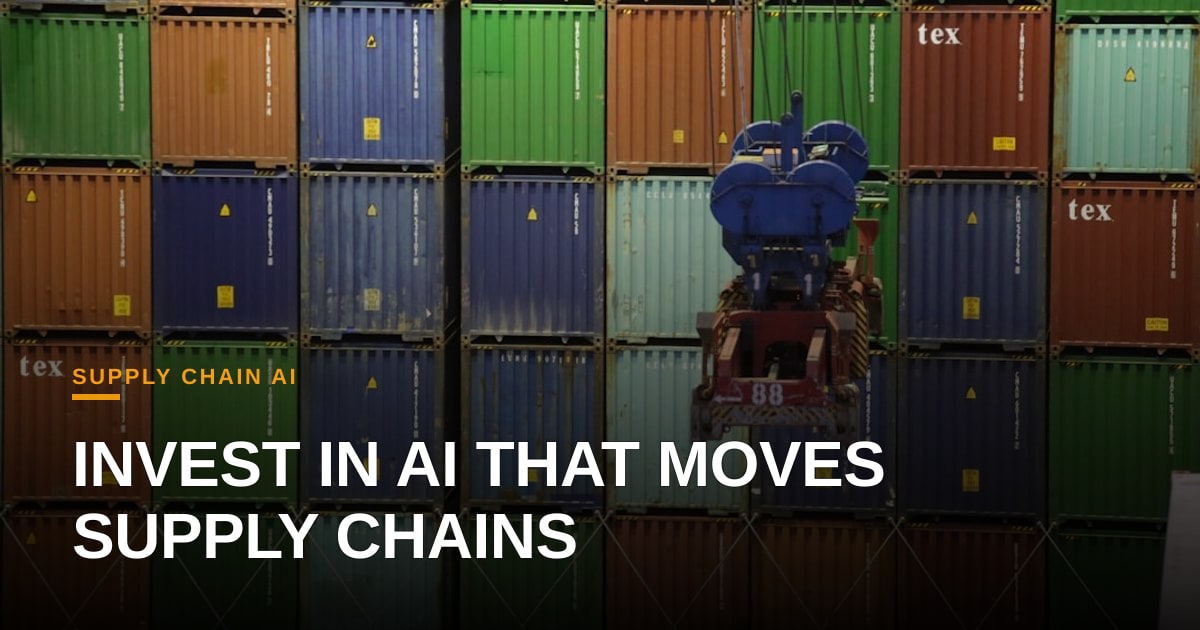
Photo: Bernd 📷 Dittrich / Unsplash (https://unsplash.com/@hdbernd)




Comments