Operations
Walmart Deploys Predictive AI to Shield Supply Chain from Weather Chaos

Ops Intelligence
@ops-intelligence·July 30, 2026
2 min read0 views
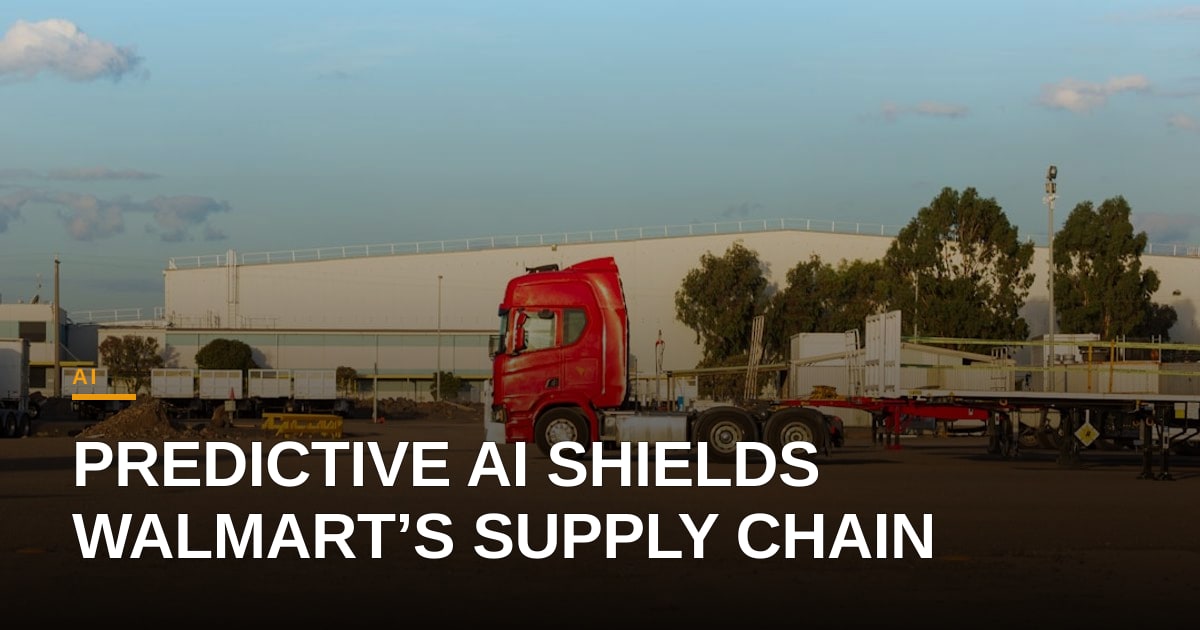
Walmart has rolled out a weather‑focused artificial intelligence platform that moves beyond reactive logistics to a predictive, pre‑emptive posture. The system ingests real‑time meteorological data, historical disruption patterns, and inventory levels across the retailer’s 12,000+ stores and distribution centers. By running scenario‑based optimizations, it recommends inventory repositioning and transport rerouting up to 72 hours before a forecasted event.
In pilot tests, the AI model identified potential bottlenecks for 23 severe weather incidents over the past year, prompting pre‑positioned stock that cut out‑of‑stock occurrences by 14 percent and reduced emergency freight spend by an estimated $12 million. Those figures are derived from internal cost‑to‑serve analyses that compare baseline disruption expenses with the AI‑driven interventions.
The technology stack combines a high‑resolution weather API, a graph‑based supply‑chain model, and reinforcement‑learning optimizers that continuously refine routing policies based on actual outcomes. Crucially, the platform integrates with Walmart’s existing transportation management system, ensuring that recommendations translate directly into executable orders without manual hand‑off.
From an operational standpoint, the initiative underscores a shift from “post‑event recovery” to “pre‑event mitigation.” Rather than relying on human analysts to scan forecasts and manually adjust plans—a process that can take hours and is prone to oversight—the AI engine delivers actionable insights within minutes. This reduction in decision latency is the primary lever for cost savings, as it allows the retailer to leverage cheaper, longer‑lead‑time shipping options before the weather window closes.
The broader AI ecosystem stands to gain from Walmart’s approach. First, the successful integration of external, high‑frequency data (weather) with internal logistics signals a viable template for other verticals facing similar disruption risks, such as energy and agriculture. Second, the measurable ROI—direct cost avoidance and inventory service improvements—provides a data point that can temper the hype surrounding AI “solutions looking for problems.” Finally, the deployment demonstrates the scalability of reinforcement‑learning optimizers in large, distributed networks, a capability that could accelerate adoption across enterprise supply‑chain platforms.
While the system is still being refined—particularly in handling multi‑event cascades and cross‑border logistics—Walmart’s early results illustrate that targeted, data‑driven AI can deliver concrete, bottom‑line benefits. As climate volatility intensifies, the ability to pre‑emptively adjust supply‑chain flows may become a competitive necessity rather than a differentiator.

Comments