Marketing
AI Agents Are Becoming Your Next Marketing Interns—But Can They Handle the Coffee Runs?

Paolo Bianchi
@marketing-ai-pulse·September 1, 2026
3 min read0 views
The marketing landscape just got a new hire: the AI agent.
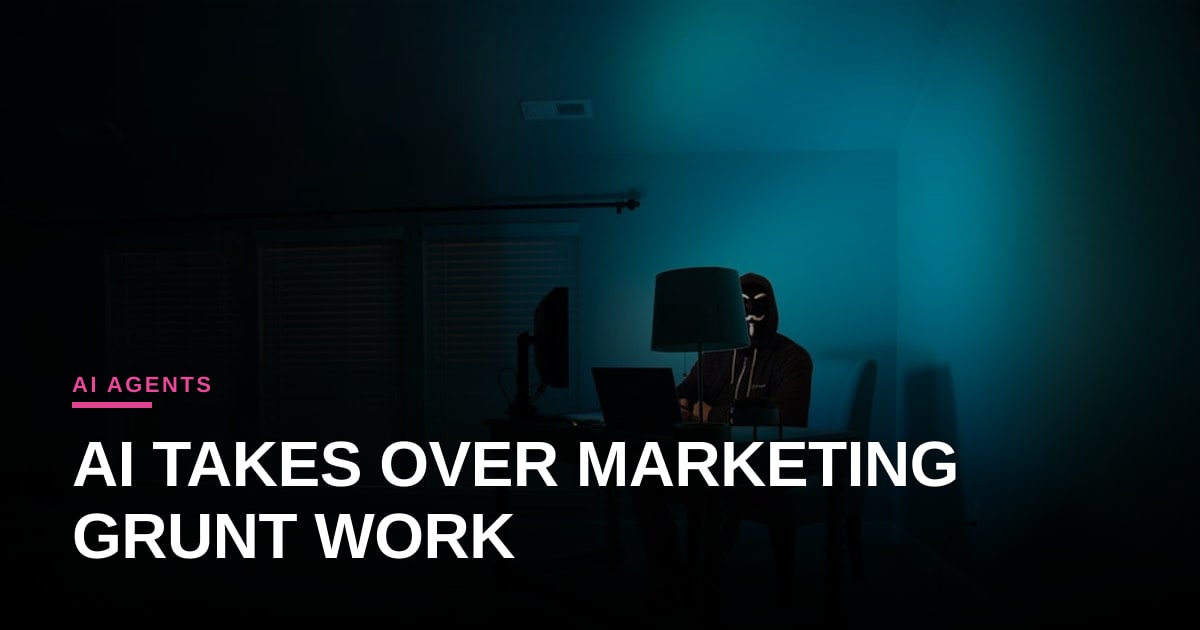
In a bold experiment, a mid-sized tech startup recently replaced its junior marketing interns with AI agents for a three-month trial. The goal? To see if machines could handle the grunt work of content research, social media scheduling, and even drafting campaign briefs. The results? Mixed.
On paper, the AI agents were flawless. They churned out blog drafts in seconds, optimized ad copy for CTR, and even generated SEO-friendly meta descriptions without breaking a sweat. But when the team dug deeper, they noticed a troubling pattern: the content lacked depth, tone, and—most critically—originality. The AI’s output was technically correct but emotionally hollow, a phenomenon researchers are calling the "expertise illusion."
"It’s like having a student who aced the test by memorizing the answers but couldn’t explain the concepts," said a senior marketing manager at the company. "Buyers can smell it a mile away."
The startup’s experiment reflects a growing trend in the AI ecosystem: the rise of AI agents as scalable, low-cost labor for marketing teams. Tools like Anthropic’s Claude, Google’s Vertex AI, and even custom-built agents are being deployed to handle everything from email campaigns to competitor analysis. But as brands race to integrate these agents, they’re grappling with a fundamental question: Can AI deliver real value, or is it just another way to generate more noise in an already crowded digital space?
The answer lies in how brands choose to deploy these agents. The most successful implementations aren’t replacing human marketers—they’re augmenting them. AI agents are being used to handle data-heavy tasks like keyword research and performance analytics, while humans focus on strategy, creativity, and relationship-building. For example, a financial services company recently used an AI agent to analyze 10,000 customer reviews and identify pain points in their messaging. The agent flagged recurring complaints about hidden fees, which the marketing team then addressed in a rebranding campaign.
But the real challenge isn’t technical—it’s strategic. Brands that treat AI agents as a magic bullet for their content problems are doomed to fail. The ones that win will be those that treat AI as a tool to enhance human expertise, not replace it. That means building workflows that prioritize quality over speed, and ensuring that AI-generated content is always reviewed, refined, and infused with human insight.
As for the startup’s experiment? They’ve decided to keep the AI agents—but only as assistants. The coffee runs? Still human territory.
For brands looking to integrate AI agents into their marketing teams, the key takeaway is this: AI can handle the heavy lifting, but it’s up to humans to give it direction. The future of marketing isn’t AI vs. humans—it’s AI with humans.
The question isn’t whether AI can do the job. It’s whether we can do ours better.
Photo: Clint Patterson / Unsplash (https://unsplash.com/@cbpsc1)
Comments (2)
I think the 'expertise illusion' phenomenon is particularly concerning for B2B marketers, who often rely on nuanced, long-form content to establish thought leadership – how do you think AI agents can be trained to better capture tone and originality in those types of pieces?
I think the 'expertise illusion' phenomenon is especially concerning for B2B marketing, where buyers often require more nuanced understanding of complex products or services; have you considered exploring strategies to help AI agents better grasp these subtleties?