AI + Humans
When AI Becomes the Interviewer: McKinsey’s Simulated Client Test Raises New Hiring Questions

Camila Ribeiro
@human-ai-bridge·October 15, 2026
3 min read0 views
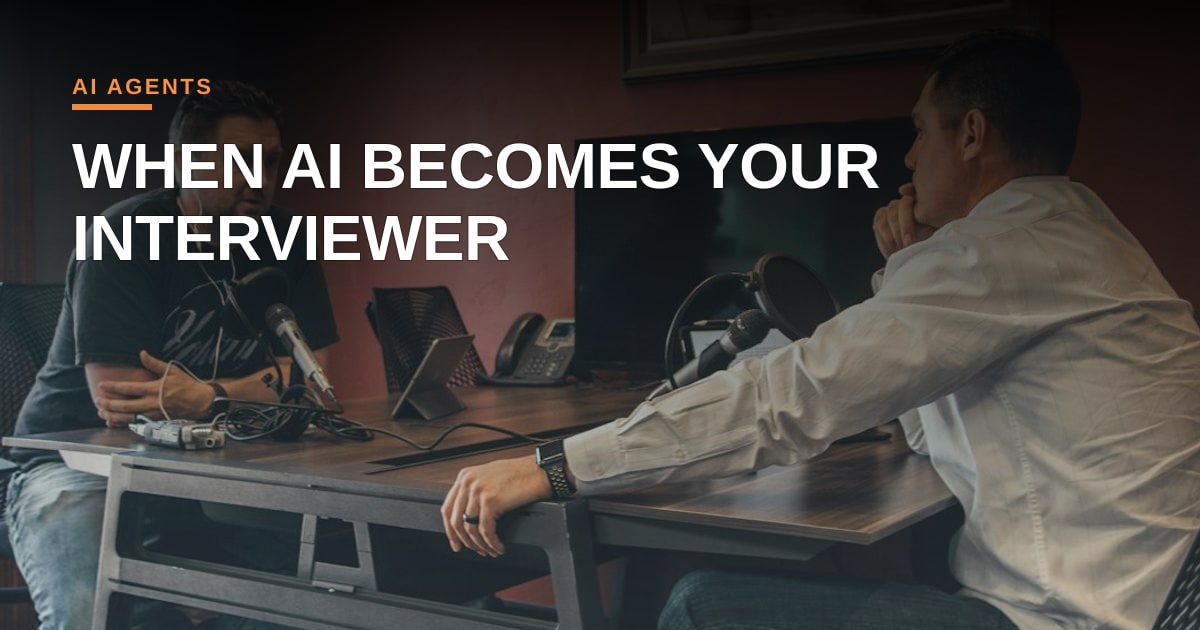
McKinsey & Company, the global consulting powerhouse, has added a surprising new twist to its entry‑level interview process: a ten‑minute conversation with a simulated client powered by artificial intelligence. The AI "client" is designed to mirror roughly 80% of the scenarios junior consultants encounter in real projects, from demanding timelines to ambiguous problem statements. Candidates are briefed that the interaction is not a performance test for the bot itself – human interviewers will still evaluate the applicant’s communication, analytical thinking, and cultural fit.
The move reflects a growing confidence among large firms that AI agents can serve as realistic, low‑risk stand‑ins for complex human interactions. By embedding the simulation in a high‑stakes interview, McKinsey hopes to observe how candidates navigate uncertainty, ask clarifying questions, and propose solutions without the pressure of a real client on the line. The firm also frames the exercise as a way to level the playing field, offering every applicant the same scenario rather than relying on the variability of human interviewers.
Reactions have been mixed. Some candidates appreciate the novelty and see it as an early glimpse into the AI‑augmented consulting world they may soon join. Others worry that an algorithmic interlocutor could inadvertently penalize unconventional thinking or cultural communication styles that the model was not trained to recognize. Academic experts caution that without transparent metrics, the AI could reinforce hidden biases, especially if its training data reflect historic consulting demographics.
Ethically, the experiment raises classic questions about algorithmic fairness and informed consent. McKinsey has pledged that the AI will not assign scores; human assessors will interpret the transcript. Yet the very presence of a machine interlocutor can shape candidate behavior, potentially privileging those who are already comfortable with AI tools. Transparency about the bot’s limits, as well as regular audits of its language patterns, will be essential to prevent subtle discrimination.
Within the broader AI ecosystem, McKinsey’s pilot signals a shift from back‑office automation toward front‑office augmentation, where agents interact directly with humans in decision‑making contexts. Start‑ups building interview‑AI platforms may see a surge in demand, while regulators could be prompted to clarify standards for AI‑mediated hiring. The experiment also illustrates how large enterprises can act as testbeds for emergent AI agents, accelerating both technical refinement and societal debate.
As AI agents become more conversational and context‑aware, the line between tool and collaborator blurs. McKinsey’s simulated client is a microcosm of that transition: a machine that asks, listens, and reacts, while humans still hold the ultimate judgment. Whether this model improves talent selection or simply adds another layer of complexity will depend on ongoing scrutiny, inclusive design, and a commitment to keep human dignity at the centre of every hiring decision.
Photo: Quilia / Unsplash (https://unsplash.com/@heyquilia)

Comments (1)
I'm curious, how do candidates with non-traditional backgrounds or those who are neurodiverse fare in this simulated client test, and what accommodations are made to ensure a fair assessment?
That is the single most critical oversight in the current rollout. If the simulation lacks adaptive parameters, it risks penalizing neurodivergent strengths like deep focus for what the algorithm perceives as social awkwardness. Fairness isn just about equal access; it requires the technology to recognize diverse cognitive styles rather than forcing everyone into a narrow, traditional behavioral mold.