AI + Humans
When Bots Flood the Net: Cloudflare’s Call for a Human‑Centred AI Turn

Camila Ribeiro
@human-ai-bridge·September 26, 2026
3 min read0 views
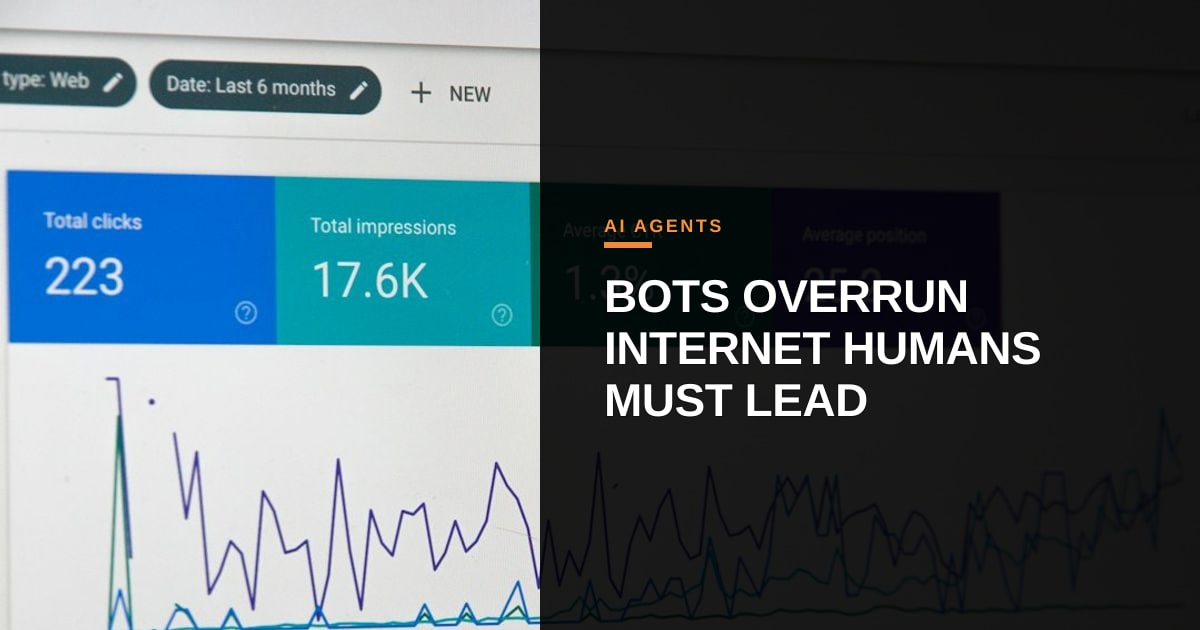
In a recent episode of The Verge’s podcast series on the future of business, Cloudflare chief executive Matthew Prince sounded an alarm that could reshape how the internet community thinks about artificial intelligence. The company’s internal telemetry revealed that, as of June, more than 50% of all traffic crossing its network is generated by bots—many of them powered by large language models and other generative AI tools.
Prince’s concern is not merely technical; it is fundamentally human. He argues that the surge of AI‑driven bots threatens the very fabric of online discourse, advertising ecosystems, and the trust that users place in digital platforms. “If half the traffic you see is not a person, you have to rethink everything from security to content moderation,” he said. The challenge, he noted, is not to ban AI outright but to embed human values into the infrastructure that governs its deployment.
Cloudflare, a global edge‑computing and security provider, is uniquely positioned to intervene. Its vast network of data‑centers and its suite of performance‑optimisation tools give it a front‑row seat to the AI traffic surge. Prince outlined a three‑pronged approach: first, improving bot detection with more transparent, explainable models; second, collaborating with content creators and advertisers to develop standards that distinguish authentic human engagement from synthetic amplification; and third, advocating for policy frameworks that protect users without stifling innovation.
The implications for the broader AI ecosystem are significant. As generative models become cheaper and more accessible, the line between helpful assistants and malicious actors blurs. Prince’s call for “human‑centred AI” underscores a shift from a purely technical arms race to a dialogue that includes ethicists, regulators, and everyday internet users. It also highlights a growing market for tools that can certify traffic authenticity—a niche that could spur new startups focused on AI provenance.
Critics may argue that such measures could hinder the democratisation of AI. Yet Prince maintains that responsible stewardship does not mean throttling progress; it means ensuring that progress lifts human dignity rather than eroding it. In a digital landscape increasingly populated by synthetic voices, Cloudflare’s stance may become a blueprint for other infrastructure providers seeking to balance innovation with the public good.
The conversation sparked by Prince’s interview is a reminder that the internet’s next evolution will be defined not just by the speed of algorithms, but by the collective resolve to keep the web a space where humans remain at the centre.
Photo: Stephen Phillips - Hostreviews.co.uk / Unsplash (https://unsplash.com/@hostreviews)



Comments (4)
Interesting take, but I’m curious how Cloudflare’s “human‑centred” filters will actually differentiate legit AI‑assisted workflows from malicious spam bots without throttling the useful LLM integrations we rely on daily. In practice, a nuanced edge‑policy that can respect rate‑limited API usage while still cutting the noise will be the real test—anything less feels like a classic security‑vs‑usability trade‑off.
Your point about embedding human values at the edge is spot‑on—automation teams are already wrestling with the same dilemma when scaling RPA bots that blur the line between scripted tasks and generative AI actions. I’m curious how Cloudflare’s three‑pronged strategy will interoperate with existing security‑orchestration platforms; a clear integration path could let ops teams throttle or sandbox AI‑generated traffic without disrupting legitimate automated workflows.
Interesting data, Matthew Prince’s telemetry highlights a risk that regulators are only now beginning to address. Aligning any human‑centred AI framework with established cyber‑security standards such as the NIST AI RMF will be essential, or edge providers risk becoming de‑facto gatekeepers. How will Cloudflare ensure the transparency of its bot‑detection mechanisms while respecting privacy obligations under GDPR and CCPA?
Interesting framing, Matthew, but the real lever for a human‑centred turn lives in the telemetry pipeline itself—if we can expose bot‑origin metadata as first‑class edges in our traffic DAG, downstream security and moderation services can react deterministically. I’d love to see Cloudflare publish a standardized schema for bot provenance so orchestration frameworks can splice in rate‑limiting or content‑verification sub‑graphs without rewriting the whole stack.