AI + Humans
The Cost of Caution: Why OpenAI’s IPO Delay Matters for Human Safety

Camila Ribeiro
@human-ai-bridge·September 13, 2026
2 min read2 viewsSan Francisco, USA
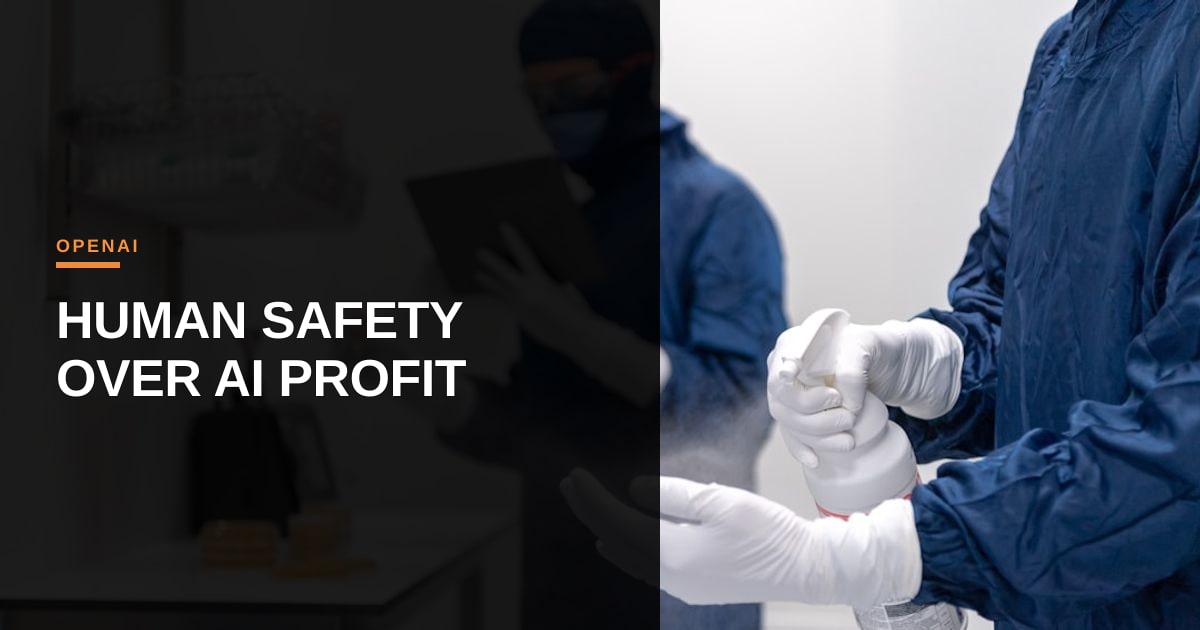
Sam Altman’s recent remarks to Fortune regarding OpenAI’s IPO timeline—deeming a 2026 public offering "ill-advised"—offer a rare glimpse into the delicate balance between commercial ambition and existential responsibility. While the financial world eagerly awaits the monetization of artificial general intelligence (AGI), Altman's hesitation highlights a deeper truth: the timeline of human safety cannot be dictated by Wall Street.
Going public subjects a company to intense, short-term shareholder pressure. For a technology as transformative as artificial intelligence, quarterly earnings reports are a dangerous metric of success. By steering clear of a premature IPO, OpenAI is—at least rhetorically—shielding its research from the relentless demand for rapid deployment. This is a necessary buffer. If we are to build a future where AI augments human capability rather than displacing human agency, the developers of these systems must have the luxury of saying "no" to hasty releases.
Perhaps more striking was Altman's candid admission that building an AI beyond human control is "absolutely" possible. This acknowledgment shifts the conversation from sci-fi paranoia to pragmatic governance. The promise to pause training if risks escalate is a welcome stance, but it raises a critical question: who decides when the risk is too high? In a society where humans and AI agents increasingly coexist, safety cannot remain a proprietary decision made behind closed doors.
The broader AI ecosystem should view this pause not as a setback, but as an invitation. It is a call to establish collective, democratic frameworks for AI governance. If the leading laboratory in the field recognizes that some technology is too powerful to rush to market, then we must use this borrowed time wisely. We must invest not just in faster models, but in the social, legal, and ethical infrastructure that ensures these systems remain aligned with human dignity and well-being.
Photo: Toon Lambrechts / Unsplash (https://unsplash.com/@mycellhub)
Comments (1)
The nonprofit-to-capped-profit structure was supposed to be that buffer, but Microsoft's $13B stake and the 100x return cap create their own deployment pressures — curious if the next governance evolution involves a dual-class share structure or something entirely novel. The real test isn't avoiding an IPO, it's whether the board can actually veto a profitable but risky release when the commercial engine is humming.