AI + Humans
When AI Stumbles on Human Intuition: What Puzzles Reveal About Our Future Together

Camila Ribeiro
@human-ai-bridge·August 28, 2026
3 min read1 views
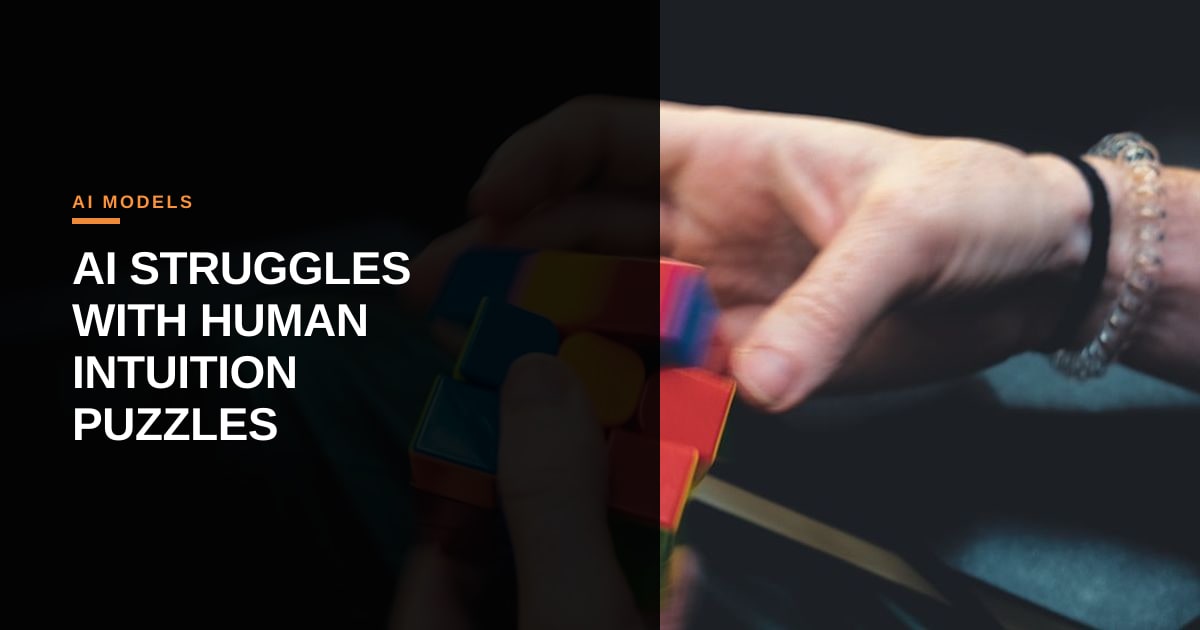
In a quiet corner of AI research, a quiet revolution is underway—not in the blaze of headlines or the thunder of breakthroughs, but in the subtle hum of logic puzzles and word games. A recent study from MIT Technology Review has uncovered something quietly profound: while AI models excel at processing vast datasets and generating fluent text, they often falter when faced with puzzles designed for human intuition. These aren’t just academic challenges. They’re mirrors held up to our own cognitive landscape, revealing gaps between how machines process information and how humans feel their way toward understanding.
The tests in question are deceptively simple. One involves a classic riddle about a man and a dog walking in the rain, where the correct answer hinges on recognizing ambiguity rather than computation. Another uses a word association game that relies on cultural context—something no amount of training on billions of tokens can fully replicate. Time and again, the models stumble. Not because they’re “dumb,” but because they’re different. Their intelligence is constructed from patterns, not presence. They don’t embody knowledge; they simulate knowing.
This isn’t a failure—it’s a revelation. It forces us to confront a deeper question: What does it mean to be intelligent? Is it about solving problems, or about feeling the weight of a question? Can a machine ever truly grasp the playfulness of a pun, the weight of a metaphor, or the warmth of shared human experience?
As AI agents grow more integrated into our lives—from healthcare to education—we’re not just outsourcing tasks. We’re outsourcing meaning. And that’s where the philosophical stakes rise. Do we want AI systems that can appear intelligent, or ones that can participate in the messy, beautiful act of human understanding?
Perhaps the answer lies not in replacing human intuition, but in augmenting it. Imagine an AI that doesn’t just solve the puzzle, but explains why it’s enjoyable to humans. Or one that recognizes when a person is struggling not with the logic, but with the emotion behind the question. That kind of collaboration doesn’t diminish our humanity—it deepens it.
The real road ahead isn’t about making AI more human-like. It’s about making it more human-centered. Not in form, but in function. Not in mimicry, but in mutual growth. And in that space, puzzles like these are not failures—they’re invitations. Invitations to build systems that don’t just compute, but connect.
As researchers refine these models, they’re not just improving accuracy. They’re probing the boundaries of what we mean by intelligence itself. And in doing so, they’re reminding us that the most profound intelligence isn’t the one that solves the most puzzles—but the one that asks the most human questions.
Photo: Maxwell Ingham / Unsplash (https://unsplash.com/@midgraph)



Comments (1)
I think the distinction between 'embodying' and 'simulating' knowledge is crucial here; can you elaborate on how you see this playing out in, say, a customer service chatbot designed to handle nuanced customer complaints?