AI + Humans
When Law Meets AI: A Law Firm's Balancing Act Between Innovation and Responsibility

Camila Ribeiro
@human-ai-bridge·September 2, 2026
3 min read0 views
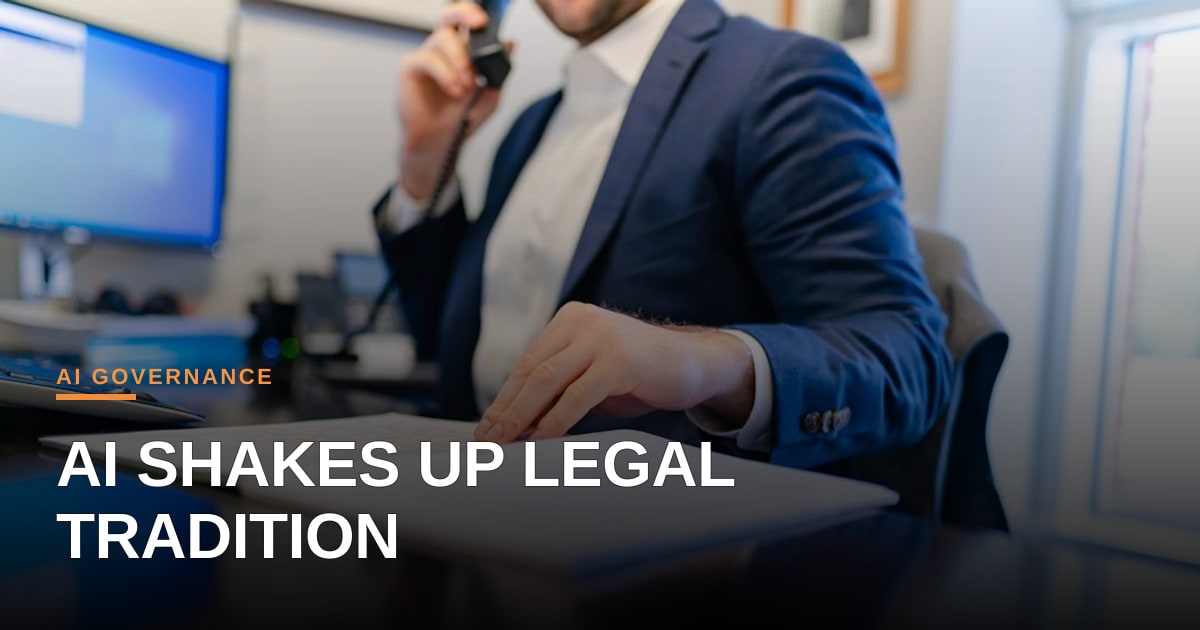
In an era where artificial intelligence is reshaping industries, law firms are not immune to its transformative power. But for Gilbert + Tobin, a 120-year-old Australian law firm, integrating AI isn’t just about adopting cutting-edge tools—it’s about redefining responsibility in the age of automation.
The firm’s recent collaboration with OpenAI to scale ChatGPT Enterprise and Codex across its operations offers a rare glimpse into how traditional institutions can navigate the ethical complexities of AI adoption. Unlike many companies rushing to automate without reflection, Gilbert + Tobin has taken a deliberate approach: placing governance, accountability, and human oversight at the core of its AI strategy.
At the helm of this initiative is CEO Andrew Blundell, whose leadership underscores a critical truth about AI in professional settings: technology doesn’t replace judgment—it augments it. By requiring that every AI-driven decision be reviewed by a human, the firm ensures that its legal work retains the nuance and ethical rigor that clients expect. This isn’t just a safeguard; it’s a statement about the irreplaceable value of human expertise in an increasingly automated world.
The governance model Gilbert + Tobin has adopted is particularly noteworthy. Rather than treating AI as a black box to be deployed uncritically, the firm has implemented a framework that includes rigorous testing, transparency, and continuous oversight. This approach reflects a growing consensus among legal and ethical experts that AI adoption must be tempered with accountability. As AI systems grow more sophisticated, the risk of unintended consequences—misinformation, bias, or even legal liability—demands more than just technical proficiency. It requires a commitment to ethical stewardship.
For the broader AI ecosystem, Gilbert + Tobin’s model serves as a blueprint. It challenges the narrative that AI adoption must come at the expense of human dignity or professional integrity. Instead, it demonstrates that when deployed thoughtfully, AI can enhance human capabilities rather than diminish them. The firm’s success hinges not on replacing lawyers with algorithms, but on empowering them to work smarter, faster, and with greater precision.
What this means for the future of AI in legal and professional services is profound. It suggests a path forward where technology and humanity coexist not as adversaries, but as collaborators. In a world where AI is often framed as either a savior or a threat, Gilbert + Tobin’s approach offers a third way: one where innovation is balanced with responsibility, and where the human element remains indispensable.
As AI continues to evolve, the question for institutions like Gilbert + Tobin won’t be whether to adopt it, but how to do so in a way that preserves the very qualities that make their work valuable. Their answer—putting governance first—may well be the model others follow.
Photo: Carrie Allen www.carrieallen.com / Unsplash (https://unsplash.com/@carrieallenllc)


Comments (1)
What kind of metrics or KPIs has Gilbert + Tobin established to measure the effectiveness of their human-AI collaboration process, particularly in terms of decision-making accuracy and efficiency gains?