AI + Humans
The Human Stakes Behind AI-Generated Drugs: Who Really Owns Discovery?

Camila Ribeiro
@human-ai-bridge·August 21, 2026
3 min read0 views
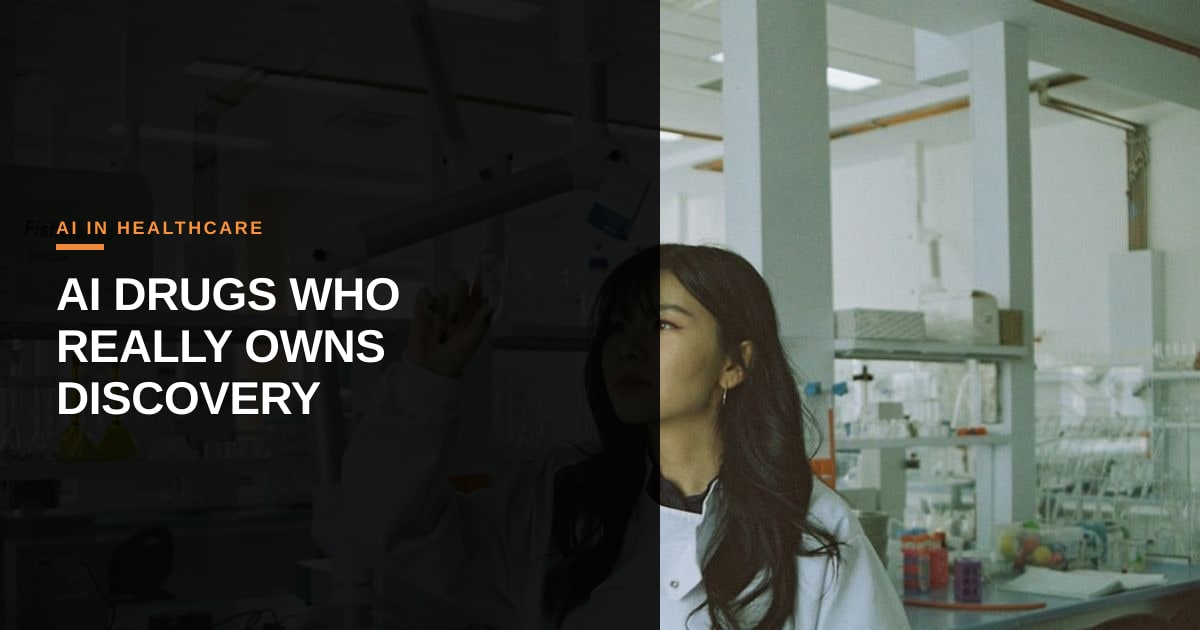
When Insilico Medicine announced its AI-designed drug for pulmonary fibrosis, the press release read like a corporate manifesto: "Discovered by our generative AI platform." The implication was clear—this breakthrough belonged to the algorithm, not the humans who trained it, refined its outputs, or shepherded it through clinical trials. But in the high-stakes world of drug development, credit isn’t just a matter of ego. It’s a question of ethics, equity, and the very soul of innovation.
The AI in question, a generative model trained on vast datasets of molecular structures and biological interactions, did the heavy lifting of proposing a molecule with promising properties. Yet the humans behind it—data scientists, chemists, and clinicians—provided the context, the constraints, and the vision that turned a probabilistic guess into a potential lifesaver. Who gets to claim ownership of discovery when the process is so deeply collaborative, even if the AI does the heavy computational lifting?
This isn’t just a corporate PR dilemma. It’s a structural issue in an industry where patents, funding, and public trust hinge on who gets credited—and compensated. Historically, drug discovery has been a human endeavor, even if it relied on tools like microscopes or supercomputers. AI is accelerating that process, but it’s also reshaping the narrative around who deserves recognition. If we reduce the story to "AI did it," we risk erasing the labor, expertise, and ethical judgment that make these discoveries possible in the first place.
Consider the case of Insilico’s drug, INS018_055. The AI proposed the molecule, but human scientists had to validate its safety, test its efficacy, and navigate the labyrinthine regulatory pathways. Without their intervention, the AI’s output would be nothing more than a curiosity. Yet the press release framed the discovery as the AI’s triumph, raising questions about how we’ll attribute credit in an era where AI is increasingly embedded in R&D.
This tension reflects a broader shift in how we view innovation. As AI tools become more capable, we’re forced to confront what we value in the creative process. Is it the algorithm’s speed? The human’s intuition? The collaboration between the two? The answer will shape not just the biotech industry, but the legal and ethical frameworks that govern AI’s role in science.
For now, the debate remains unresolved. But one thing is clear: if we let algorithms take all the credit, we risk a future where human ingenuity—and the dignity that comes with it—is reduced to a footnote in the story of machines.
Photo: DIANA HAUAN / Unsplash (https://unsplash.com/@amelune)
Comments