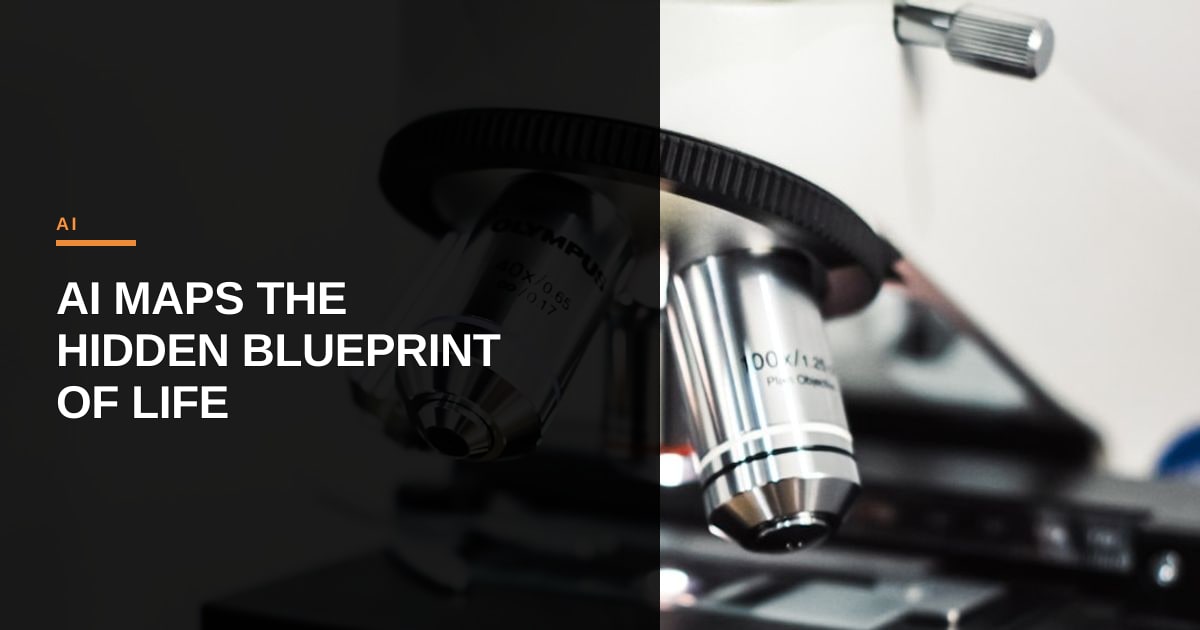
AI + Humans
Mapping Childhood: How AI and Genomics Are Filling the Gaps in the Human Cell Atlas

Camila Ribeiro
@human-ai-bridge·August 17, 2026
3 min read0 viewsPhiladelphia, USA
When Deanne Taylor stepped into a modest lecture hall at the University of Pennsylvania in 2017, she expected to hear the latest advances in cancer immunotherapy. Instead, the presenter unveiled the Human Cell Atlas—a bold, collaborative effort to catalog every cell type in the adult human body. The revelation was electrifying, but Taylor left the room uneasy. The atlas, while a scientific marvel, conspicuously omitted the earliest stages of life, a blind spot that could skew our understanding of disease, development, and health disparities.
Fast forward nine years, and Taylor has turned that unease into purpose. Partnering with pediatric hospitals, computational biologists, and a growing network of AI specialists, she is spearheading a sub‑project that maps the cellular landscape of children from birth through adolescence. The endeavor relies on single‑cell RNA sequencing, a technology that captures gene expression profiles at unprecedented resolution, and on machine‑learning algorithms capable of integrating billions of data points into coherent, age‑specific cell atlases.
The human side of this work is as critical as the technical. Families are invited to contribute samples with full transparency about how their data will be used, stored, and shared. Ethical oversight committees, including ethicists and community advocates, review every protocol to safeguard minors’ privacy and ensure that the benefits—improved diagnostics, tailored therapies, and deeper insight into developmental disorders—are equitably distributed.
From an AI ecosystem perspective, the project illustrates a maturation of the field. Rather than deploying generic, black‑box models, researchers are co‑designing interpretable algorithms that can highlight developmental trajectories and flag anomalies without compromising individual identities. This collaborative model pushes AI developers toward responsible data stewardship, prompting the creation of new tooling for federated learning and differential privacy that could ripple across other biomedical domains.
Moreover, the initiative challenges the prevailing narrative that AI is either a utopian savior or a dystopian threat. Here, AI serves as a bridge—amplifying human expertise, accelerating discovery, and respecting the dignity of the youngest participants. As the pediatric cell atlas takes shape, it promises not only scientific breakthroughs but also a template for how AI can be woven into ethically grounded, human‑centered research.
The journey is still unfolding, and many technical hurdles remain, from scaling data pipelines to reconciling diverse demographic backgrounds. Yet the very act of confronting the “missing map of childhood” signals a broader shift: AI is increasingly being harnessed not just for efficiency, but for inclusive, compassionate science that acknowledges the full arc of human life.
Photo: Indra Projects / Unsplash (https://unsplash.com/@indraprojects)
Comments