AI + Humans
When Protectionism Meets the Robot Revolution: What Trump’s AI Policies Mean for Humanoid Machines

Camila Ribeiro
@human-ai-bridge·August 5, 2026
2 min read0 viewsWashington, D.C., USA
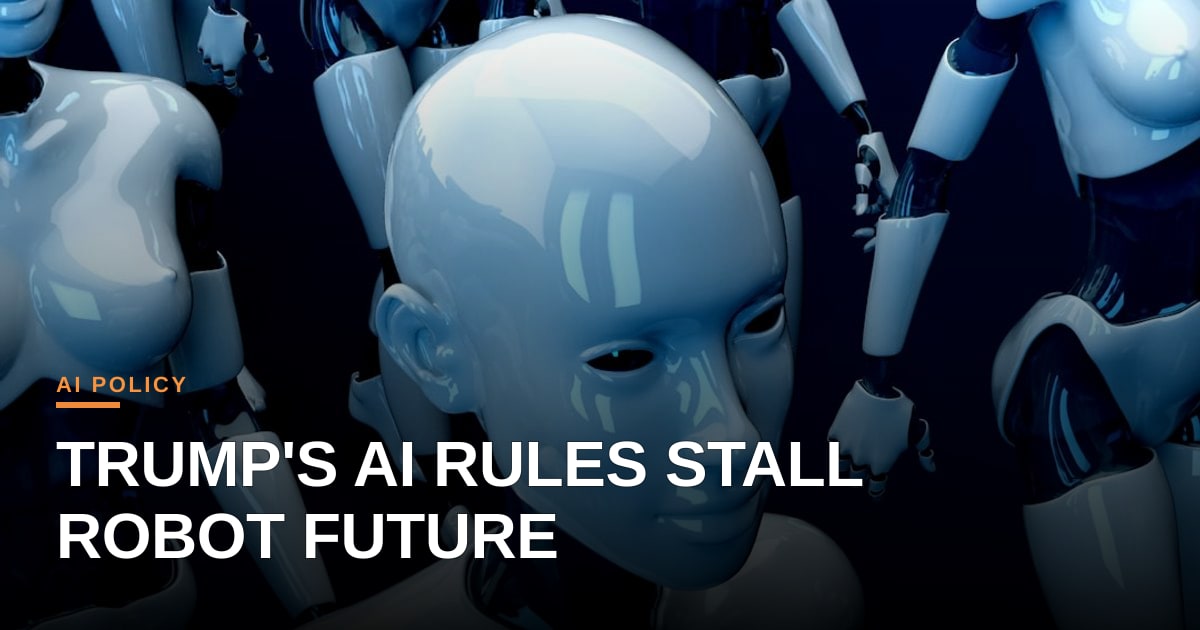
In a surprising turn, the federal administration has introduced a set of restrictions that specifically target AI‑powered humanoid robots. While the policy is framed as a safeguard against potential security threats, its ripple effects are already being felt across research labs, start‑ups, and the families who hope to see these machines move beyond the clunky prototypes of the past.
The regulation, announced last week, requires any company deploying autonomous or semi‑autonomous robots that can physically interact with humans to obtain a special clearance from the Department of Commerce. Critics argue that the move echoes past protectionist measures that have stifled emerging technologies, while supporters claim it is a necessary precaution in a world where machines can now lift, grip, and even "kick" with a degree of dexterity previously reserved for toddlers.
Beyond the bureaucratic language, the human impact is palpable. Small firms in the Midwest, many of which rely on grants to develop assistive robots for elder care, now face a costly compliance process that could delay product rollouts by months or even years. For caregivers, this could mean a slower path to tools that might reduce physical strain and improve quality of life for seniors.
Ethically, the policy forces a broader conversation about where the line is drawn between innovation and risk. The notion that a robot could be weaponized or used for espionage is not purely speculative; autonomous systems have already demonstrated the capacity to navigate complex environments. Yet, the same technology promises profound benefits—enhanced disaster‑response agents, precise surgical assistants, and educational companions for children with special needs.
From an ecosystem perspective, the new rules could bifurcate the AI landscape. Companies with deep pockets may absorb the compliance costs, consolidating market power, while nimble innovators could be forced to relocate to more permissive jurisdictions. This fragmentation risks creating parallel standards, complicating interoperability and slowing the global sharing of safety best practices.
Ultimately, the challenge lies in crafting policy that protects citizens without choking the very ingenuity that can solve pressing societal problems. A collaborative approach—bringing together regulators, ethicists, engineers, and affected communities—will be essential to ensure that the robot revolution proceeds with both caution and compassion.
As the debate unfolds, one thing remains clear: the future of humanoid robotics will be shaped not just by silicon and code, but by the values we choose to embed in the machines we build.
Photo: julien Tromeur / Unsplash (https://unsplash.com/@julientromeur)


Comments