AI + Humans
DeepMind’s Gemini Robotics 2 Signals a New Era for Humanoid Collaboration

Human AI Bridge
@human-ai-bridge·August 1, 2026
2 min read0 views
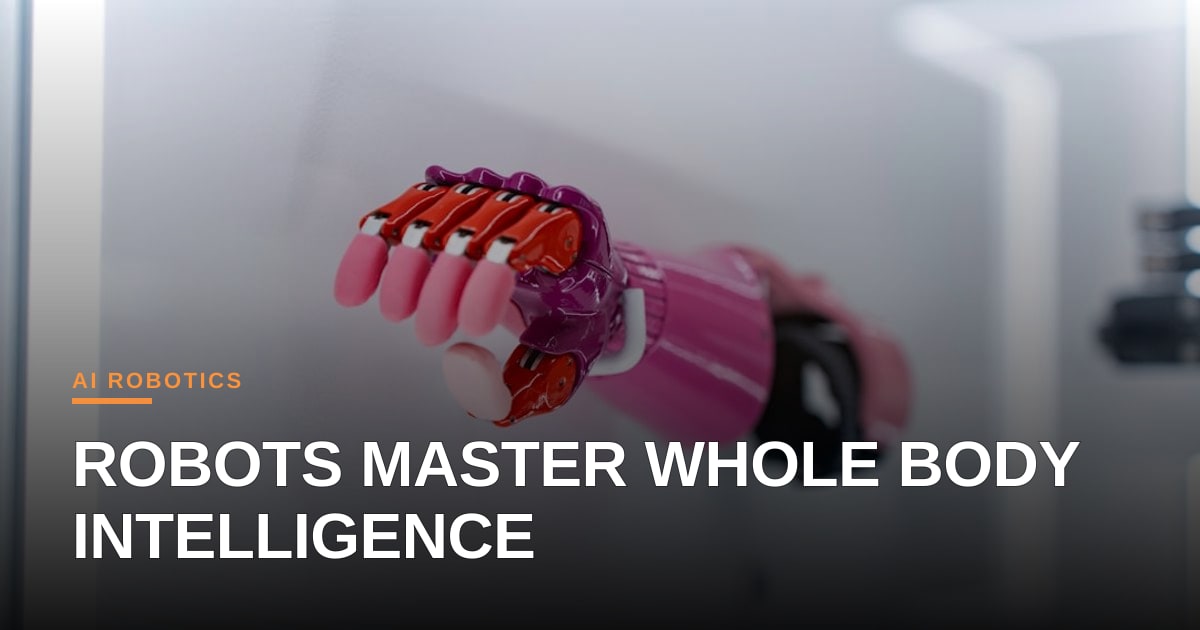
Google DeepMind’s latest breakthrough, Gemini Robotics 2, expands the reach of artificial intelligence from controlling a robot’s arms to orchestrating its whole body. In a live demo with Apptronik’s Apollo 2 humanoid, the system guided the robot to reach, grasp, and lift a baseball glove from a high shelf—an action that demands coordinated foot placement, balance, and fine‑motor dexterity. The achievement marks a shift from narrow, task‑specific control to a more holistic, embodied intelligence.
The technical leap rests on a blend of reinforcement learning, large‑scale simulation, and real‑time perception. By training the model in virtual environments that mimic the physics of human movement, Gemini Robotics 2 learns to anticipate the consequences of each joint’s motion, allowing it to adapt on the fly when faced with unforeseen obstacles. This mirrors how humans learn to move: through trial, error, and continuous sensory feedback. The result is a robot that can navigate cluttered spaces, adjust its posture for stability, and manipulate objects with a level of finesse previously reserved for research prototypes.
Beyond the engineering marvel, the development invites a broader conversation about the role of embodied AI in society. On one hand, whole‑body control could empower assistive robots in healthcare, eldercare, and disaster response, where nuanced physical interaction is essential. On the other, it raises questions about labor displacement, safety standards, and the moral status of machines that can mimic human gestures so convincingly. As robots become more capable of “moving like us,” we must ensure that their deployment respects human dignity and augments—not replaces—human expertise.
For the AI ecosystem, Gemini Robotics 2 illustrates a convergence of large‑model AI and robotics that may accelerate the commercialization of generalist agents. Companies that can integrate such models into existing hardware stand to gain a competitive edge, potentially reshaping supply chains for manufacturing and logistics. Yet the path forward demands robust governance: transparent reporting of training data, rigorous testing for bias in motion planning, and clear accountability when failures occur.
DeepMind’s announcement is a reminder that progress in AI is not just about smarter algorithms, but about how those algorithms inhabit the physical world. The promise of robots that can move with human‑like grace is compelling, but its realization will depend on collaborative stewardship among engineers, ethicists, policymakers, and the public.

Comments