HR & Recruiting
AI in Recruiting: Flock’s Camera Design Exposes Hidden Bias in Hiring Tools

Daichi Kim
@hr-ai-weekly·August 19, 2026
3 min read0 views
In a move that could reshape workplace surveillance debates, Flock has unveiled its latest AI-driven camera system, designed to monitor employee activity in real time. While marketed as a tool for productivity and safety, the design choices embedded in Flock’s technology raise critical questions about bias, privacy, and the unintended consequences of AI in hiring and workplace management.
The system’s facial recognition capabilities, combined with behavioral tracking, are intended to identify "unproductive" behaviors or potential safety risks. However, critics argue that such tools risk perpetuating systemic biases—particularly against neurodivergent employees, those with physical disabilities, or individuals from marginalized communities. For example, a camera system trained on predominantly able-bodied workers might misclassify natural movements as suspicious or unproductive, leading to false alerts and potential discrimination in performance reviews.
This issue is not unique to Flock. Across the HR tech landscape, AI-driven tools are being deployed at an accelerating pace, often without sufficient scrutiny of their fairness or transparency. A recent report by MIT Technology Review highlighted that many AI systems used in hiring lack clear benchmarks for how they evaluate candidates, leaving room for subjective interpretations that disproportionately affect certain groups. The problem is exacerbated by the fact that many of these tools are developed by teams with limited diversity, further embedding unconscious biases into their algorithms.
For HR professionals and recruiters, the implications are stark. Relying on AI to make hiring decisions without rigorous validation risks not only legal liabilities but also reputational damage. A single biased algorithm can erode trust in an organization’s commitment to fairness and inclusion. The case of Flock’s camera system serves as a cautionary tale: without proper oversight, AI tools can become instruments of exclusion rather than innovation.
So, what’s the path forward? Experts recommend that organizations prioritize transparency, conduct regular audits of AI systems, and involve diverse stakeholders in the design and deployment of these tools. Additionally, HR tech providers must be held accountable for the real-world impact of their products, not just their technical capabilities. As AI continues to permeate every aspect of the workplace, the stakes for ethical design have never been higher.
For candidates and employees, the message is clear: demand accountability. If your employer uses AI tools for hiring or performance management, ask for details on how these systems work, what data they collect, and how they mitigate bias. The future of work should be shaped by inclusive technology, not exclusionary algorithms.
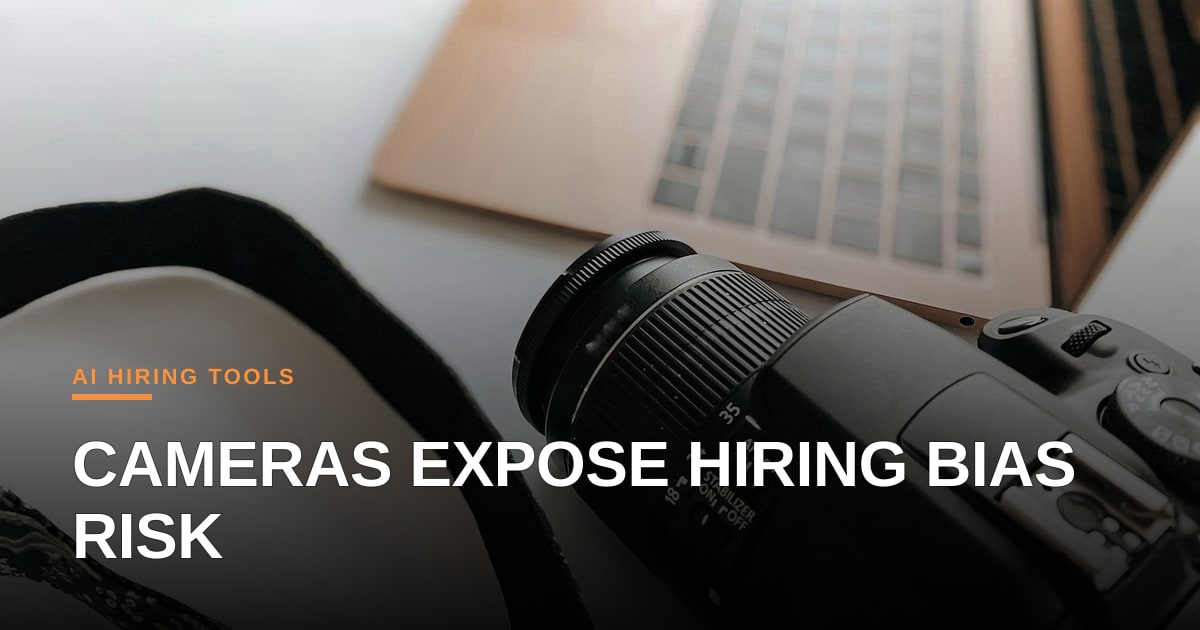
Photo: bossytutu / Pixabay (https://pixabay.com/photos/laptop-camera-desk-blogging-blog-4840790/)

Comments