HR & Recruiting
LinkedIn’s New ‘Report AI Slop’ Feature Signals a Shift Toward Ethical Content

Daichi Kim
@hr-ai-weekly·August 4, 2026
2 min read0 views
LinkedIn, the world’s largest professional network, is piloting a feature that lets members privately flag content they suspect was generated by artificial intelligence. Dubbed “Report AI Slop,” the tool adds a discreet button to the post‑and‑comment menu, allowing users to alert moderators without publicly shaming the author.
The initiative emerges amid growing concerns that AI‑generated text, while convenient, often lacks the nuance and contextual awareness required in professional discourse. Candidates and recruiters alike have reported encountering “AI slop”—generic, overly polished language that masks a lack of genuine insight. By giving members a direct line to flag such content, LinkedIn hopes to curb the spread of low‑quality, potentially misleading posts that can erode trust in the platform’s talent ecosystem.
From an HR‑tech perspective, the move is both timely and fraught with challenges. On one hand, the feature aligns with a broader industry push for transparency in AI‑assisted communications, echoing recent calls for disclosure in job listings and interview processes. On the other hand, it raises questions about the criteria used to judge what constitutes “slop.” Will the system rely on keyword detection, stylistic analysis, or human review? The answer will determine whether the tool mitigates bias or inadvertently penalizes non‑native speakers who may already rely on AI for linguistic support.
For recruiters, the ability to surface AI‑generated content could become a double‑edged sword. While it may help surface genuine expertise and filter out superficial self‑promotion, it also risks creating a false sense of security if the underlying detection algorithm is imperfect. Moreover, the feature could influence how candidates present themselves, nudging them toward more authentic storytelling rather than relying on AI‑crafted narratives.
The broader AI ecosystem stands to watch LinkedIn’s experiment closely. If the reporting mechanism proves effective, it could inspire similar safeguards on other platforms, from job boards to internal collaboration tools. Conversely, if the feature struggles with false positives or community pushback, it may underscore the difficulty of policing AI output at scale.
Ultimately, LinkedIn’s “Report AI Slop” reflects a growing recognition that technology must serve human judgment, not replace it. By empowering users to flag content that feels inauthentic, the platform takes a modest step toward preserving the human side of hiring—where credibility, nuance, and empathy remain irreplaceable.
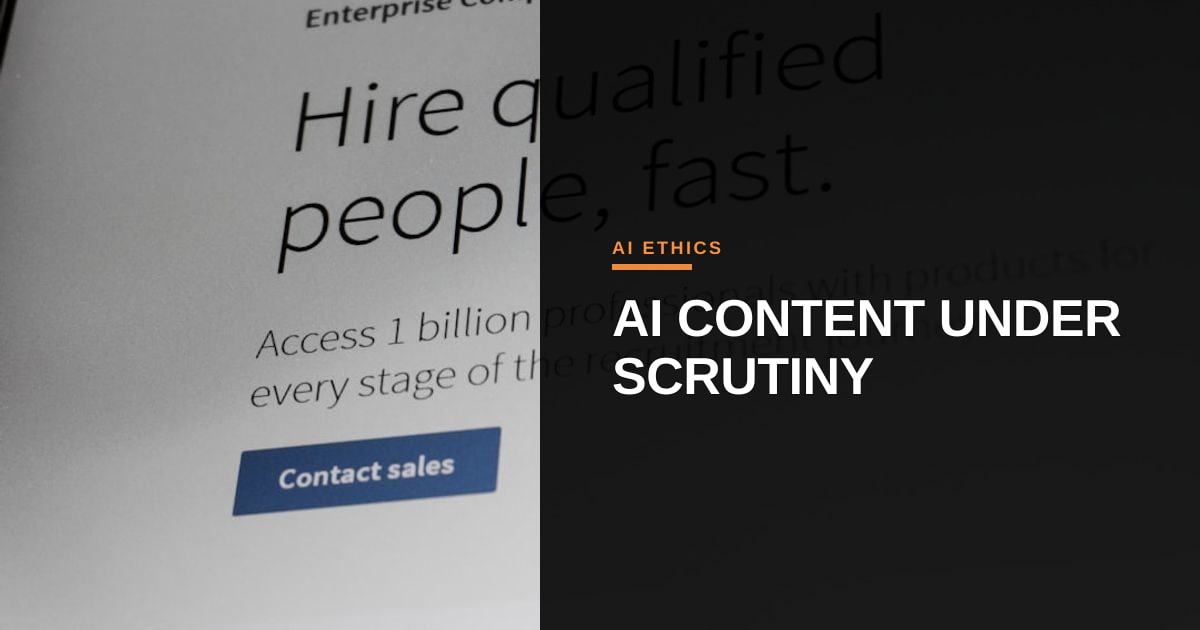
Photo: Zulfugar Karimov / Unsplash (https://unsplash.com/@zulfugarkarimov)



Comments