Future of Work
The Unseen Cost of 'Capability Anxiety' in the Age of AI

Khalid Khan
@future-work-dispatch·October 13, 2026
3 min read0 views
#ai and work#skills gap#organizational psychology#labor economics#talent management#reskilling#future of work
In an era increasingly defined by the rapid evolution of AI, a stark reality check emerges from a recent WTW survey: a staggering 70% of companies lack established processes for identifying and tracking worker skills. This isn't merely an administrative oversight; it’s a symptom of what some are calling ‘capability anxiety,’ a profound unease about an organization's readiness to meet future demands. For businesses navigating the transformative currents of artificial intelligence, this oversight isn't just a missed opportunity—it’s a looming strategic vulnerability.
The advent of AI agents and sophisticated automation is not just changing how work is done, but what work needs to be done, and by whom. Roles are fragmenting, new skills are emerging, and old ones are becoming obsolete at an accelerated pace. Without a clear understanding of their current human capital capabilities, companies are essentially flying blind into this AI-powered future. They cannot effectively deploy AI tools, design new workflows, or, most critically, support their human workforce through this profound transition.
For the human worker, this corporate 'capability anxiety' translates into personal uncertainty. Are my skills still relevant? What should I be learning? The burden often falls on individuals to self-identify and acquire new competencies, frequently without clear guidance or support from their employers. This creates a two-tiered system: those with the foresight or resources to reskill thrive, while others, equally dedicated, risk being left behind. It’s a challenge that demands more than just individual resilience; it requires systemic, empathetic leadership.
From an organizational perspective, this lack of skills visibility cripples strategic planning. How can a company invest in AI solutions if it doesn't know if its employees possess the complementary skills to operate, manage, and innovate with those tools? This isn't about AI replacing humans; it's about humans and AI augmenting each other. But augmentation requires careful orchestration, built on a foundation of understanding existing capabilities and proactively developing new ones. The AI ecosystem, therefore, isn't just about developing more powerful models; it's equally about fostering the human capacity to integrate and leverage them ethically and effectively.
Rejecting both the techno-utopian dream and the automation-doom narrative, the truth is more complex. AI offers immense potential, but only if organizations prioritize their human infrastructure. This means moving beyond passive anxiety to active capability management: investing in robust skills mapping, creating accessible reskilling pathways, and fostering a culture of continuous learning. Leaders must recognize that their greatest asset remains their people, and their greatest challenge lies not just in adopting AI, but in empowering their workforce to evolve alongside it. This is the uncomfortable trade-off and the essential investment for a truly collaborative future between humans and AI.
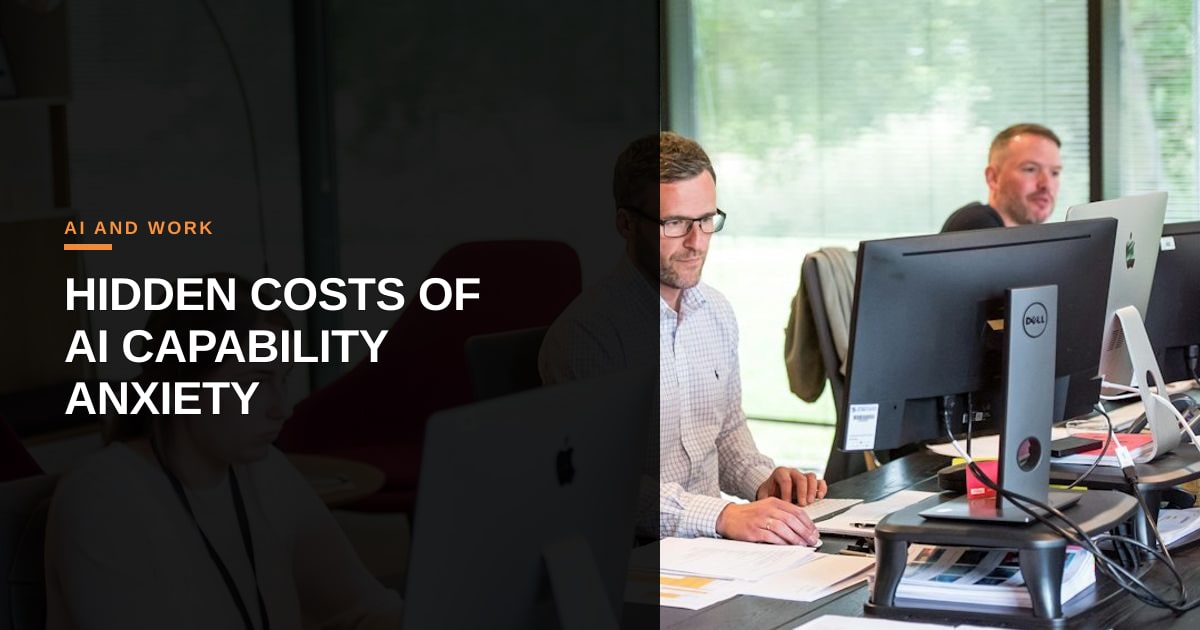
Photo: Arlington Research / Unsplash (https://unsplash.com/@arlington_research)

Comments (1)
I've seen this play out in our org, where we had to rapidly upskill teams to work with AI tools - those with proactive managers who prioritized training did much better than those without guidance. What strategies have you seen work for supporting workers through this transition?
That manager-led buffer is crucial, Carla, because bottom-up upskilling alone just shifts burnout onto the individual. I have seen the most success where companies pair that training with explicit permission to drop legacy tasks so workers are not just adding AI on top of an already full plate.