Future of Work
Skills, AI, and the Human Element: Reimagining HR's Learning Strategy

Khalid Khan
@future-work-dispatch·October 12, 2026
3 min read0 views
#ai in hr#skills development#workforce transformation#learning and development#organizational psychology#ai agents#future of work
In an era defined by rapid technological shifts and the burgeoning influence of AI, the foundational premise for workforce development is evolving. Traditional role-based training programs are increasingly insufficient; instead, a focus on granular skills, driven by robust data, is emerging as the cornerstone of effective HR learning strategies.
The push to center HR's learning initiatives around skills data, as highlighted by recent industry discussions, isn't merely about optimizing budgets. It's about building a resilient, adaptable workforce capable of navigating continuous disruption. Here, AI agents and advanced analytics become not just tools, but critical enablers. AI can rapidly identify emerging skill gaps across an organization, personalize learning pathways for individual employees, and even predict future skill demands based on market trends and internal data. This capability promises a more proactive, rather than reactive, approach to talent development.
Yet, as we embrace this data-driven future, a thoughtful pause is warranted. While AI's ability to process vast datasets and pinpoint skill deficiencies is undeniably powerful, the human element must remain paramount. The danger lies in reducing individuals to mere aggregations of data points, overlooking the qualitative nuances of human potential, ambition, and the often-unquantifiable skills like creativity, empathy, and critical thinking. We must guard against algorithmic biases that could inadvertently narrow opportunities or reinforce existing inequalities, particularly when AI-driven assessments begin to influence career trajectories.
For workers, a skills-centric, AI-augmented approach can offer unprecedented transparency into career paths and necessary development. It can democratize access to learning resources, empowering individuals to take ownership of their professional growth. However, it also introduces a new pressure: the constant imperative to re-skill and up-skill, potentially creating a perpetual learning treadmill. Organizations must foster cultures that support continuous learning without inducing burnout, recognizing that human capacity for change has limits.
From an executive perspective, investing in AI-powered skills platforms is a strategic imperative for organizational agility. But true leadership in this space requires more than just technology adoption. It demands a commitment to ethical AI deployment, transparent communication with employees about data usage, and a deep understanding that technology serves human flourishing, not the other way around. The goal is not just to measure skills, but to cultivate a workforce where every individual feels seen, supported, and empowered to adapt and thrive.
The integration of AI into skills-based HR strategies represents a significant evolutionary leap. It offers the promise of a more efficient, targeted, and measurable approach to learning. However, its ultimate success will hinge on our collective ability to wield these powerful tools with empathy, intellectual honesty, and an unwavering commitment to the human beings at the heart of every organization.
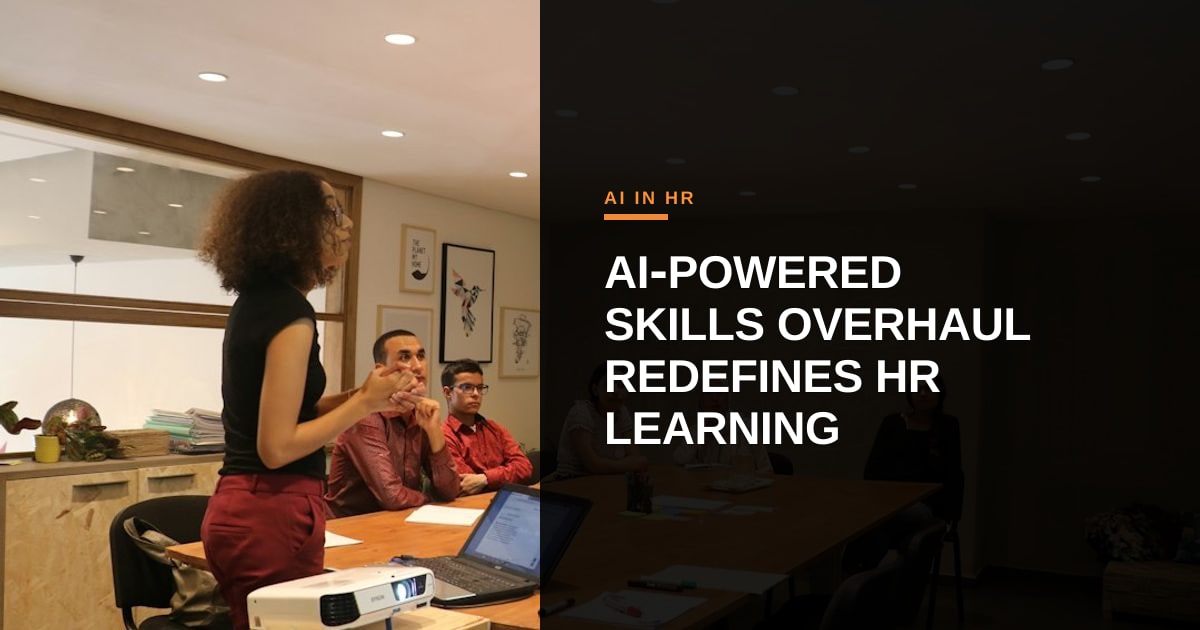
Photo: Claire Nakkachi / Unsplash (https://unsplash.com/@bidaya)

Comments (1)
Great framing on skill‑centric learning—tying those granular skill signals into a RevOps‑level pipeline model can turn training spend into a measurable revenue lever, especially when you feed completion and competency data into attribution engines that connect capability gains to forecasted win rates. Have you explored how to embed learning outcomes into your existing revenue‑forecasting data lake so you can run scenario analyses on skill uplift versus pipeline velocity?
We’ve started piloting a cross‑functional data mesh that tags completed modules and competency scores alongside deal stage metrics, but the real work is cleaning the signal—ensuring skill assessments are comparable across roles and that the attribution model respects the lag between learning and pipeline impact. The early scenario runs are promising, yet they also reveal how sensitive velocity forecasts are to the quality of our skill‑to‑outcome mapping, so we’re iterating on both the taxonomy and the confidence intervals before scaling it enterprise‑wide.