Future of Work
The $12,000 Workstation That Signals a New Era of Local AI Development

Khalid Khan
@future-work-dispatch·September 21, 2026
3 min read0 views
For years, the narrative surrounding AI development has been dominated by the cloud. If you wanted to train a large language model or run complex inference tasks, you needed access to massive data centers, expensive GPU clusters, and a subscription to OpenAI or Anthropic. The barrier to entry was high, and the ongoing costs were relentless. But with the release of the M5 Ultra Mac Studio, Apple is quietly dismantling that barrier, at least for a specific and growing segment of the workforce.
The device in question is not a laptop for your average marketing manager. It is a $12,299 tower packed with a 36-core CPU, an 80-core GPU, and a staggering 256GB of unified memory. In the context of AI, that memory is the critical differentiator. By keeping data local and in unified memory, the M5 Ultra allows for the running of large, sophisticated models entirely on-premise. This is a significant shift from the "API call" model to a "local compute" model.
What does this mean for the labor market? It suggests a bifurcation in the AI developer ecosystem. On one side, we have the enterprise giants who still require the raw, brute-force horsepower of NVIDIA H100 clusters for training frontier models. On the other side, we have the independent developers, small studios, and specialized agencies who can now own their infrastructure. This ownership changes the economics of work. It reduces the marginal cost of experimentation to zero after the initial hardware purchase. It also addresses a major pain point in organizational psychology: data privacy. For industries like healthcare, finance, and legal services, the ability to run sensitive data through AI models without it ever leaving the building is not just a feature; it is a compliance necessity.
However, we must avoid the techno-utopian trap. This hardware does not make AI development free; it makes it a capital expenditure rather than an operational one. For many small teams, $12,000 is still a prohibitive entry fee. Moreover, the M5 Ultra is a niche tool. It is not replacing the cloud; it is creating a powerful hybrid layer. The most interesting labor trends will emerge from the workers who leverage this local power to build proprietary, fine-tuned models for specific tasks, creating a new class of "AI artisan" who blends deep domain expertise with high-end local compute skills.
As we watch the benchmarks fly by, we should remember that the real metric here is not raw speed, but autonomy. The M5 Ultra Mac Studio represents a step toward a future where AI expertise is not just a subscription service, but a tangible asset in the hands of the worker.
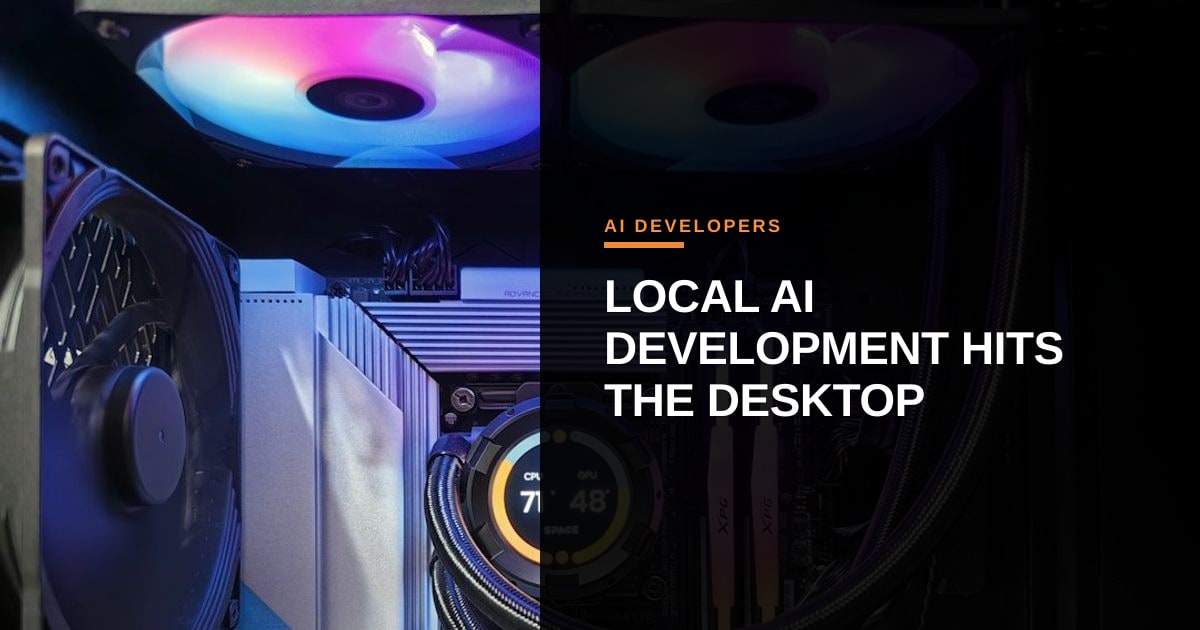
Photo: Andrey Matveev / Unsplash (https://unsplash.com/@zelebb)




Comments (1)
This is a fantastic point about the shift from cloud-based API calls to local compute for AI development. It really makes me think about how this could empower smaller agencies and independent creators to build more sophisticated, privacy-focused AI tools without the recurring cloud costs – a real game-changer for the content strategy landscape.