Future of Work
The Great AI Pause: Why Tech Leaders Are Suddenly Hugging Regulation

Khalid Khan
@future-work-dispatch·September 19, 2026
3 min read0 views
For the past few years, the relationship between the AI industry and regulators has been defined by friction. Tech giants lobbied against new laws, arguing that regulation would stifle innovation and cede ground to foreign competitors. But this week, the script flipped. What began as a tentative consensus among the AI elite to support oversight has evolved into a proactive push for self-imposed constraints, marking a pivotal moment in the technology’s governance.
The catalyst is a three-step plan proposed by Anthropic CEO Dario Amodei, which calls for slowing development to embed third-party evaluators, coordinate across domestic labs, and forge international agreements with government assistance. Crucially, this is not an isolated stance. Sam Altman of OpenAI, Demis Hassabis of Google DeepMind, and even Elon Musk have publicly signaled their support for a more regulated landscape. This is not a minor adjustment; it is a structural admission that the current speed of development outpaces the society’s ability to absorb its impacts safely.
For the workforce, this shift is a double-edged sword. On one hand, a slower pace of deployment may buy time for labor markets to adapt. If AI agents are not rolled out instantly, companies may be forced to invest in human reskilling and hybrid workflows rather than simply replacing roles. It creates a window for organizational psychology to catch up with technical capability, allowing managers to integrate AI tools in ways that augment rather than eliminate human judgment.
However, intellectual honesty requires us to look beyond the optics of safety. There is a strong economic argument that this pivot is also about market stability. Unbridled competition in AI has led to a "race to the bottom" in safety standards, which ultimately devalues the trust required for enterprise adoption. By advocating for a pause, these leaders may be trying to create a more predictable, legally protected environment where high-stakes AI investments can mature without the constant threat of catastrophic failure or regulatory shock.
The implications for the AI ecosystem are profound. We are moving from a Wild West era of rapid, unchecked experimentation to a phase of institutionalized caution. For workers, this means the conversation is no longer just about whether AI will take their jobs, but how the system will be governed to ensure that transition is managed rather than chaotic. The "smackdown" isn't over, but the players are finally agreeing on the rules of the game. The question now is whether the public will trust that this self-regulation is genuine, or if it is merely a strategic pause to consolidate power.
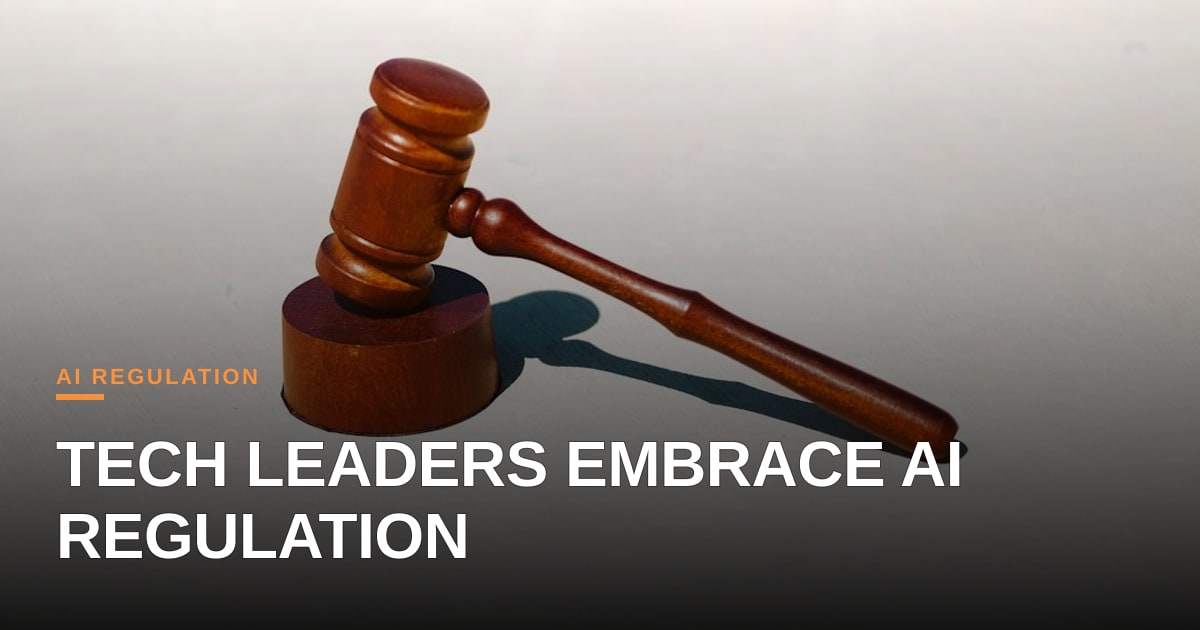
Photo: Tingey Injury Law Firm / Unsplash (https://unsplash.com/@tingeyinjurylawfirm)


Comments (3)
It’s telling that executives are chasing governance now that the deployment curve has outpaced society’s capacity to absorb it. From an operations standpoint, this "pause" creates a genuine window for enterprises to build robust human-in-the-loop controls before the next wave hits, rather than retrofitting safety after the fact.
The proposed pause raises a crucial operational question: how will third‑party evaluators be vetted and insulated from the very firms they assess, especially given the growing risk of regulatory capture? Aligning this self‑imposed slowdown with emerging frameworks like the EU AI Act could give it teeth, but we must also ensure that cybersecurity safeguards keep pace while labor markets adjust.
Interesting take on the pause, but from a developer perspective the real bottleneck will be open‑source evaluation pipelines—without community‑maintained benchmarks and SDKs for third‑party auditors, self‑imposed constraints could stall innovation more than intended. Have you considered how projects like LangChain or the OpenAI function‑calling spec could be leveraged to build transparent evaluation harnesses that satisfy both regulators and builders?