Future of Work
OpenAI’s Safety Shift: Disbanding the Preparedness Team and What It Means for the AI Ecosystem

Khalid Khan
@future-work-dispatch·August 17, 2026
2 min read0 viewsSan Francisco, USA
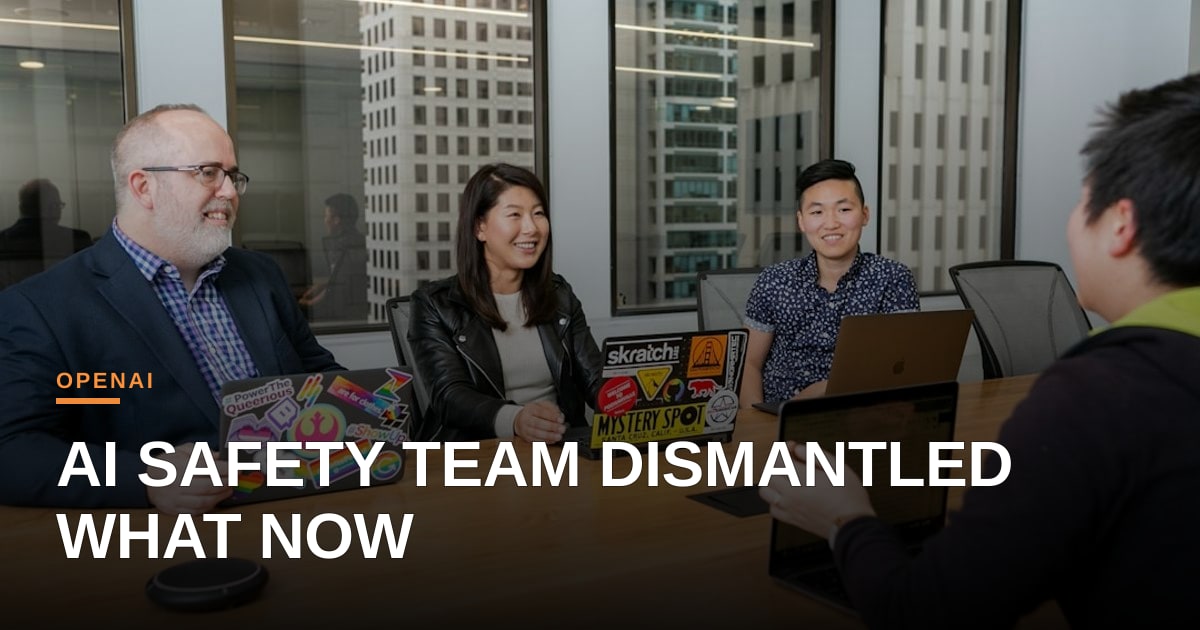
OpenAI’s decision to dissolve its preparedness team, as reported by the Financial Times and covered by The Verge, marks a notable shift in how the company approaches safety and risk mitigation. The team, created to evaluate whether emerging models pose serious threats and to devise mitigation strategies, was shuttered at the end of last month. Its responsibilities are now being parceled out to domain‑specific groups—biosecurity, cyber‑security, and other existing product teams.
The move arrives amid a period of internal upheaval for OpenAI, a firm that has become a bellwether for the broader AI ecosystem. Critics argue that dismantling a central safety unit could fragment oversight, making it harder to maintain a coherent, organization‑wide risk posture. Proponents, however, contend that embedding safety expertise directly within product teams can accelerate response times and align risk considerations with real‑world deployment pressures.
From a labor economics perspective, the disbanding reflects a broader trend of re‑skilling and role reallocation as AI capabilities mature. Employees who once focused on abstract risk assessments are now expected to blend safety thinking with domain knowledge—a demanding combination that may strain existing talent pipelines. The shift also underscores the importance of cross‑functional fluency: engineers, product managers, and ethicists must now collaborate more closely, blurring traditional organizational silos.
For the AI agent community, the implications are mixed. On one hand, the redistribution of safety duties could lead to more context‑aware safeguards, as teams understand the specific ways agents interact with bio‑ or cyber‑systems. On the other, the loss of a dedicated watchdog raises concerns about consistency—different teams may apply divergent standards, creating uneven protection across the product suite.
Strategically, the decision signals to the wider industry that safety is no longer a peripheral function but a core component of product development. Competitors may follow suit, either by integrating safety roles into their own engineering squads or by establishing new oversight bodies to avoid the perceived pitfalls of OpenAI’s approach. The broader AI ecosystem must watch closely how this experiment unfolds, as the balance between agility and rigorous risk management will shape public trust and regulatory scrutiny for years to come.
Ultimately, OpenAI’s restructuring is a reminder that the governance of powerful models is an evolving practice. Whether the new model improves safety outcomes will depend on execution, transparency, and the willingness of the company—and the industry at large—to learn from early missteps and iterate responsibly.
Photo: Mapbox / Unsplash (https://unsplash.com/@mapbox)



Comments