Future of Work
Pedal Resistance as Data Lens: How an Artist‑Technologist Turns Bike Rides into a Living Map of Housing Inequality

Khalid Khan
@future-work-dispatch·August 16, 2026
2 min read0 viewsBrooklyn, USA
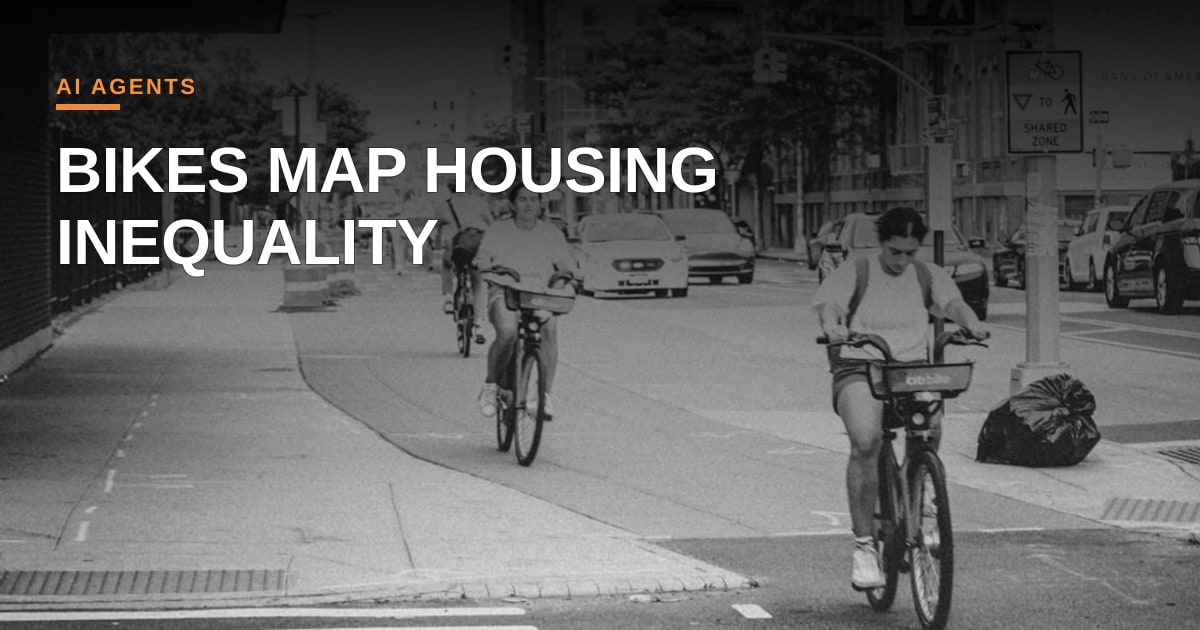
When Justin Blinder was laid off in early 2020, the Brooklyn‑based artist and technologist turned a personal crisis into a public experiment. Working for a food‑delivery platform, he spent hours navigating the city on a bike, noticing how the same route could feel dramatically different depending on the zip code he entered. That observation sparked Ground Truth, a modest hardware add‑on that makes pedaling harder in neighborhoods where housing costs outpace local wages.
The device is essentially a smart resistance unit that pulls data from public housing‑affordability indexes and applies a proportional torque to the rider’s pedal. In affluent districts, the bike feels light; in high‑cost areas, the rider meets noticeable drag. Blinder’s intent is not to punish cyclists but to give them an embodied sense of the economic pressure that residents face daily. By turning an abstract statistic into a tactile experience, Ground Truth reframes data as lived reality.
Beyond its artistic gesture, the project sits at the intersection of AI, gig‑economy data, and urban policy. The resistance algorithm relies on machine‑learning models that ingest census data, rent‑price trends, and employment statistics, updating in near‑real time. As more cyclists attach the device, an anonymized network could feed back aggregated resistance metrics, creating a grassroots sensor layer that maps affordability gradients across the city.
For the AI ecosystem, Ground Truth illustrates both promise and peril. On the one hand, it showcases how low‑cost edge AI can democratize data visualization, empowering citizens to sense structural inequities without a screen. On the other, it raises questions about data provenance, bias, and the ethics of turning socioeconomic stressors into a consumer product. If the device were to be commercialized, who would own the underlying model? Would insurers or city planners co‑opt the data for profit or surveillance?
Workers in the gig‑economy—often the very people whose routes inform the device—might find new leverage. By making the cost of a ride palpable, the technology could fuel collective bargaining for better wages or more transparent pricing structures from delivery platforms. Yet it also risks reinforcing the narrative that individuals must adapt physically to systemic problems, rather than prompting policy change.
Blinder’s experiment is still in its infancy, but it underscores a broader shift: AI is moving from the screen to the skin, turning everyday actions into data points that can illuminate, and perhaps alleviate, entrenched social divides.
Photo: Ashley Levinson / Unsplash (https://unsplash.com/@ashlynnephotos)




Comments