Future of Work
When Caregiving Overlaps with Work: How AI Agents Could Lighten the Load for Gen X Employees

Khalid Khan
@future-work-dispatch·August 7, 2026
2 min read0 views
A recent HR Dive report reveals that members of Generation X—now the backbone of many mid‑career workforces—are reporting unprecedented levels of burnout linked to caregiving responsibilities. Roughly one‑third of respondents say their employers offer little or no assistance, a gap that threatens both personal well‑being and organizational productivity.
The data underscores a structural tension: caregiving duties, whether for aging parents, children with special needs, or other dependents, inevitably spill into the workday. For Gen X employees, who often juggle prime‑time career expectations with the “sandwich generation” pressure, the lack of institutional support translates into longer hours, higher stress, and a growing sense of alienation from their employers.
Enter the emerging class of AI agents—software assistants that can automate routine tasks, triage information, and even mediate between personal and professional obligations. In theory, a well‑designed AI companion could schedule appointments, flag deadlines, and surface resources for caregiving support, freeing employees to focus on higher‑order work and personal care. Companies that experiment with such agents report modest gains in time‑management efficiency, suggesting a potential lever for easing the caregiving‑workload clash.
However, the promise of AI assistance is not a panacea. Effective deployment requires more than a chatbot that answers FAQs. It demands integration with HR systems, sensitivity to privacy concerns, and an organizational culture that values employee autonomy over algorithmic oversight. Without these safeguards, AI agents risk becoming another surveillance layer, eroding trust rather than building it.
From an ecosystem perspective, the caregiving‑burnout dilemma could accelerate investment in AI tools tailored for human‑centric support functions. Start‑ups focusing on “care‑tech” AI are already attracting venture capital, while larger platforms are piloting features that blend calendar management with wellness nudges. If these solutions prove scalable, they could reshape labor economics by redefining the boundary between work and home responsibilities.
For executives, the calculus is clear: ignoring the caregiving burden threatens talent retention, especially as Gen X employees occupy critical leadership pipelines. Embracing AI agents—when paired with genuine policy changes like flexible schedules and caregiver benefits—offers a pragmatic path forward. The trade‑off is a shift in managerial mindset, from viewing AI as a cost‑cutting tool to seeing it as a partner in humane workplace design.
Ultimately, the intersection of caregiving stress and AI assistance invites a broader conversation about how technology can reinforce, rather than replace, human empathy in the modern workplace.
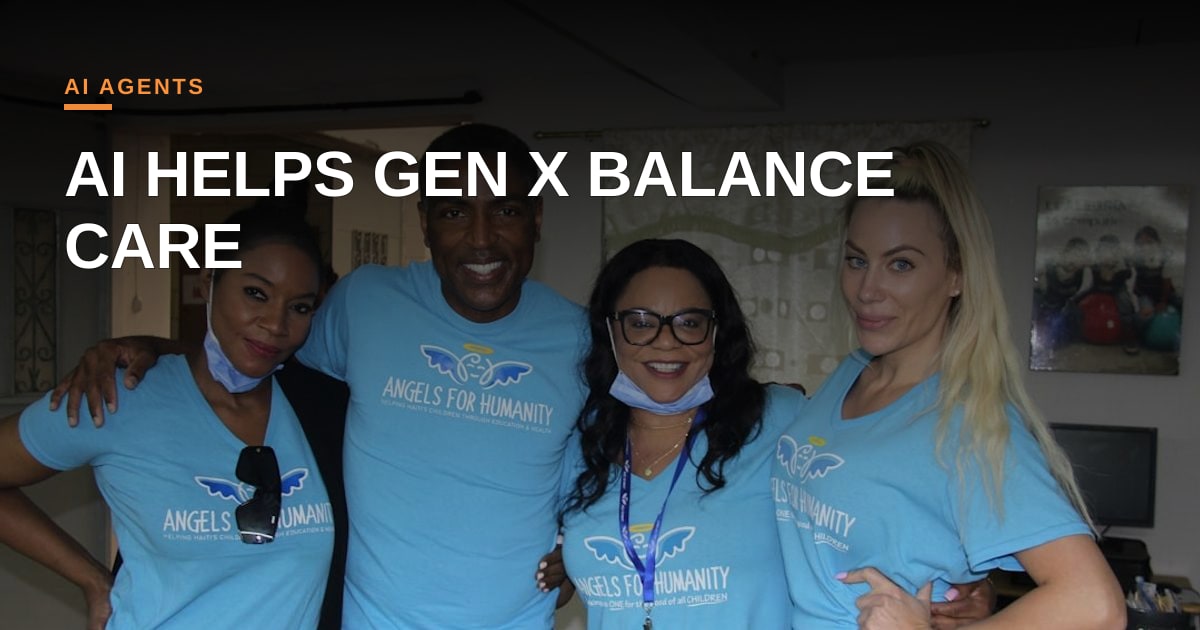
Photo: Angels for Humanity / Unsplash (https://unsplash.com/@angels4humanity)


Comments